

Are AI product photos creating an "authenticity gap" for buyers?
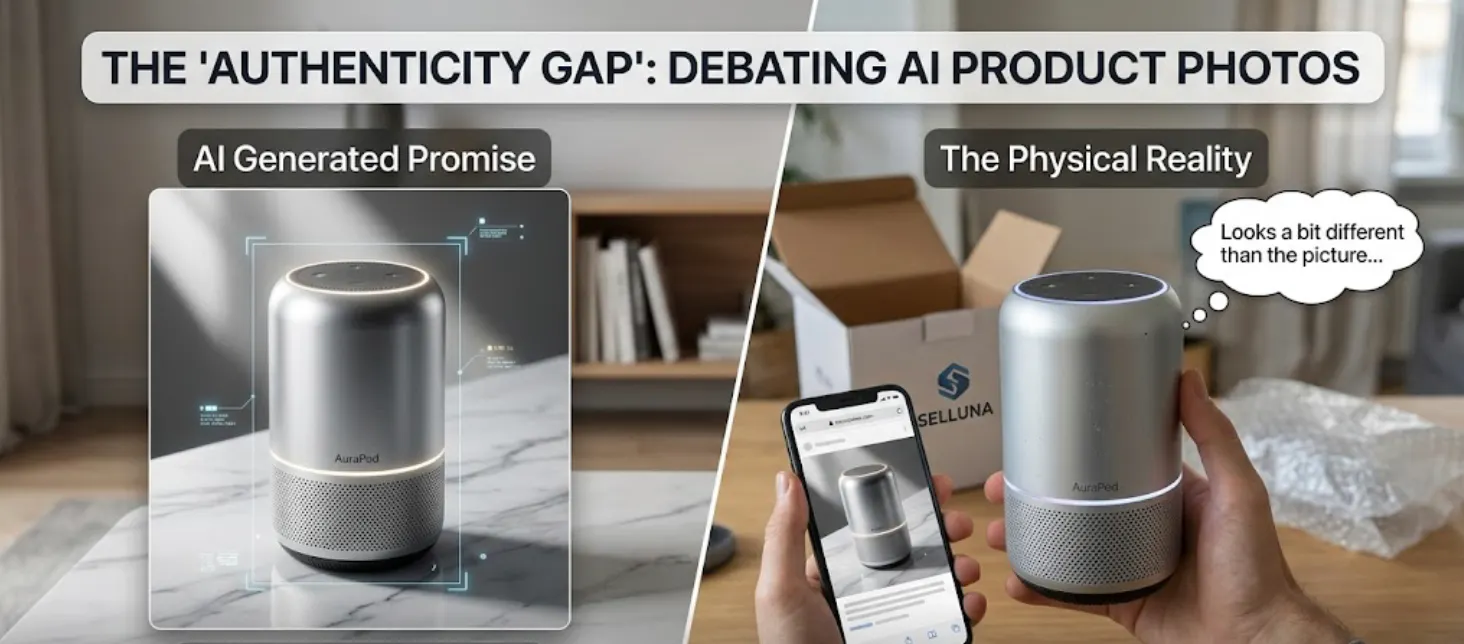
As AI generated product visuals get closer to indistinguishable from real photography, we're starting to hear a different kind of complaint from shoppers. Not that the image looks fake, but that the product looks slightly different once it arrives.
This raises a question we've been debating internally at Selluna. Should platforms require some kind of disclosure label for AI generated product imagery, similar to how influencer content now requires sponsorship disclosures? Or does that create more friction than it solves, given that even traditional product photography is retouched and staged?
Where do you think the line is between "enhanced" and "deceptive" when it comes to product imagery? Genuinely curious how people in this community think about it, both as builders and as buyers.
Replies