I m working on a game-mod discovery website, and one product-design question keeps coming up: how much information should users see before opening an individual game page?
A mod listing can become confusing surprisingly quickly. A game may have several versions, different Android requirements, multiple modified features, and updates that no longer work with older save files. Showing everything in the listing makes the interface crowded, but hiding too much forces users to open several pages before finding a compatible version.
The information hierarchy I m currently considering is:
I'm Johnny, solo founder. Embent is an embeddable AI agent you point at your website or docs: it answers visitor questions only from what you actually published, cites the page under every answer, and the part I care most about says "I don't know" instead of improvising, then logs that question so you know exactly which page to write next.
The homepage is the demo: paste your URL at embent.com, no signup, and a real bot built from your own site is answering about a minute later.
We're live on Product Hunt tomorrow (Aug 20). Before that, I'd genuinely love this crowd's stress test: paste your site, ask it your hardest questions, and tell me where it breaks. That "where it breaks" list is literally the feature it's what the Unanswered inbox is for.
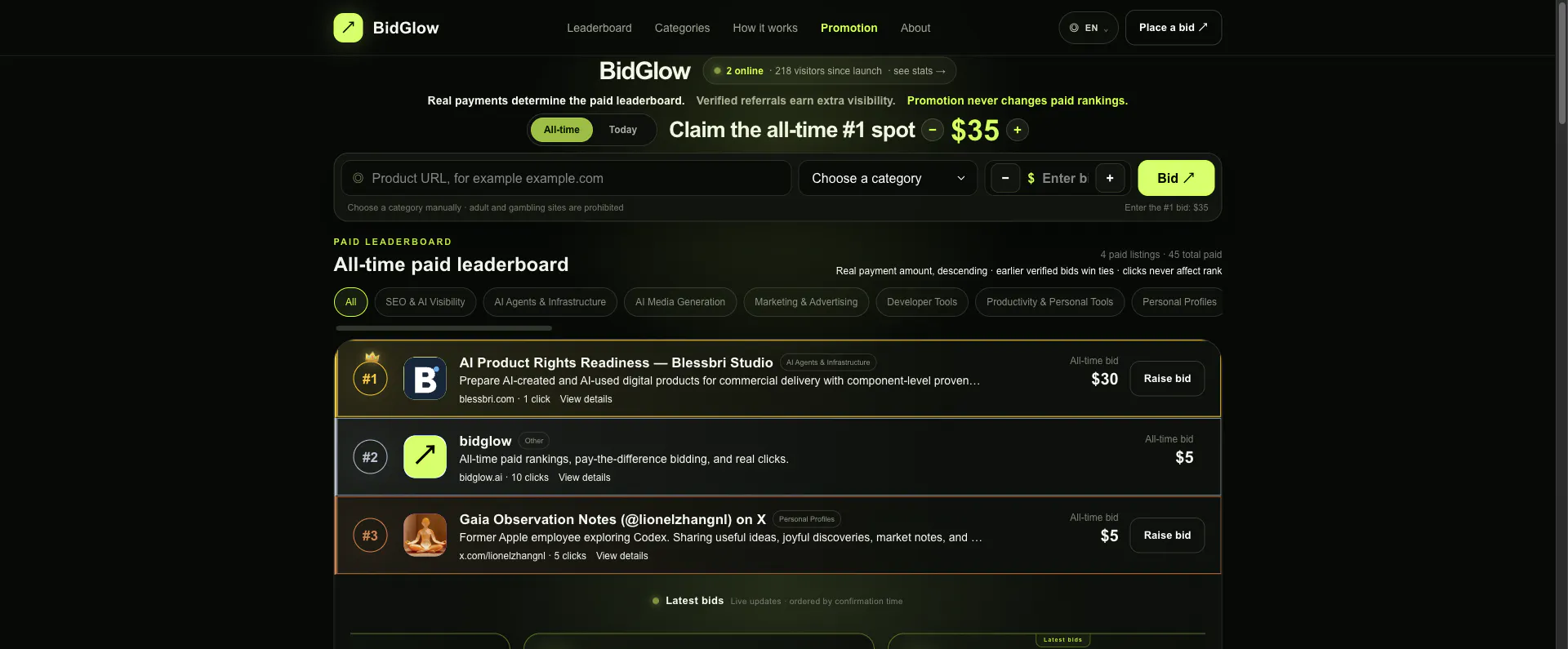
I m the maker of BidGlow, launching on Product Hunt in about two hours. This is the first screen of the English homepage.
The experiment is deliberately simple: real payments determine the public rank, outbound clicks are visible, a new listing starts at $5, and upgrading costs only the difference. It is sponsored visibility not an editorial best products list.
I m the creator of the app LocalLegends, it s an app the brings car enthusiasts and thrill seekers alike together. Upon signing up you will be able to challenge others to races via setting a time and a location (must be a legal track). Upon getting there the built in gps with guide you to the set start line, give you a count, and track who wins. Winning give you elo like in game like chess. There s leaderboards, achievements, you can friend people, and post picks of your car builds or races you ve done lately, all of this is 100% free. Nothing in my app cost money. Sign up for free today, and become a LocalLegend.
We've all had moments where we wanted to say something to someone especially in college but stopped ourselves because "what if they know it's me?" So I built an app around that idea.
sayitfreely.vercel.app/instagram You can start a conversation without revealing your identity. The other person gets curious about you, so they can continue the conversation and slowly get to know you. If you both vibe, feel comfortable, and actually want to know who s behind the messages, you can reveal your Instagram identity only when you choose to. Not interested? You can simply stop. No awkwardness, no forced reveal. The idea is basically: Curiosity Talk Vibe Trust Reveal I think this could be interesting in communities like college, where people often want to talk to each other but don't always have the courage to approach directly. I ve also made the login simple through Instagram, and there's an option to turn your conversation into an Instagram post. I'm sharing some screenshots below and would genuinely love some honest feedback. Would you actually use this?
What feels interesting?
What feels unnecessary or weird?
And what would stop you from trusting it? Please be brutally honest I'm trying to figure out if this is actually useful, not just make something that looks cool.
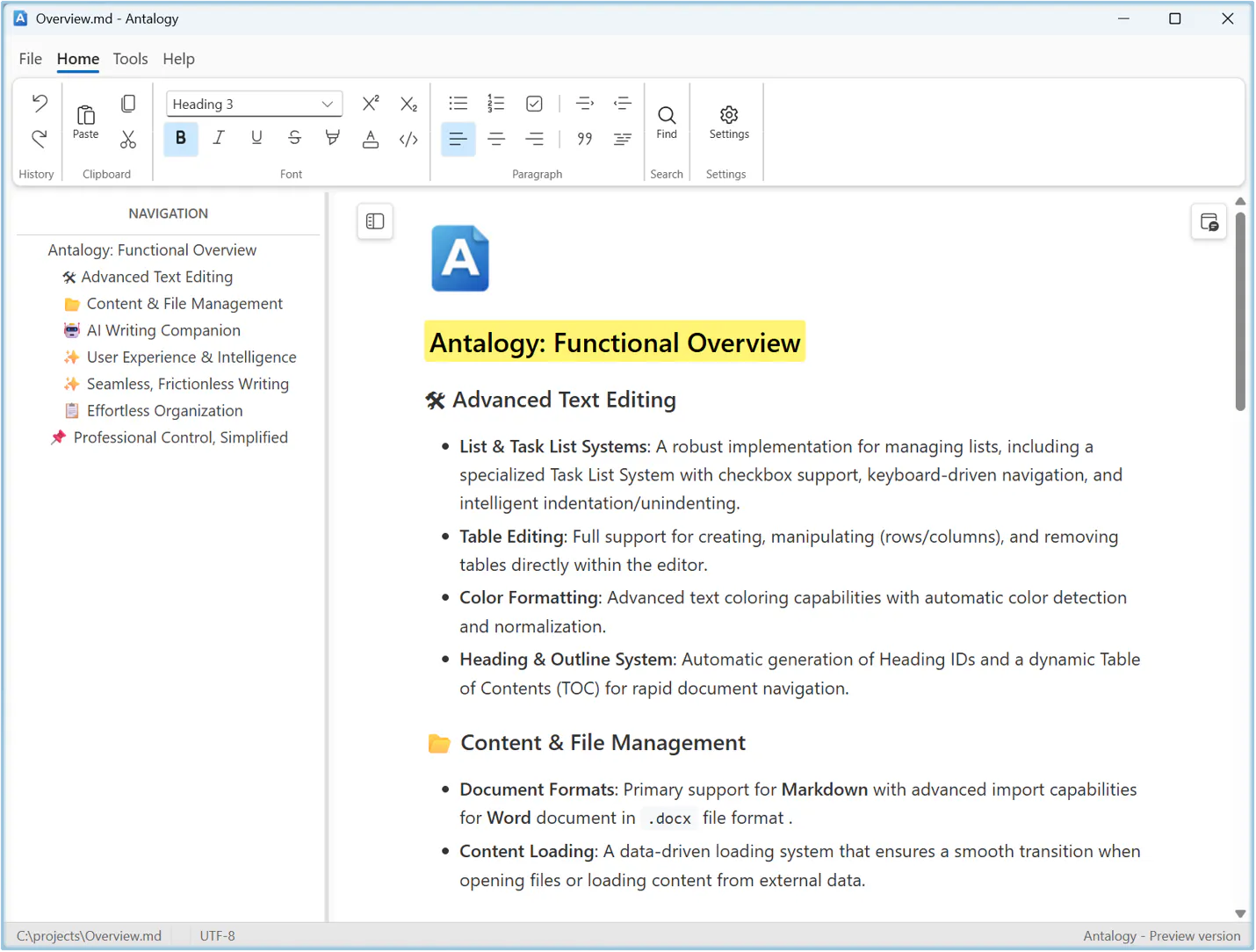
We often invest our efforts in what we ourselves lack. At the end of last year, in parallel with my main business, I decided to try to implement an idea I deeply and sorely needed - a desktop "Word for Markdown" with an integrated AI Assistant - Antalogy.