

We Noticed That Most Buyers Cannot Read a Floor Plan. Then We Built the Fix.
My co-founder and I came to interior design and real estate as outsiders. We are engineers. We did not know the conventions, the workflows, or the way things have always been done.
What we noticed instead was something that practitioners had normalized: buyers are routinely asked to make major financial decisions based on a document they cannot read.
A floor plan contains everything a buyer needs to know about a space. The dimensions, the flow, the relationships between rooms, the light, the proportion. The trained professional reads all of that instantly. The buyer reads room labels and tries to count the boxes.
The result is a structural sales problem that the residential development and real estate industries have been working around for decades rather than solving. Delayed decisions. Price negotiations driven by uncertainty rather than dissatisfaction. Lost sales to competitors with physical show units. Post-sale surprises that erode satisfaction and referrals.
We built Foursite to solve this at its root.
Foursite takes a 2D floor plan or architectural blueprint and converts it into a photorealistic AI 3D interior render in minutes. The technology is patent pending. The output is the actual space: the buyer's specific unit, with their actual dimensions, their window placement, their finish selection, rendered with the kind of photorealistic detail that removes the translation requirement entirely.
The buyer stops trying to read the floor plan and starts reacting to the space. The questions they ask change. The timeline of their decision changes. Their willingness to commit at asking price changes. All because they can see what they are buying.
We built for developers who are selling pre-construction and need every unit type visualized before the sales launch. For interior designers who need clients to approve a brief based on something more specific than a mood board. For architects who want the people evaluating their plans to actually understand them.
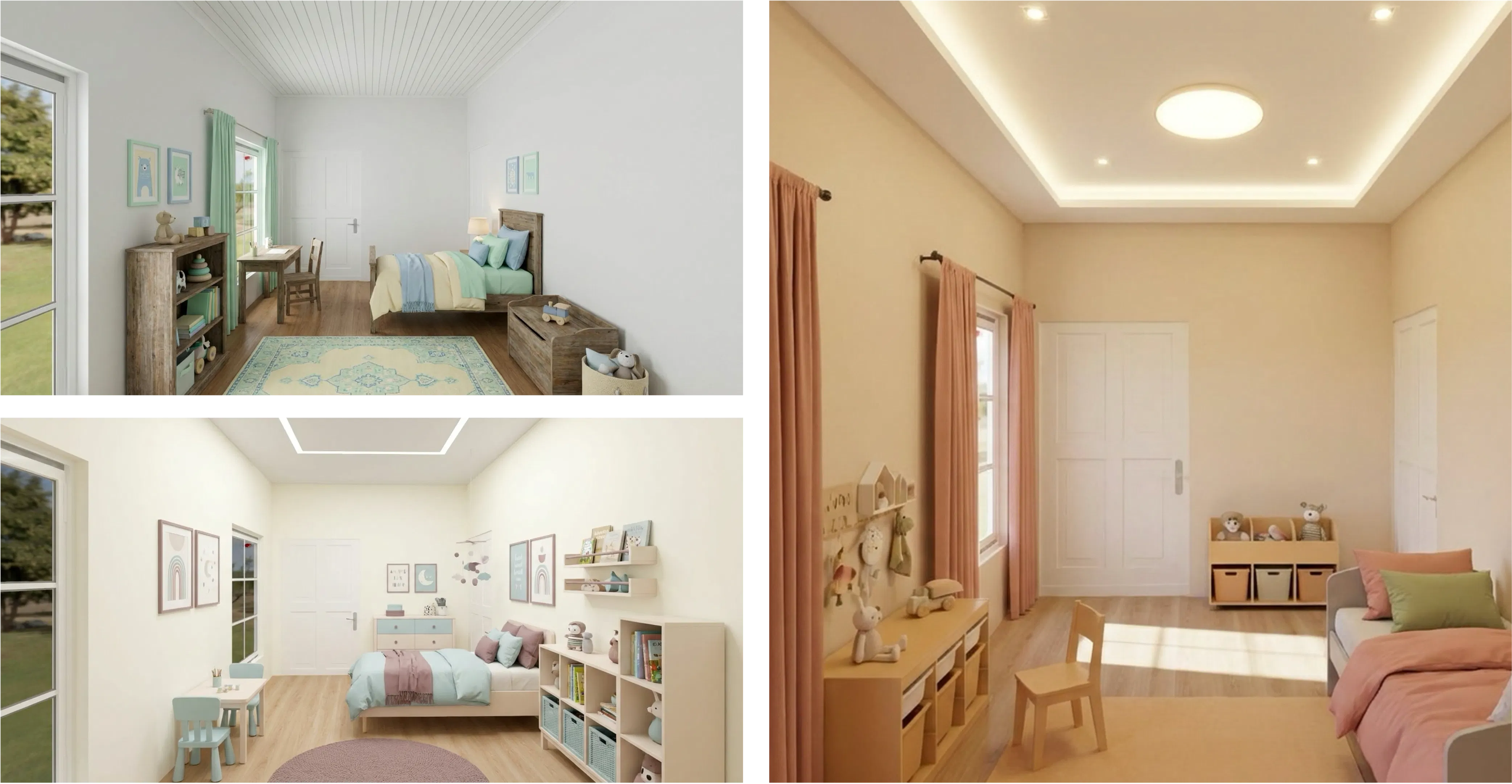
For renovation and resale, we built Remodroom. Upload a photo of an existing room. Apply a new design direction. Show the buyer the space remade. The same principle: remove the translation requirement, show the outcome directly.
Both tools are live. Both are built for the specific pain that practitioners know well and that buyers feel without being able to name it.
The floor plan has always been the most important document in residential real estate. We built the tool that makes it legible to the people who most need to act on it.
If you work in residential development, interior design, or real estate and this problem is familiar, we would love to hear from you.
Read more here: How do buyers really see a floorplan?
Replies