

We Built the Tool That Replaces the Mood Board. Here Is Why We Thought It Needed Replacing.
My co-founder and I are engineers. We have never designed an interior in our lives. What we have done is spend a lot of time talking to people who do it every day, and listening to the same frustration repeated in different words.
The frustration: clients approve things and then do not recognize them when they are built. The mood board looked right. The space does not feel right. Somebody has to absorb the cost of fixing it.
We built Foursite to solve this at its root. Not to help designers make better mood boards. To replace the mood board with something that actually shows clients their space before a single decision is locked in.
Foursite takes 2D floor plans and architectural blueprints and converts them into photorealistic AI 3D interior renders in minutes. The underlying technology is patent pending. The output is a render of the actual room, with the actual dimensions, with the actual window placement, in the actual finish package the client is choosing between.
What we discovered building this: the problem is bigger than it looks from the outside. Every residential development project. Every fit-out. Every renovation that requires a client to make a decision about a space they cannot yet see. That is a massive amount of guesswork dressed up as approval.
Interior design 3D visualization used to require an outsourced render studio, a six-week wait, and a five-figure commission for a large project. So most designers did not use it for the brief conversations where it would have mattered most. They used mood boards instead and hoped the client's imagination would close the gap.
Foursite is built for those brief conversations. Convert a floor plan to 3D in a meeting. Show the client their kitchen before the meeting ends. Iterate the design in the room instead of via email over three weeks.
We also built Remodroom for the renovation use case: upload a photo of the actual room, choose a style, see the redesign. Same idea. The client sees their home, not a reference to someone else's home.
Both tools are live. Both are built for practitioners who are tired of the visualization gap costing them revision cycles, client satisfaction, and margin.
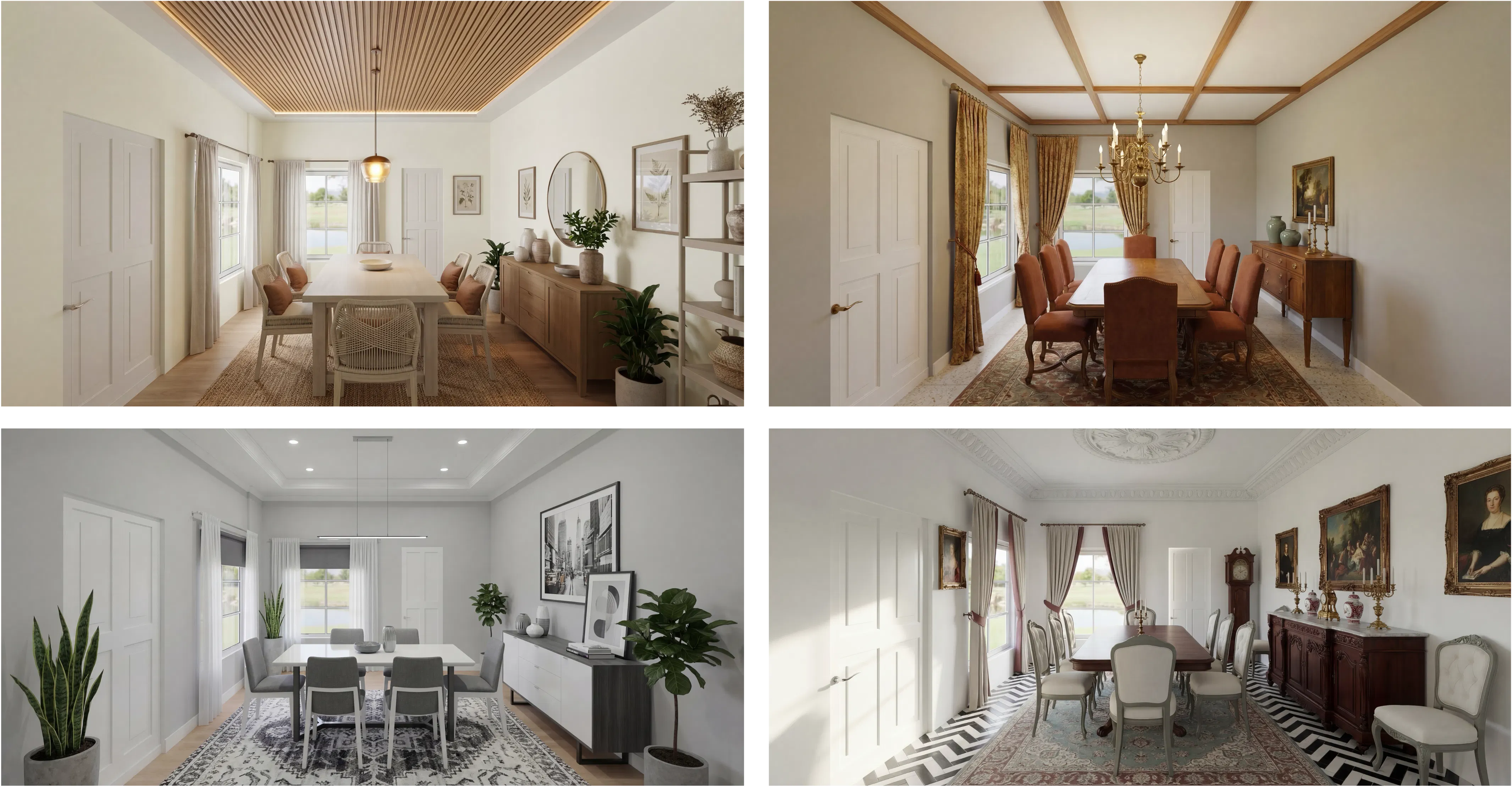
The mood board had a good run. We think the better version of this conversation starts with a render of the actual space. VirtualSpaces is now patent pending.
Read more: The Moodboard is dead
We built the tool that makes that possible. We would love for you to try it and tell us where we are wrong.
Replies