

How We Built a YouTube Shorts Strategy for Musicians Without Any Video Budget
W
hen we started looking at YouTube Shorts for musicians on our roster, we hit the same wall everyone else does: great audio, no video. Traditional shoots cost $3K to $8K and take three weeks to deliver. A typical indie artist ships one or two tracks a month — the math collapsed immediately. So we looked for a way to generate a YouTube Shorts-ready 9:16 video from a finished audio track the same day the mix was done. This is what we found.
The Problem We Kept Seeing
Musicians are flooding YouTube Shorts right now. The algorithm loves vertical video, and Shorts are surfaced to non-subscribers in a way long-form videos aren't. But the production gap is brutal: audio artists have polished tracks and nothing to show. A 30-second Short still needs a visual layer.
We talked to a dozen indie artists about this. Every one of them had the same answer: "I know I should be on Shorts. I just can't make the content." Not for lack of music — for lack of video.
Why YouTube Shorts Changed the Economics
A long-form YouTube music video at 16:9 is a production commitment. A Short is 60 seconds maximum — vertical, fast, repeat. The audience expectation is rawer. That shifts the production calculus. You don't need a cinematographer. You need a visual that moves, has rhythm, and fits a phone screen.
YouTube itself recommends filming vertically for Shorts from the start rather than re-cropping horizontal footage — which is exactly what most artists do wrong the first time. Vertical-native output is what makes Shorts content feel native rather than recycled.
How We Built the Workflow
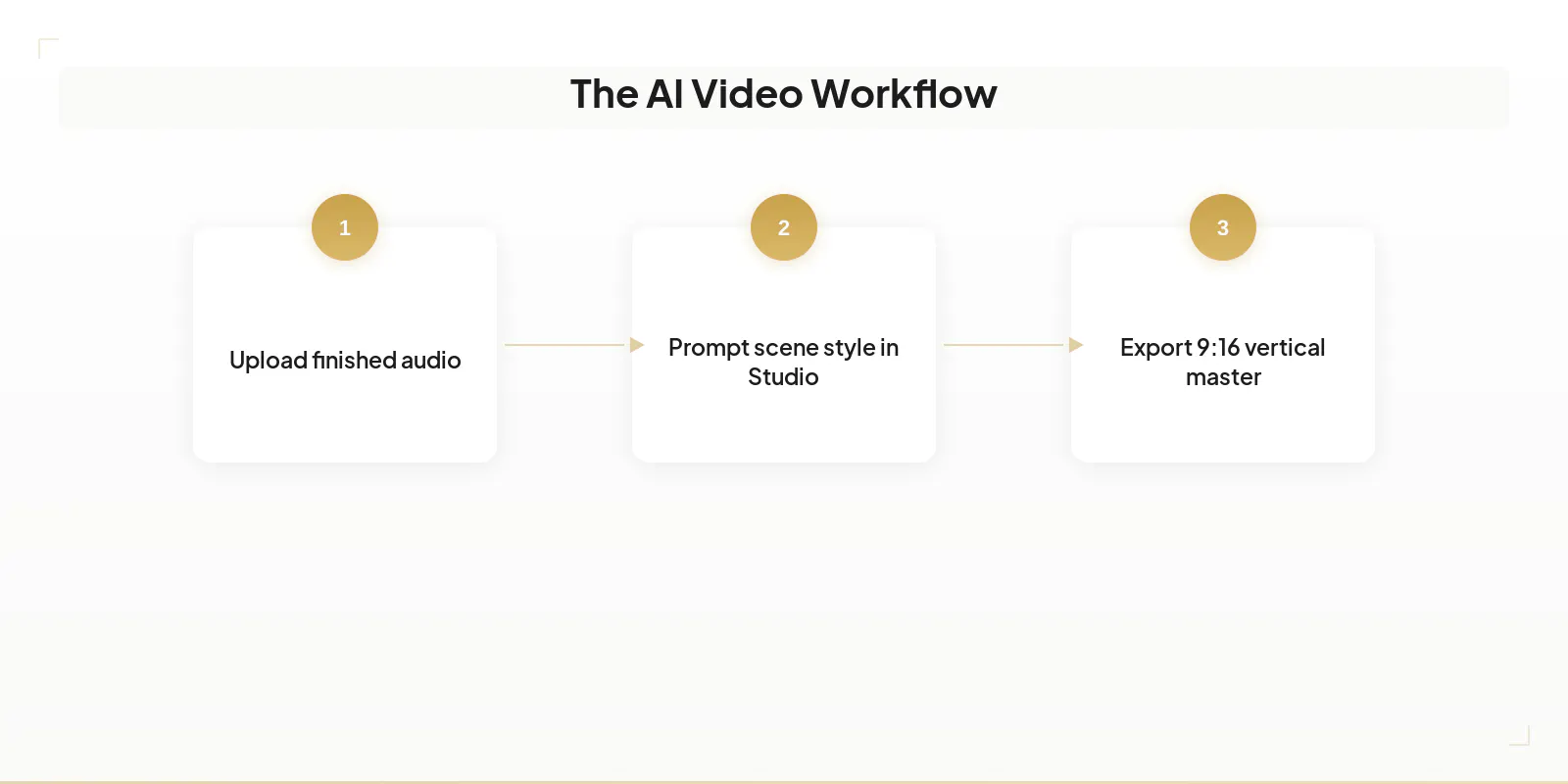
We settled on a three-step process: audio in, prompt the style, export the vertical master. No crew, no location, no scheduling.
The production layer is an AI music video generator. The artist uploads a finished audio file — WAV, MP3, FLAC — sets a visual direction through scene prompts in the Studio interface, and generates a 9:16 vertical video. The Pilot Plan at $30/month gives 750 credits, covering roughly three full Engine generations. For one new track per month, that's a full Shorts cycle: two drafts to find the right visual direction, one final cut for release.
The 9:16 output size is critical here. It goes directly to YouTube Shorts, TikTok, Instagram Reels, and Spotify Canvas without re-cropping. One generation, four distribution surfaces.
What the Results Looked Like
Turnaround: one afternoon per track. The generation itself takes minutes. Studio adjustments — changing a scene's visual feel, fixing a moment that didn't land — add time, but the total stays inside a single working day.
Quality: not identical to a traditional shoot. The AI visual has a different aesthetic — more abstract, more motion-graphic than live-action. For certain genres — electronic, ambient, lo-fi — it fits naturally. For artists who need recognisable faces and real environments, it's a supplement, not a replacement.
Cadence: the big shift. Once artists stopped treating every track as a video production project and started treating it as a one-afternoon task, they posted more. More Shorts, more algorithm exposure, more catalog discovery.
What We'd Do Differently
Start with the catalog, not the next single. The artists who got the most out of the workflow were the ones who went back and made Shorts for five or six older tracks before they ever touched a new release. Catalog Shorts surface at discovery; new-release Shorts compete in a crowded moment.
And pair the visual workflow with the audio platform strategy. The same 9:16 video that goes to Shorts also works as a Spotify Canvas — a looping visual that plays behind a track during streaming. The connection between vertical video and streaming surface presence is something most artists underuse.
Frequently Asked Questions
How do I use YouTube Shorts for music promotion?
Upload a 60-second or shorter vertical video with your track as the audio. A visual layer — even a simple animated one — performs better than a static image. Post consistently, use music-relevant hashtags, and link your channel to your Spotify and Apple Music profiles so Shorts viewers can find your full catalog.
What length should a YouTube Short be for music?
Under 60 seconds is the technical requirement. In practice, 30–45 seconds tends to perform best for music Shorts — long enough to establish a hook and a visual mood, short enough to watch twice without skipping. If your song has a standout verse or chorus, build the Short around that moment.
Can AI make YouTube Shorts for musicians?
Yes. AI music video generators take an audio file as input and produce a 9:16 vertical video, which is the native format for YouTube Shorts. The output is sized correctly for mobile viewing and can be uploaded directly without re-editing or re-cropping.
Does YouTube Shorts help grow a music channel?
It can, particularly for catalog discovery. Shorts are surfaced to non-subscribers more aggressively than long-form video. Artists who post consistently see incremental subscriber growth and, more importantly, streams on songs that never got much organic discovery when they first released.
What's the best way to post music on YouTube Shorts?
Use a vertical video rather than a static image. Add your track as the audio through a music video file rather than the Shorts audio picker — that way your song is credited and linked in the metadata. Keep it under 60 seconds. Post within the first 24 hours of a release to capture the algorithm boost.
Final Thought
YouTube Shorts rewards consistency more than production value. The artists who showed up with vertical content every week — regardless of how polished it was — outperformed the ones who saved their energy for a single high-production drop. The workflow we built isn't glamorous, but it makes showing up every week sustainable. That's the real unlock.
About the Author
Alex is a music video director and creator-economy strategist who works with independent artists and small labels on visual release planning. He has directed more than 60 music videos across hip-hop, indie pop, and electronic music, and spends most of his time now building production-light content workflows that let artists stay visible between major releases.
Disclosure: This post reflects the author's direct experience building video workflows for independent musicians. Some links point to tools referenced in the workflow described above.
Replies