

Backlinks aren't dead. They just changed. Here's how they still work for SEO and GEO in 2026.
Yes, backlinks are still one of the strongest signals Google uses to judge whether a page deserves to rank. For competitive commercial queries, they remain one of the clearest ways to separate two pages with similar content.
But the math changed.
In the age of AI search, backlinks influence visibility differently. They act on the retrieval layer — the live search index that grounds AI answers — rather than the model's frozen training weights. That split explains why studies measuring pure ChatGPT answers sometimes find links matter less, while studies measuring AI Overviews or Perplexity find they still matter.
The shift in 2026:
Backlinks are a gate, not a dial. A Semrush study of 1,000 domains found that authority score correlated with AI mentions at Pearson 0.65. Raw backlink volume correlated much more weakly. The relationship is threshold-shaped. Low-authority domains collect a handful of citations; top-tier domains collect dozens.
Brand mentions now rival raw links. Brand search volume was the strongest single predictor of LLM citations. Nofollow links perform almost like follow links in AI surfaces — AI systems do not honor the nofollow attribute the way classic PageRank logic assumes.
Listicle placements and brand mentions are among the most valuable backlinks for both SEO and AI visibility. Pages that already get pulled into AI search now do more heavy lifting than a pile of plain links ever did.
High DA links still matter for ranking in Google's top 10. But they won't do what most teams actually want in 2026, which is showing up inside AI Overviews, ChatGPT answers, and Perplexity citations.
What still works:
Relevance over volume. A link from a site in your niche that drives real traffic beats dozens of low-quality links.
Earn editorial mentions on pages that already rank and get traffic. These are the sources AI engines repeatedly cite.
Structured listicle placements on industry publications are the highest-leverage placements — they're easy for AI engines to parse and rank for category queries.
Original data and digital PR. Surveys, benchmarks, and proprietary research earn the kind of editorial links that Google values and AI systems trust.
What no longer works:
Chasing DA alone. A relevant link from a site your actual customers read will send you traffic. A high DA link from a site no one in your industry trusts will not.
Volume link building below a certain threshold. A weak or manipulative link rarely earns a penalty anymore — it simply gets ignored. The real cost is wasted time and budget, not a penalty.
Backlinks and GEO: The connection you're missing
A link's GEO ROI now depends on the perceived reliability of the supporting site, not its authority score. A premium link still has excellent SEO ROI, but its GEO ROI depends on the credibility of the media.
If a strong site references you, it helps both SEO rankings and AI visibility. The click layer is what's really changed: AI Overviews and GEO eat a lot of basic informational intent, so thin niche sites are hurting. The ones surviving go deeper.
Backlinks still move the needle in 2026. But the game has changed from "collect as many as possible" to "earn the right ones."
How Rankfender's new Backlinks Intelligence changes the game
We built Backlinks Intelligence to help you stop guessing and start winning. It's not another backlink checker. It's a system that connects your link profile directly to your AI visibility.
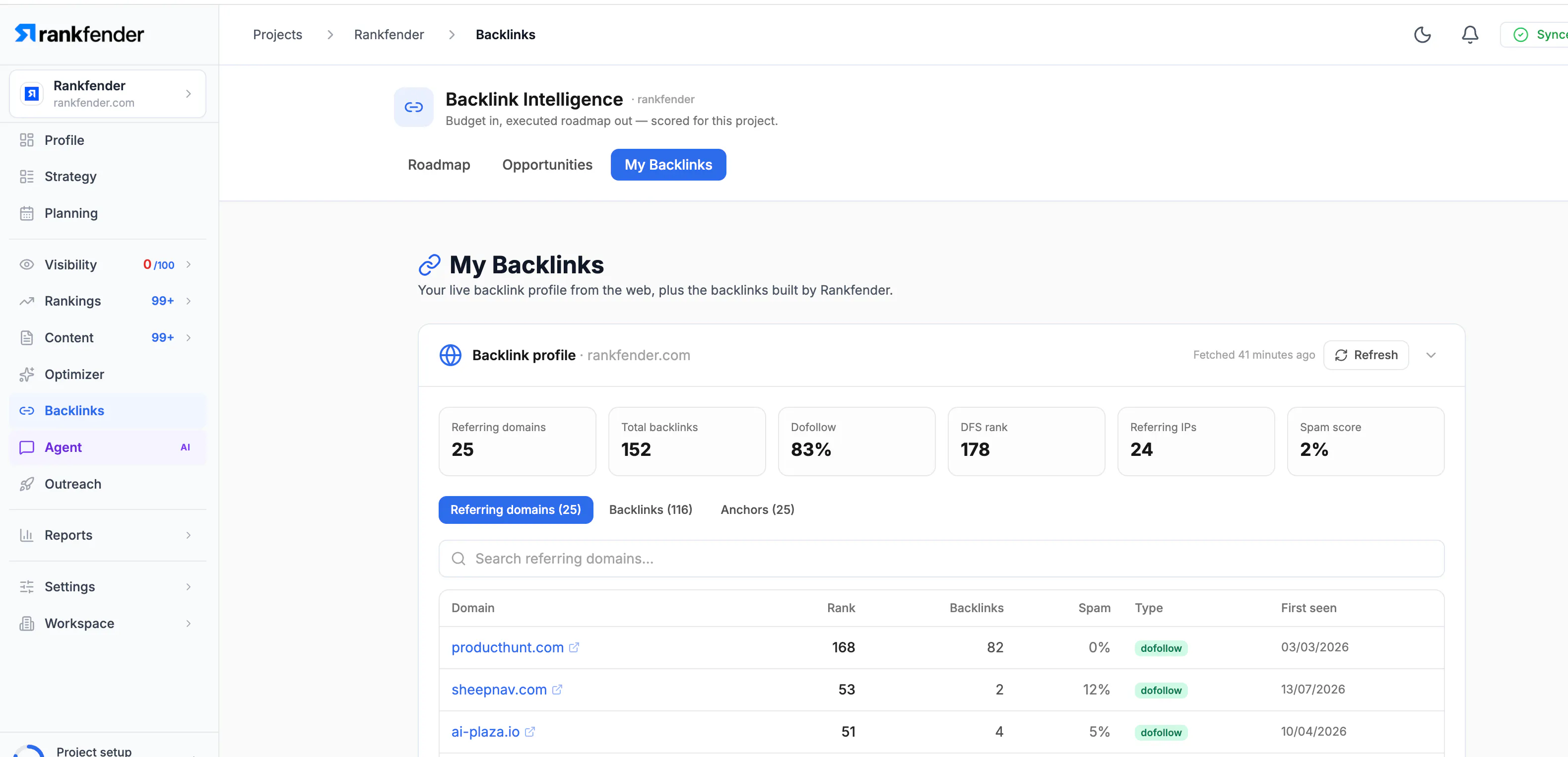
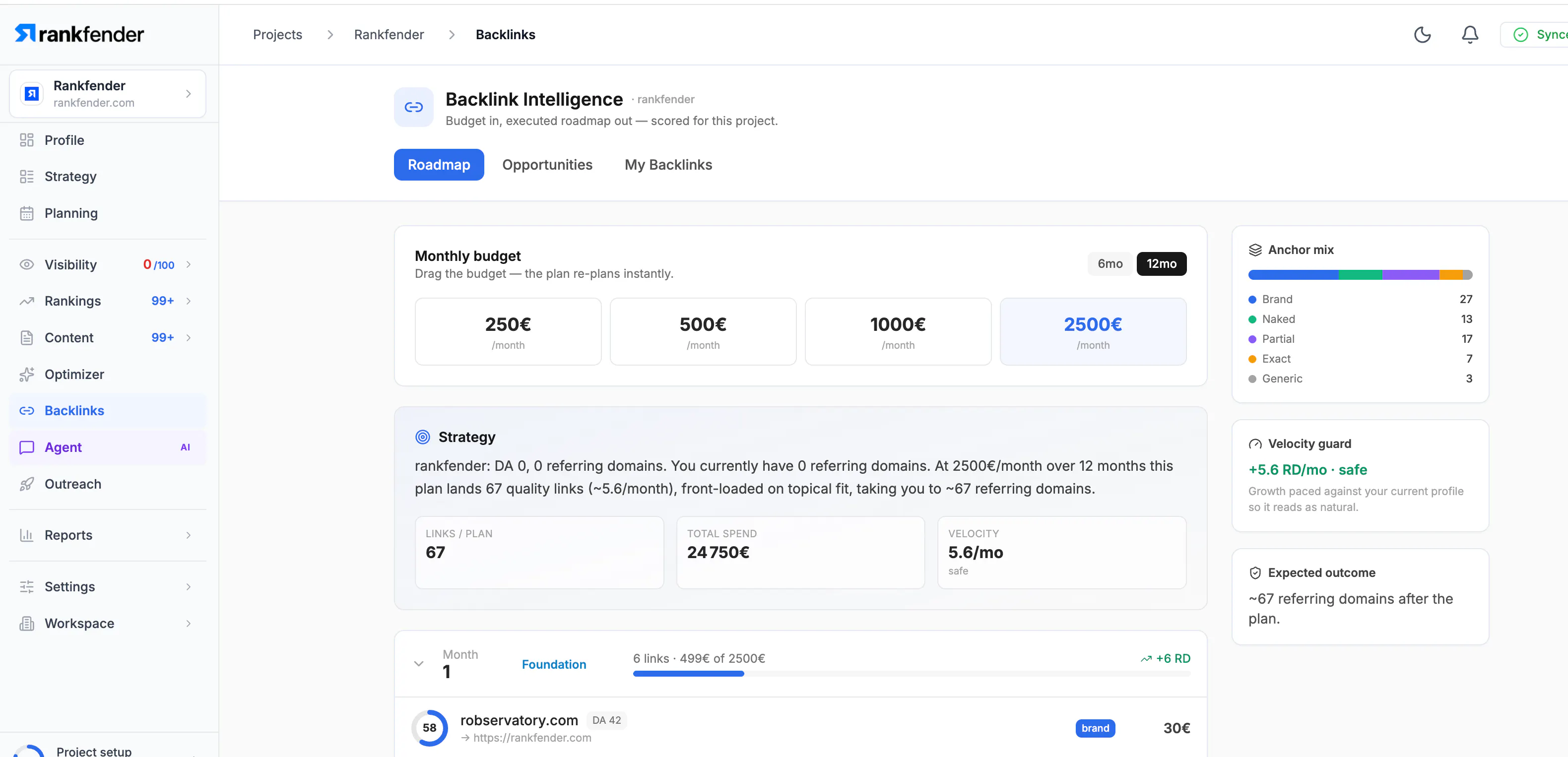
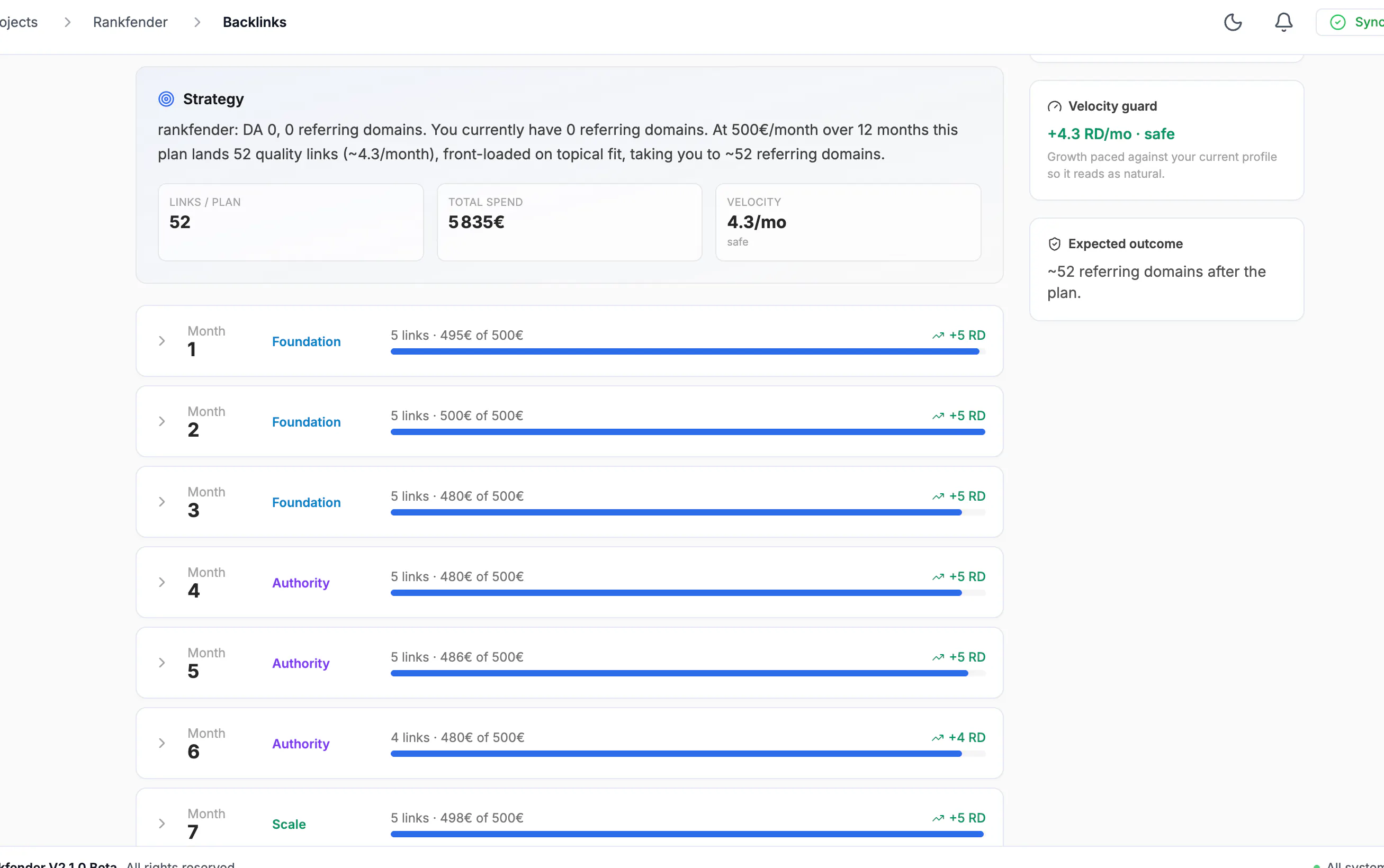
Here's what it does:
1. Authority scoring with citation context. Not just DA. Not just DR. Backlinks Intelligence shows you which links actually drive citations in ChatGPT, Perplexity, and Gemini — not just which ones look good on a report.
2. Lost link tracking with impact scoring. When a link drops, you see it immediately. More importantly, you see what it cost you in visibility — not just in rankings, but in AI citations.
3. Competitor backlink intelligence. See exactly which links your competitors are earning that you're not. Not just a list — a prioritized view of the gaps that matter most.
4. Link-to-citation mapping. Backlinks Intelligence connects your link profile directly to your AI citation data. You see which links are actually moving the needle on your visibility across ChatGPT, Gemini, Perplexity, and Google AI Overviews.
5. Listicle placement discovery. Finds the industry publications and comparison pages that AI engines repeatedly cite — and shows you how to get your brand into them.
6. Brand mention detection. Unlinked brand mentions are now authority signals. Backlinks Intelligence surfaces them so you can convert them into links or use them as proof of relevance.
7. Actionable outreach recommendations. Not just data — specific, prioritized actions. "Here's the page you should target. Here's why. Here's how to approach it." + a roadmap with monthly budget.
The bottom line:
Backlinks haven't stopped working. They feed Google's core ranking, and that ranking still influences which pages an AI model encounters and trusts. But in 2026, the goal is no longer "collect as many links as possible." The goal is "earn the right links that make you citeable."
You need to know which links are actually moving the needle on your AI visibility. You need to know which ones you're losing. You need to know exactly what your competitors are doing that you're not.
That's what Backlinks Intelligence is built for.
What I'm curious about: What's your current backlink strategy? Are you still chasing DA, or are you focused on earning mentions on pages that actually get cited by AI?
Replies
Be the first to reply
Have a question or a thought to share? Add a comment above to start the conversation.