

We set out to fix retention. The hole was somewhere else
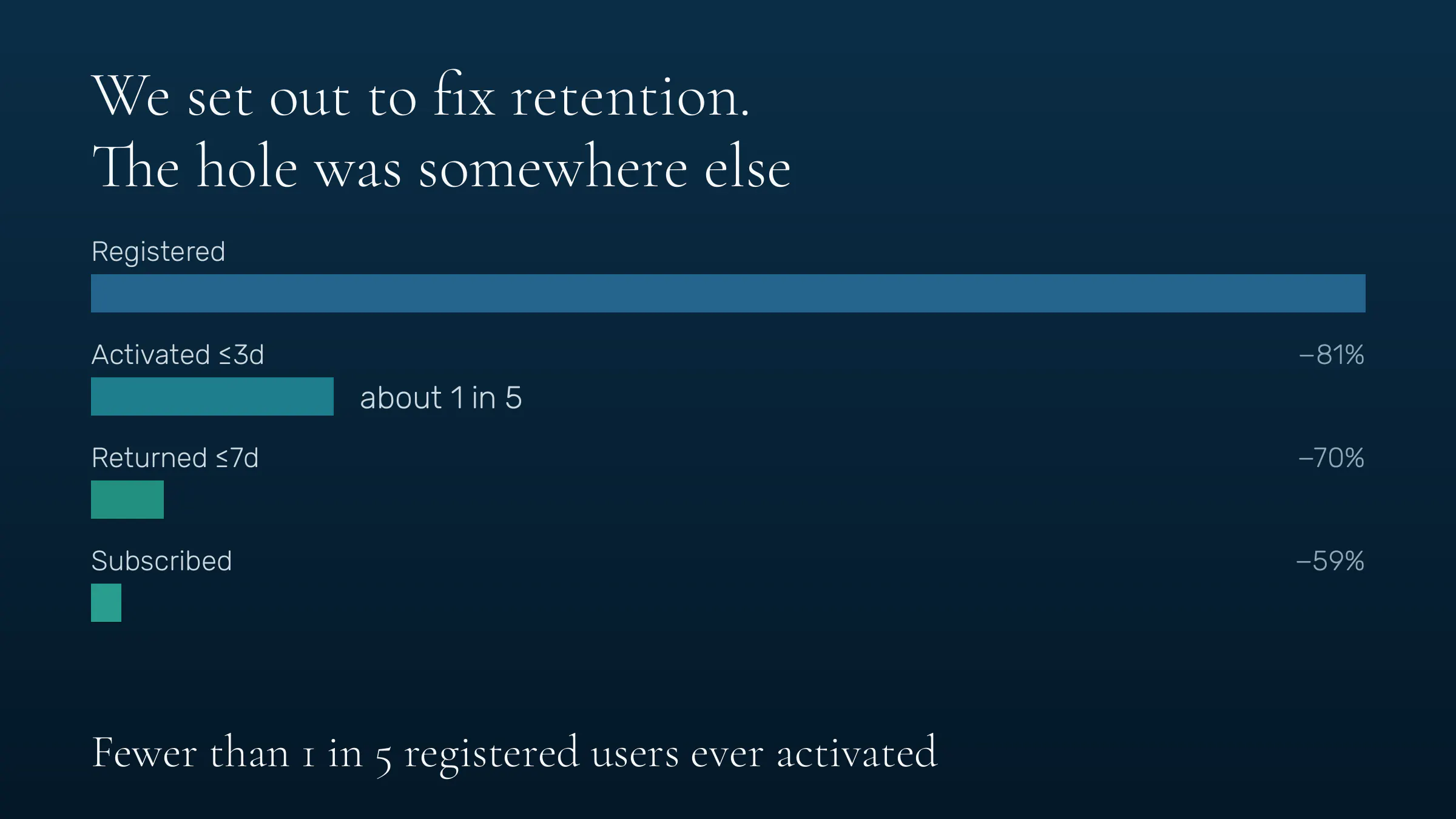
More than 4 in 5 people who registered for OceanMind never did the one thing OceanMind exists for.
Not once. Not a single practice.
We build OceanMind, a breathwork app for nervous-system control. We checked the backend numbers directly. On the current dashboard, fewer than 1 in 5 registered users have activated. The median time from signup to a first practice was 7.8 hours.
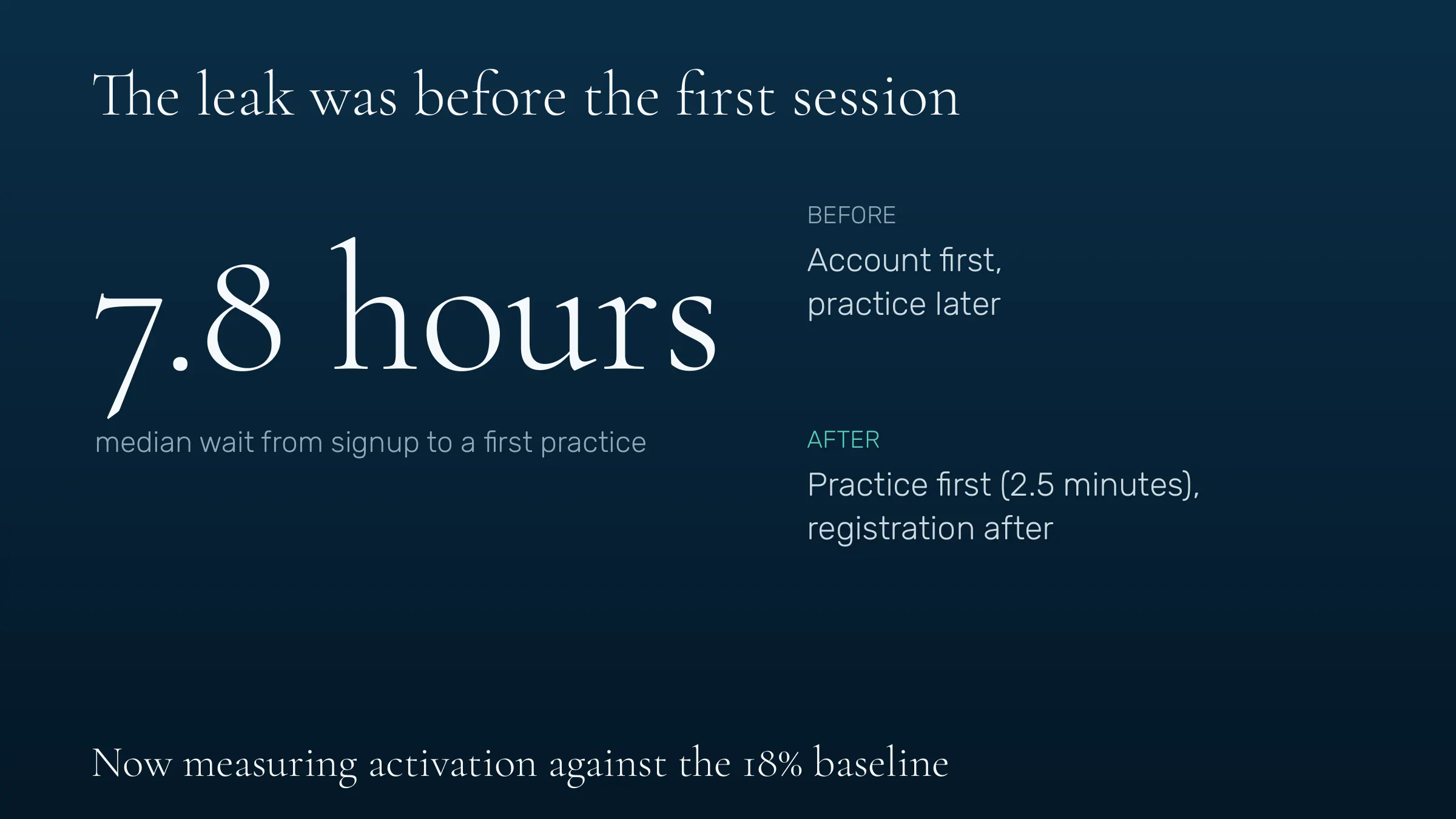
The leak was never after the first session. It was before it. For months we had been sure retention was the number one problem; underneath it sat a problem no less frightening: activation.
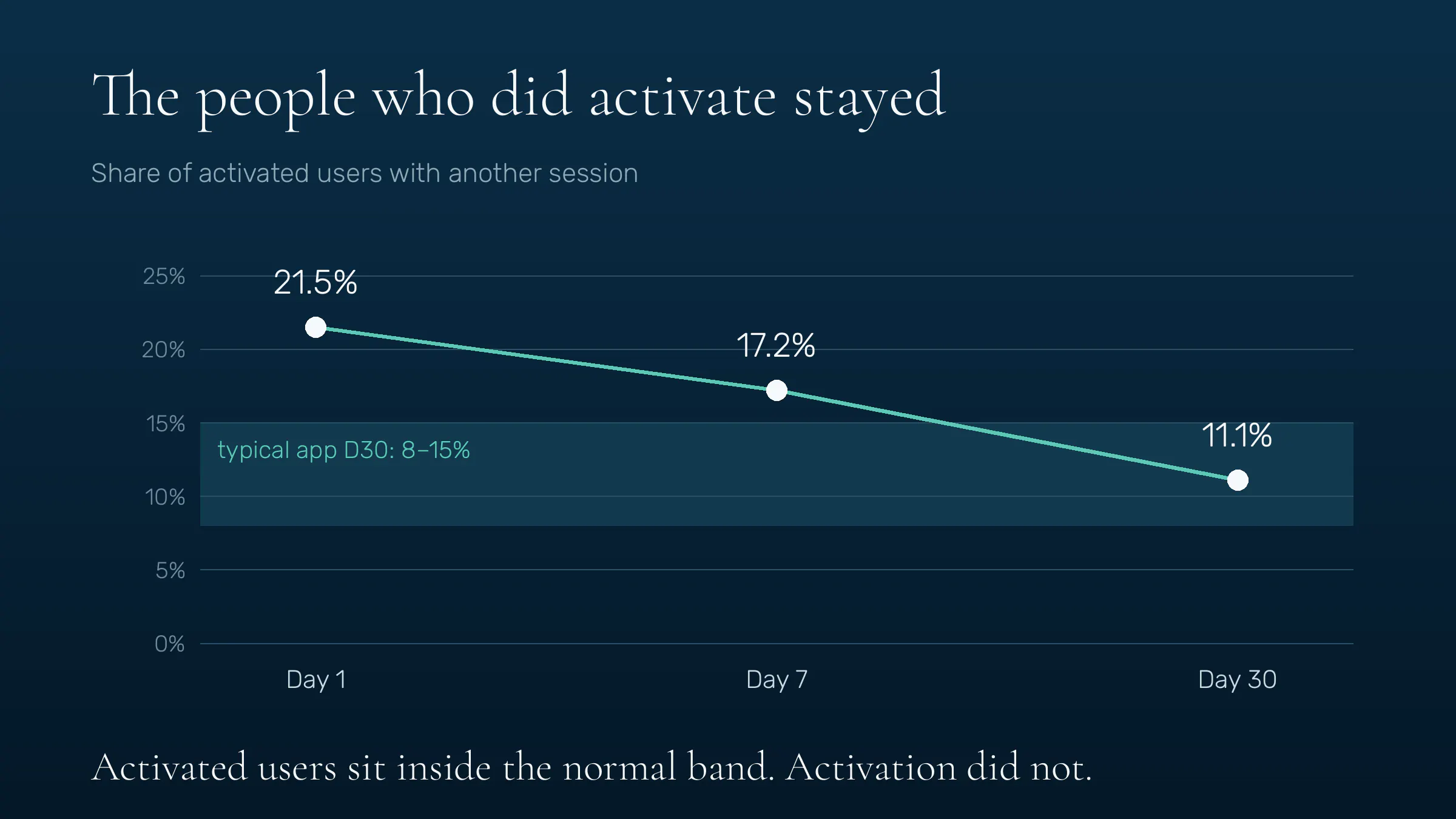
The people who did activate stayed. Registered users who got through a first practice sit on a flat curve: D1 21.5%, D7 17.2%, D30 11.1%. A typical app D30 runs 8 to 15 percent. Our activated users were already inside the normal band. Our activation was not.
So first we fixed the ruler. The numbers underneath could not be trusted as they were, so we rebuilt measurement on one 21-event contract. One completion event. One definition of a registered user.
Then we shipped the activation fix. We shipped v1.9.0 on both platforms. No account up front. One first practice, 2.5 minutes. Registration after the practice, not before it.
Now we measure the cut. Activation gets read against the 18% baseline, on new-user cohorts, over the next weeks. Our North Star is weekly state-shift completers, and that number only moves if the first practice happens.
What was your fake leak, the metric you chased before you checked where the drop actually was?
Replies
Be the first to reply
Have a question or a thought to share? Add a comment above to start the conversation.