
 •
3yr ago
WriterZen Goes Live Today 🚀 Support us 👇👇👇
 •
8mo ago
Who do you actually talk to when things get hard?
A Fortune piece from late last year had the CEOs of Apple, Airbnb, and PepsiCo all agreeing on something that surprised me: being at the top is one of the loneliest places to be.
That resonated. But I think it starts way before you reach Fortune 500 CEO. It starts the moment you go all in on your own thing.
 •
4mo ago
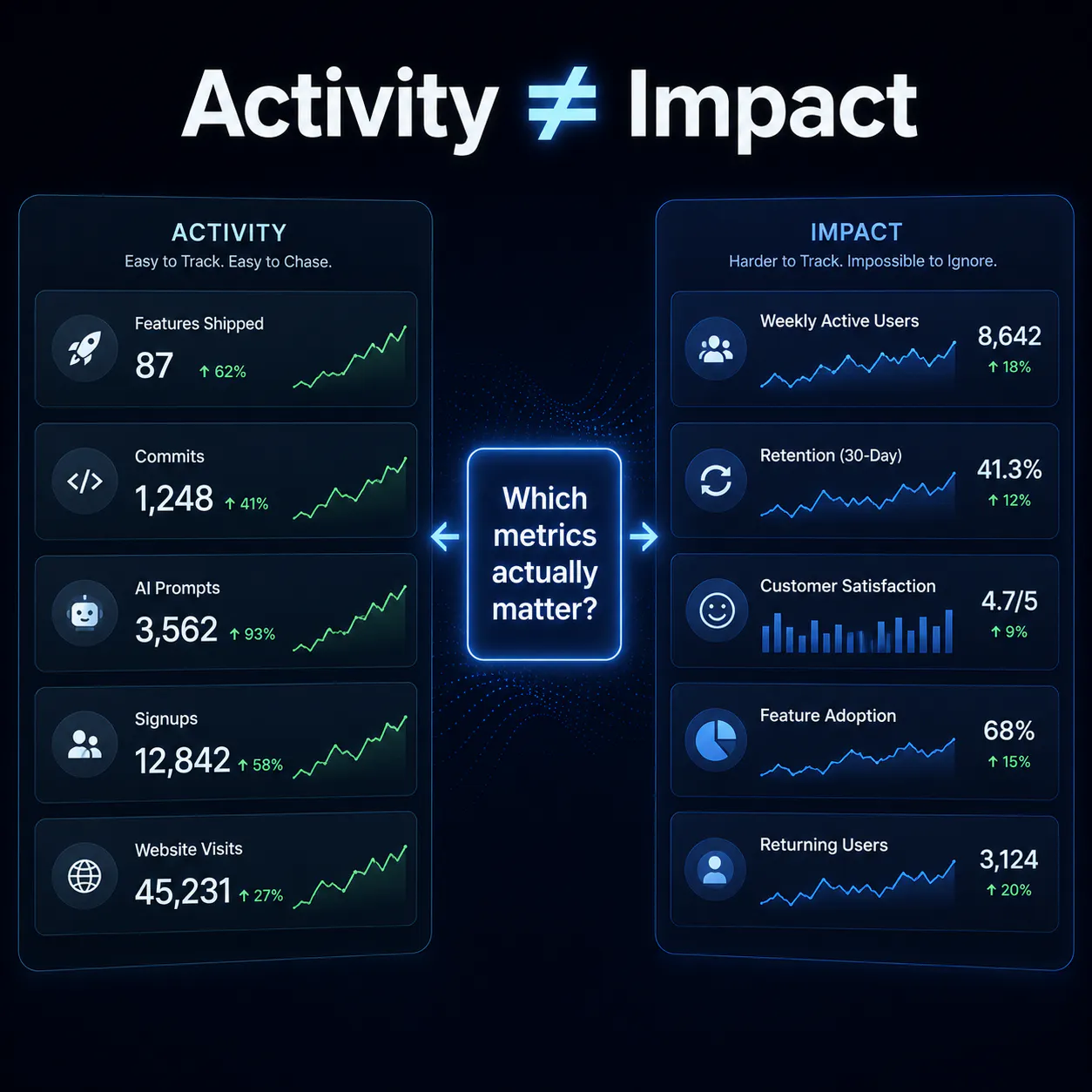
📊 The easiest startup metrics to improve are often the least useful ones.
I've caught myself celebrating numbers that looked great on paper:
 •
2yr ago
Are there any other time management methods besides the Pomodoro Techique?
 •
4mo ago
How did you actually pick your auth provider?
I have been comparing a bunch of auth and identity providers over the last few weeks, and I keep running into the same feeling, which is that after a while they all start to blur together. The landing pages promise more or less the same things, the feature lists look almost identical, and the pricing pages all seem built to be a little hard to compare. So I am genuinely curious how people cut through that. For those of you who chose one and shipped with it, what made the decision in the end? Was it the quality of the docs, the pricing, one specific feature you could not get anywhere else, the support you got while evaluating, or simply someone you trust telling you to use it? I really need a real reason, please.
 •
4mo ago
Wispr Flow + a meeting notetaker: do you run both, or does one cover you?
Dictation tools and meeting notetakers technically solve two different jobs. One types for you everywhere, the other listens to your calls and hands you a summary. But they both sit in the same "capture" corner of the stack, and I've noticed a lot of people running one of each without ever really deciding to.
My own take is that the split is mostly historical. Dictation came from accessibility, notetakers came from sales tooling, and they met in the middle by accident. If either side added the other's core job tomorrow, I'm not sure most people would keep paying for two.
Curious whether that matches reality or whether I'm wrong about it.
Where are you right now?
 •
4mo ago
Nobody wants to upload a file to a product they don't trust yet
For a long time our empty state was a box that said: drop a document here.
Reasonable. It's a tool for reading long documents, so of course it needs a document. But watch what that actually asks of a first-time visitor. Go and find a file. Make sure it's the right one. Make sure it's long enough to be worth the trouble. Upload it. Wait. Only then do you find out whether the thing is any good.
 •
4mo ago
What makes a web security scanner genuinely useful for developers?
I've been thinking about this while building a web security assessment tool, and I realized that many scanners overwhelm users with hundreds of warnings but provide very little guidance on what actually matters.
In your experience, what makes a security scanner genuinely valuable?
Some questions I'd love to hear your thoughts on:
Do you prefer a simple summary or a detailed technical report?
Should findings be prioritized by severity, exploitability, or business impact?
How important are confidence scores in deciding whether to trust a finding?
What's the biggest frustration you've had with existing security scanners?
Which security checks do you think are often overlooked but should be included?
 •
4mo ago
Three agent-memory tools launched today. None of them can tell me what retires a fact.
Been going through today's board and there's a real cluster on it Memmy, Greplica, and a few others all solving some version of "your agent forgets everything the moment the session ends."
Good problem to be working on. I've been running a docs/ memory folder for my own setup for a while, so the pain is familiar.
 •
4mo ago
How do I find startups that are looking for a developer? How to approach them?
I have been trying platforms such as YC s Work at a Startup, Wellfound, LinkedIn, and other job boards, but not much of remote hiring(outside US).
I have been working with react, next.js , react native and node.js from last 4 years and more. I wanna to join an early-stage startup, contribute closely to the product, and learn more about a startup.
Whenever I find an interesting startup, I usually reach out through email or Discord. Most of the time, they are either not hiring, do not have the budget, or do not reply. I have also tried approaching founders with specific suggestions about how I could improve or help build their website or product but no luck.
I have the flexibility to take some risk so idm working on contract, freelance type. I just wanna have try something like this.