
 •
3mo ago
How many AI subscriptions are you actually paying for?
I added mine up this month and the total was higher than I'd have guessed. Claude Max, ChatGPT Pro, xAI, and GitHub Copilot which I added recently.
Two of those are top tier plans, which is where most of the damage is. The honest part is that I don't open all of them in a given week. A couple I keep because they're each better at different things, one because it sits in my editor and I forget it's there, and the rest because cancelling feels like a decision I'd only have to make again in two months.
What gets me is that this is only half the bill. Every AI SaaS app I sign up for has to price in its own inference cost, so I end up paying a second time, through their subscription, for models I already pay for directly. The startup can't really avoid it either. They either eat the margin or charge me extra to cover it, and I don't think either side is happy with that.
So what's your number? How many do you actually open in a normal week? And has anyone cancelled one and genuinely not missed it?
 •
3mo ago
New Here...Pre-Launch Feedback?
I tried searching, so if I'm way off...please don't hesitate to delete or move or tell me what I screwed up. Considering doing a launch here soon and was wondering if there's a forum/intro or some other means of getting some feedback or some sort of litmus test before launching? Thanks!
 •
3mo ago
ChatGPT > Claude for prompt engineering
Unpopular opinion:
I still think @ChatGPT by OpenAI writes better prompts than @Claude by Anthropic.
When I need to:
Turn a rough idea into a detailed prompt
Analyze screenshots or UI designs
Brainstorm product strategy
Refine copy
 •
3mo ago
What critical tiny tool you can vibe code easily but somehow still don't?
I am pretty sure it's not just me, but this feels weird.
We can literally vibe code an app in a few hours now. Yet I still keep Googling the same tiny utilities over and over.
Not SaaS products. Just simple tools. Things like Markdown editor, JSON visualize, color palette extractor, text formatter. None of these are complicated anymore. Most could probably be built in one evening.
 •
4mo ago
Are we building tools for creators, or tools for creation itself?
I originally started looking for alternatives because I was tired of paying subscriptions that limit experimentation through credits, tokens, and usage caps.
Then I discovered the local AI world.
And I realized there was another side of the problem: having ownership and power, but sometimes needing to understand the entire machine before actually creating.
There is a difference between loving architecture and loving the experience of living in a beautiful space.
 •
3mo ago
I am noticing a pattern that can gets you your earlycustomers
Something I keep seeing on launches here: People say "we validated this with users" but when you dig in, it usually means 5 friendly people from their own network said "yeah I'd use that."
That's not the same as finding someone who was already complaining about the problem before you showed up.
I feel one is politeness and the other is demand.
Feels like the real validation isn't in interviews at all - it's in the comment sections, reviews, and forum posts where people vent about a problem with zero idea a solution could exist.
Genuine question: Has anyone here actually found a real customer complaint "in the wild" (Reddit, G2, Twitter, wherever) that changed how you built something? What did it say?
 •
3mo ago
Why does the same Google Workspace plan cost $2 in one place and $8 in another?
Ran into something that didn't make sense to me at first and wanted to see if anyone here has actually dealt with it.
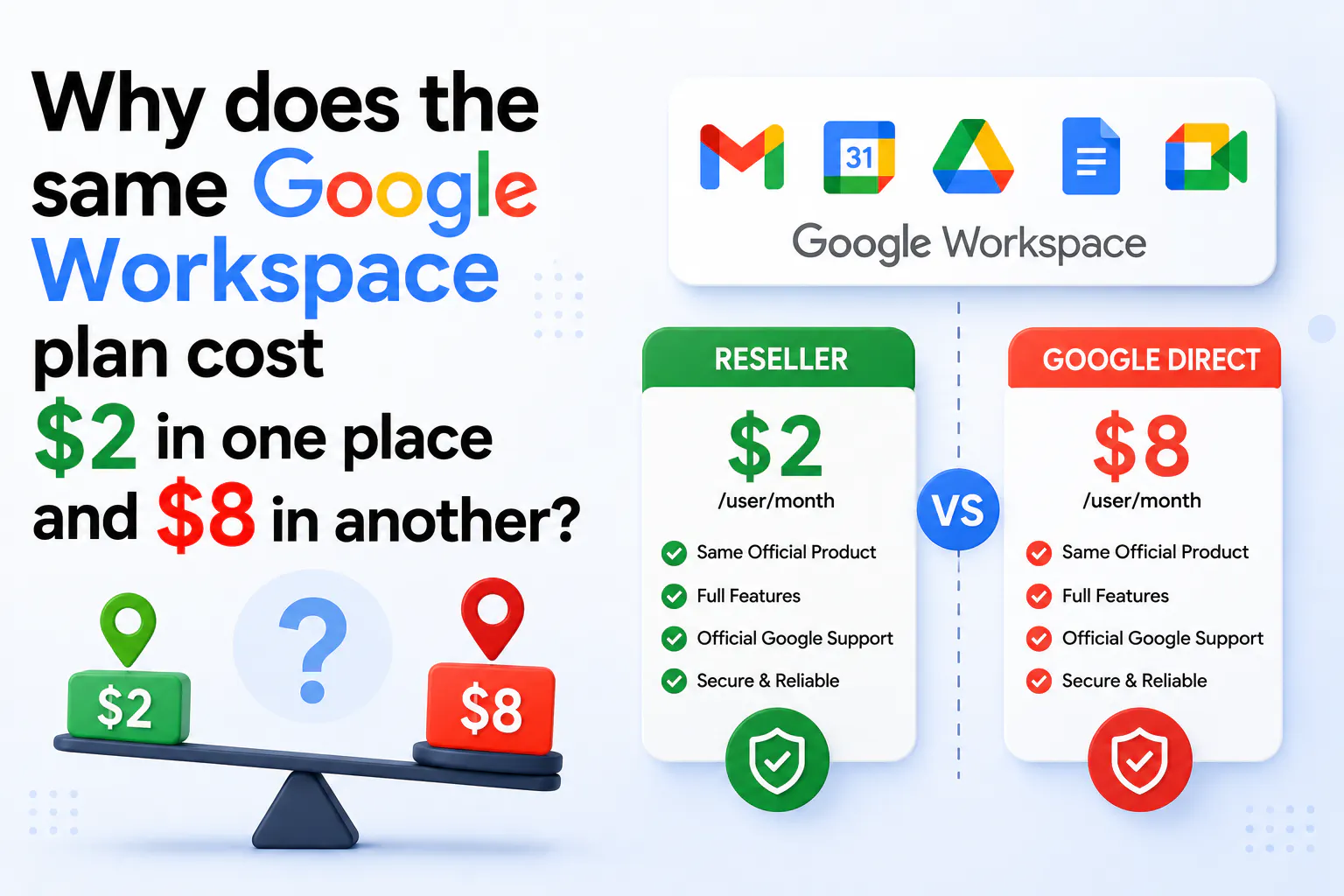
Google's own pricing for Workspace is $8 to $28 per user per month, depending on the plan. But if you look at resellers, the same product, same Gmail, same Drive, same admin console, shows up priced anywhere from $2 to $7. No feature difference that I could find. Just a completely different number depending on who's selling it.
 •
3mo ago
"Green" is the least trustworthy status on a project!
On every team I've been on, status colors get gamed before they get reported. "Green" often doesn't mean on track. It means "I don't want the conversation that comes with yellow." Nobody wants to be the one yellow in a room full of green, so people hold the line until they can't.
So the update tells you how people feel about being judged that week, not where the work actually is. And when something finally flips to red, it's usually been quietly red for a while. You just find out on the week it's too late to help.
I watched a project sit green for a month and slip anyway. Every individual read was technically defensible, and nobody wanted to be the first to say the quiet part.
For people who run teams: has anything actually helped you find out a project is slipping before the status is willing to admit it?

 •
2yr ago