
trinkets for vibecoders ✨
gooood morning legends and welcome back to another fine edition of the Leaderboard. In today's issue: a tool to go from design to code in seconds, a physical button for vibecoders, a way to run complex AI agents on your system, safely, and the inaugural issue of Maker's Corner, where we highlight the makers doing the most.
From Figma to actual code
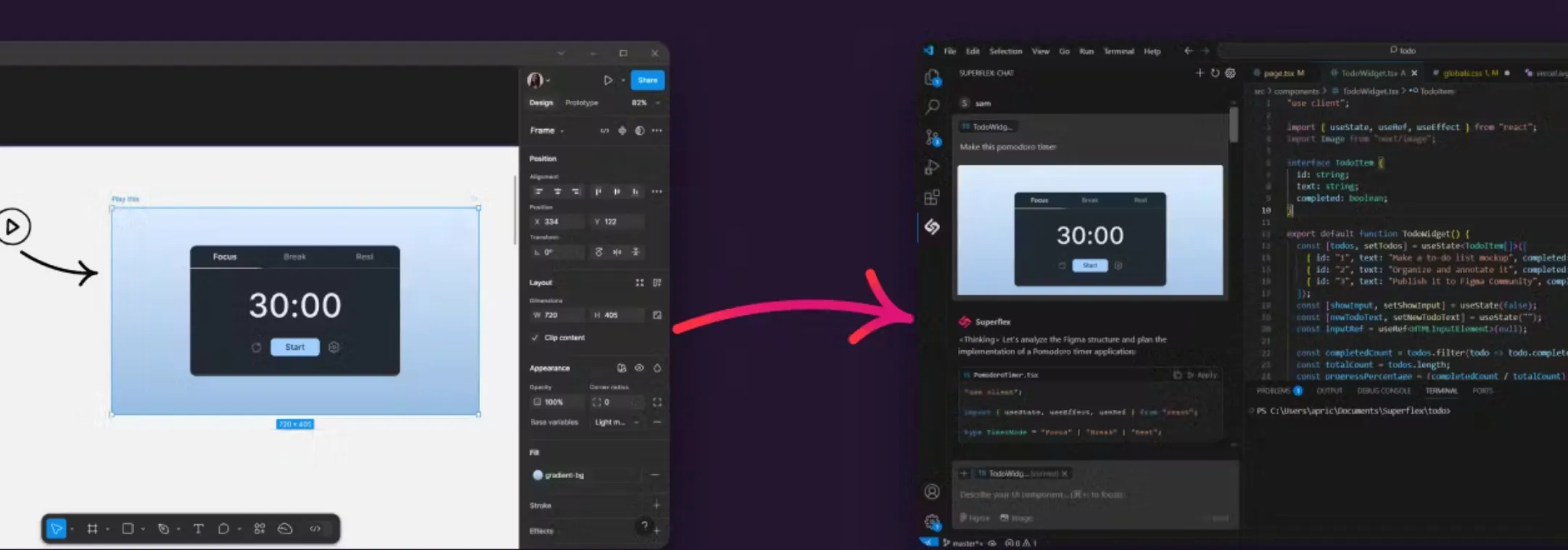
Superflex 2.0 turns your Figma designs into real, production-ready code. It reuses your existing components, respects your design system, and doesn’t mess with your setup. No magic, no weird layers—just code you don’t have to clean up after.
🔥 Our take: Handing off designs shouldn’t feel like translating between two broken languages. Superflex skips the middle mess and actually spits out code you’d be fine pushing. If you’re tired of rebuilding buttons and fixing div soup, this might be your new best friend.
One button to rule them all

The Accept Button is a real, physical key for accepting AI code suggestions. It plugs into your setup, lives on your desk, and turns “yeah, sure” into muscle memory. It’s exactly what it sounds like—and somehow still kind of brilliant.
🔥 Our take: This is either peak laziness or peak ergonomics. But let’s be honest: if you’re coding with AI all day, smashing “Accept” 500 times a session, this turns that habit into a vibe. It’s dumb. It’s genius. It’s probably both.
Your agents stopped answering and started doing
Your agents call tools, write to databases and move money, so a wrong answer is now a wrong action, which is a considerably worse meeting. Arcjet runs policy before every LLM call, tool call, query and API request: prompt injection, sensitive data, bots, rate limits, spend quotas, and your own rules in Rego on top. It reads the OpenTelemetry you already emit, so switching it on is one environment variable, no code changes and nothing to deploy. Each check also reads the earlier steps in the same workflow, so an agent's tenth action gets judged against the first nine and not on its own. JavaScript, Python and Go SDKs all at 1.0, agent framework guards included, free tier to start on.
Run AI agents locally, safely

Cua lets you spin up isolated sandboxes on your Mac (or Linux) with near-native performance. It’s built for running AI agents and complex workflows without letting them touch your actual system. Think of it like a local test lab for agent-powered automation.
🔥 Our take: Running agents on your main machine is like letting strangers borrow your car with no brakes. Cua gives you a walled-off space to experiment without trashing your setup. It’s a tool for people building weird AI stuff who don’t want to reinstall their OS afterward.
What started as a personal hack is now used by thousands
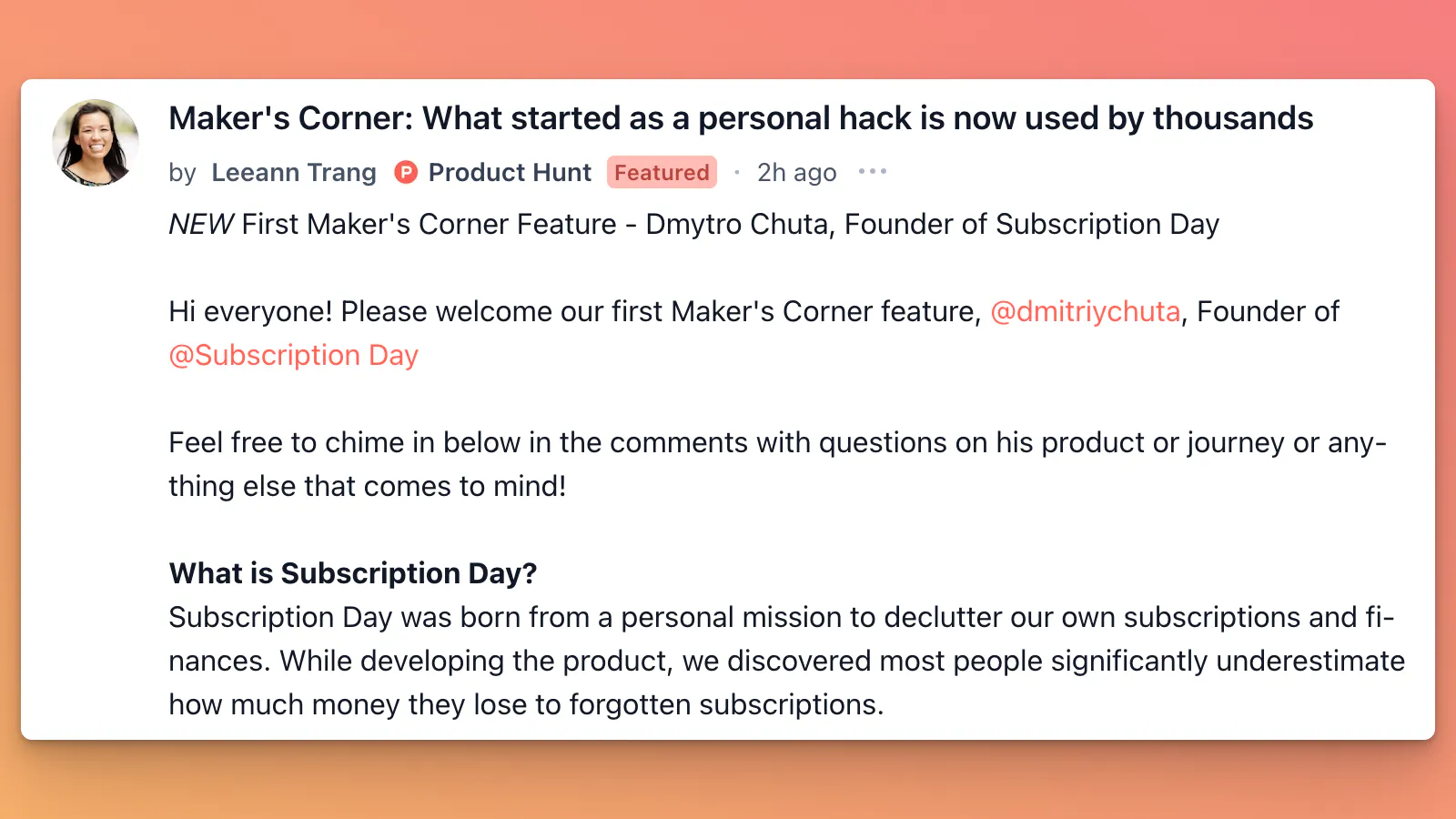
In the first Maker’s Corner thread, Dmytro Chuta shares how Subscription Day grew from a personal system into a tool used by thousands to track forgotten subscriptions. He talks about the early MVP, making design decisions solo, and using user feedback to build tiny delights—like capybara easter eggs and a “brutally honest” onboarding screen.
He also drops a few hints at what’s next: AI-powered import, calendar sync, and making churn reminders smarter—not just louder.
He’s in the thread answering questions, so if you’ve built something out of frustration and turned it into momentum, this one’s for you.
Did your launch hit the top 5? Want to be featured in Maker’s Corner? Nominate yourself here!
Daily Top Products


