


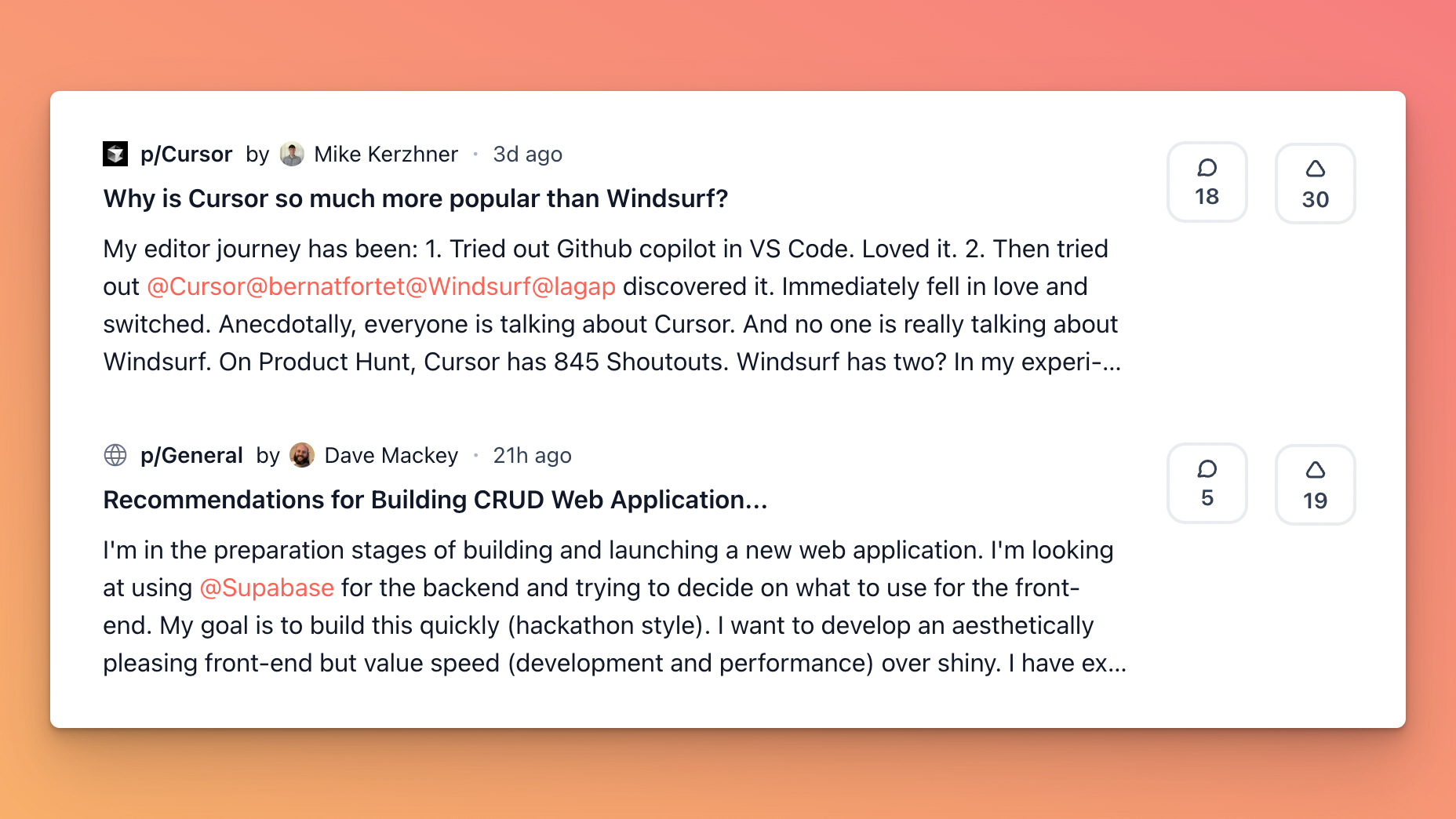
Most launches get a day of hype, then… silence. We’re changing that.
Product Forums (p/) give every product on Product Hunt its own space for ongoing conversations. Got a question? Drop it in. Have feedback? Share it. Want to see what others think before you dive in? Now you can.
Every product now has a dedicated forum at a simple URL (like producthunt.com/p/windsurf), so the discussion doesn’t have to end after launch day. It’s like a built-in community, ready to grow alongside the product.
So go ahead—keep the momentum going, connect with makers, and help shape the products you care about.
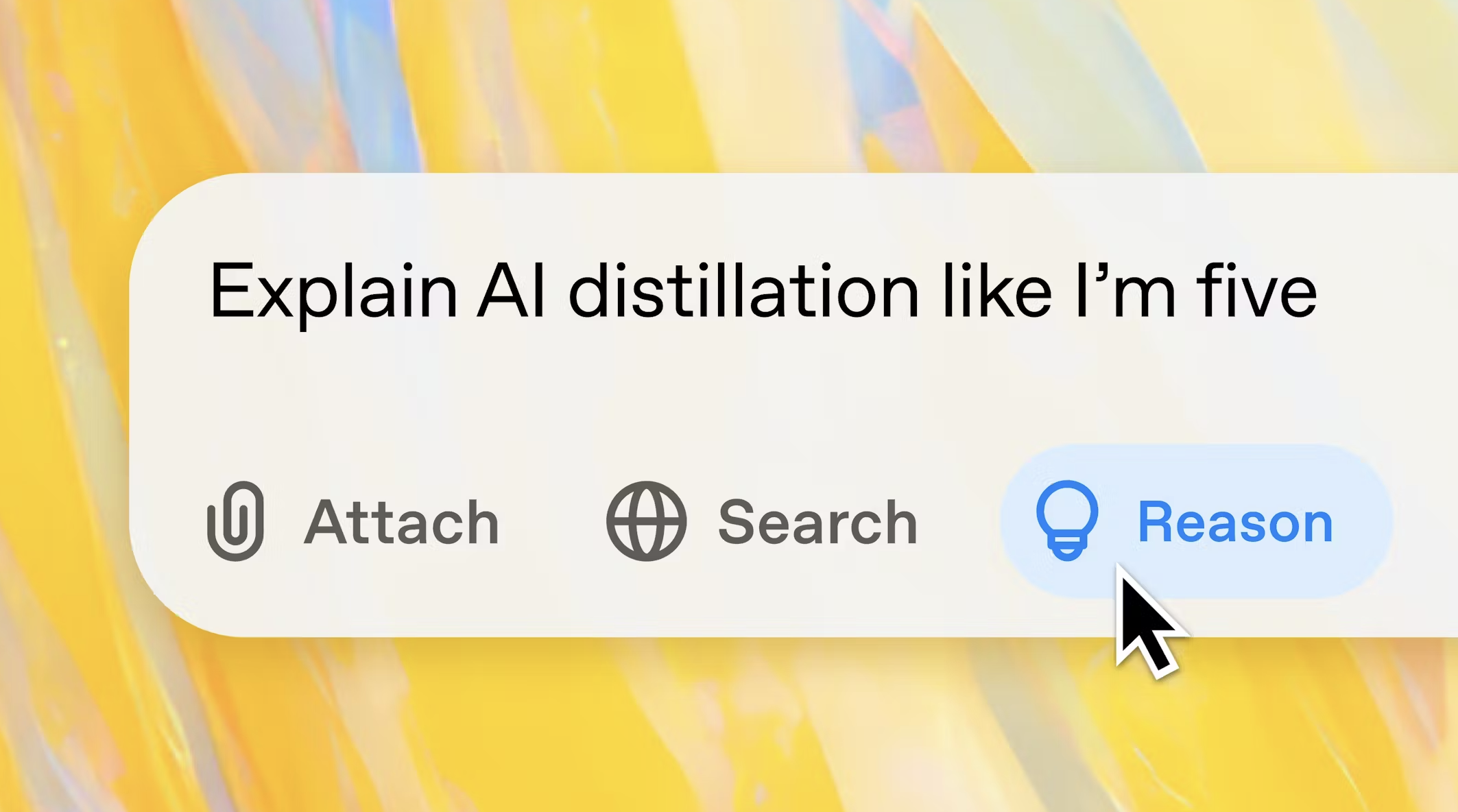
OpenAI just dropped o3-mini and Deep Research, and while they sound like small updates, they hint at something bigger.
o3-mini is a new lightweight reasoning model that’s surprisingly strong in coding, logic, and problem-solving. It’s faster, cheaper to run, and already replacing older models in ChatGPT. It also comes with an upgraded version, o3-mini-high, which performs even better in coding tasks—though OpenAI hasn’t shared many details on what makes it different under the hood.
Deep Research is more ambitious: an AI that automates multi-step research, pulling from web pages, PDFs, and images to generate structured reports in minutes. The idea is to cut out the grunt work of sifting through sources and let AI handle the heavy lifting. But OpenAI admits it struggles with credibility, meaning the tool might confidently present misleading or incomplete information.
The timing is interesting. Open-source models like DeepSeek’s R1 are proving you don’t need a billion-dollar budget to build competitive AI.