Gitmore lets you ask questions about your GitHub, GitLab, and Bitbucket repos in plain English. Instead of filtering PRs, scanning commit logs, or interrupting engineers: "What shipped last week?" "Who's been working on the API?" "Which PRs have been open longest?" "Summarize this month's releases" Plain English in, plain English out.
How it works:
Connect your repos via OAuth. We register webhooks. Every event gets normalized into a structured schema commit message, PR description, author, timestamp, files changed. The AI queries structured data, not raw text. PR descriptions and titles carry context that individual commits often miss.
1. Recently, several small bloggers have talked about ProblemHunt: a few from the USA, a few from Spain, and one from France. And we noticed an obvious thing: traffic from these countries, although not much, has started to grow.
2. But the most important thing is that people from these countries have started sharing problems more actively. For example, in the last month alone, France has already submitted 4 problems, three of which were published yesterday and today.
Hey PH community! As we all rely on video calls more than ever, I'm curious about your biggest frustrations with tools like Google Meet, Microsoft Teams, Jitsi, or even the infamous Cluey. Do clunky interfaces, poor AI integrations, or a lack of admin controls (like forcing video on for interviews) drive you nuts?
I'm thinking about adding video chat to Blimp (getblimpy.cloud), our AI-native productivity suite. Imagine an AI assistant that quietly takes minutes in the background (non-intrusive), auto-generates bullet-point actions as tasks in your project hub (ditching those sloppy AI emails), plus admin perks like mandatory video, global audio muting, and background video effects that don't slow down your video.
What are your top video chat pain points? Share below your ideas could shape this!
Ho ho ho! We ve been busy improving the platform instead of adding flashy features but we couldn t resist. So yes, we added some flashy ones too. What's on the release:
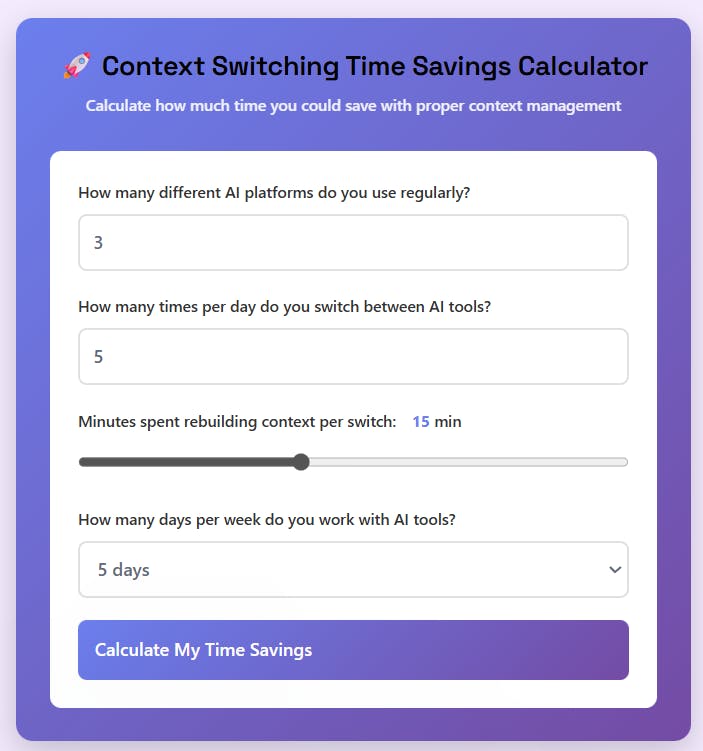
We built a small calculator for you to see how much time you are wasting per day/week/year just due to context switching between different AI tools. Try it out! My wastage was 6 hours/week, what's yours?
We re currently building a new capability in SuperIntern: turning real meeting conversations into MCP-powered automation.
The idea is simple: SuperIntern listens to the meeting, understands what people say, and then uses Model Context Protocol (MCP) to orchestrate other tools and agents.
Hey collectors, We are so happy to see so much attention and support from you ^_^, and really wanted to share some discounts or free trials, but our product is free and the only thing we can do - improve your experience using us! Have you had a chance of registering your Supabase schemas and using several suggestion quieries? If you spot any troubles, want to improve something or just having unexpected urge of saying "Hi!", please do. Just DROP here everything you want.
Some of you might even want to have more control over the Racoon - do not hesistate to create PR. Thank yall!!! ------ SlopCollector's team, with love - Samat & Aisulu.
The year is almost done, and I have started to be curious about what could be stopping companies from adopting AI for their customer support services?? From my experience, I can tell - fear, fear of losing control. Support leaders worry that AI will say the wrong thing, sound off-brand, frustrate customers, or create more cleanup work for the team. Until they see that an AI agent can learn from their own knowledge base, follow rules, escalate when needed, and stay accurate, they hesitate. Once they realize it can actually reduce workload without breaking trust, adoption becomes much easier. What do you think? Do you agree with me?
I see many countries promoting social media to raise the age for using it (e.g., Australia, the UK, etc.).
The sad thing is that some parents are already giving their toddlers a tablet to "entertain" them. This hurts the child's brain development. Not to mention when they get on social media and are exposed to various trends.
Hello Everyone, Last year I had a tumour scare. Hearing that word and waiting for the doctor to explain felt like everything froze. In those few seconds I realised how fragile life actually is. We spend our whole lives working, building, planning the future but we rarely think about the people who would be left trying to make sense of everything if something happened to us.
That moment stayed with me. I kept thinking about how there are so many tools to handle money, assets and wills, but almost nothing for the emotional side of our lives. We don t just build wealth but relationships as well, we leave memories, recipes only we know, inside jokes, photos, videos, love. The things our families actually treasure.
That s why I m building Crux (www.cruxlegacy.com). It s a simple, human place to keep the important stuff safe and make sure the right people get it when they need it. The nominee system is a big part of that, you choose who gets what, and Crux handles the rest securely and privately. It s practical, but it s also personal. It lets you leave clarity and a little bit of yourself behind.
For me, the idea is pretty simple: how we live matters, and how we leave matters too. Happy to be here and meet people building things that make life a little easier and a little more meaningful. Cheers Nick