
Databox is an AI-powered business intelligence and analytics platform for teams that need clear, trusted answers fast. It offers the best of BI, without the complicated setup, steep price, or long learning curve. It provides a blend of powerful, but easy-to-use, features, from preparing datasets and creating the custom metrics your company needs to track, to building beautiful dashboards, customizing your reporting, and receiving AI-powered insights.
This is the 8th launch from Databox. View more

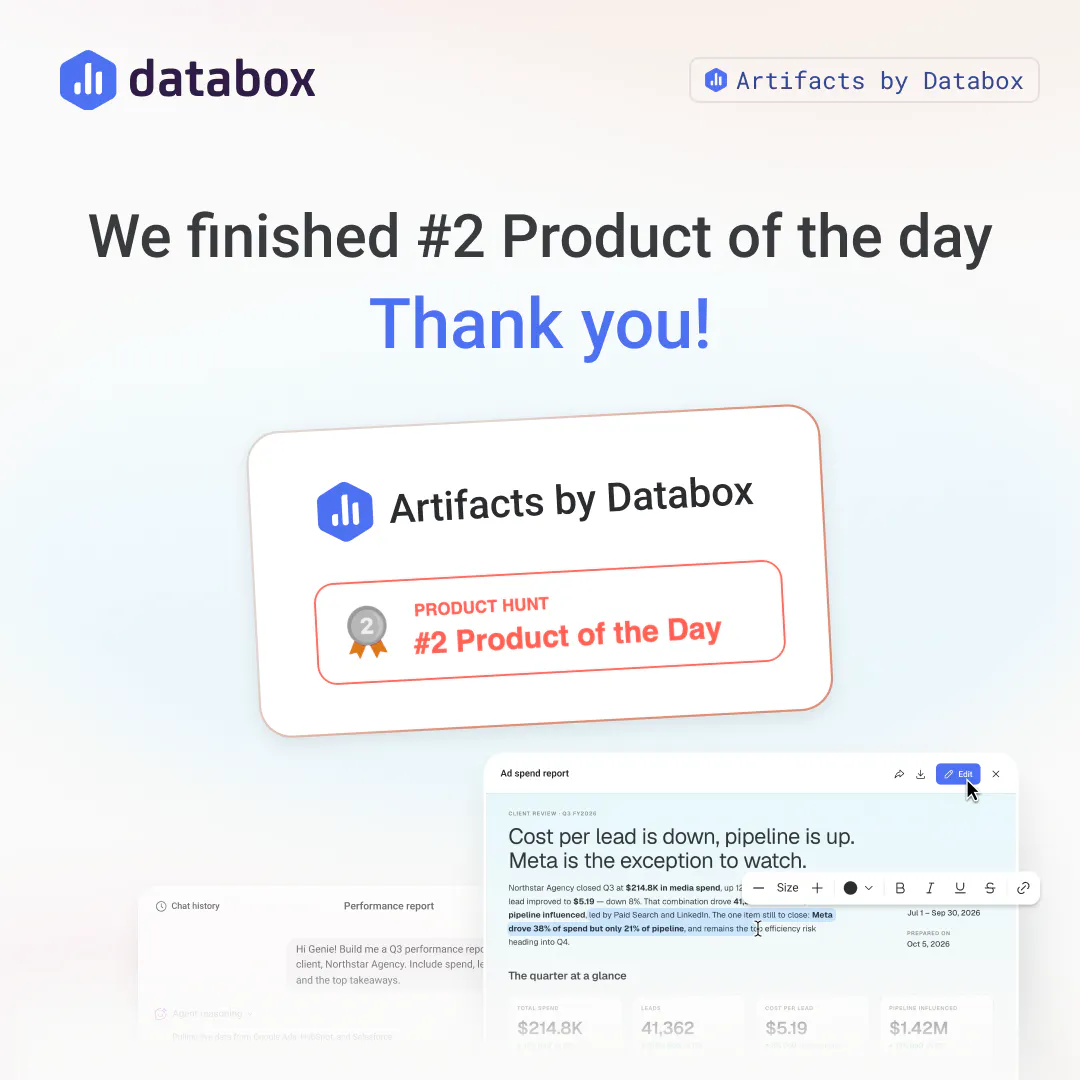
Artifacts by Databox
Launched this week
Turn any conversation with your AI Analyst into a polished report, slide deck, or interactive document built from your live data. Generate it from a single prompt, then share it via public link or download as a PDF.


Free Options
Launch Team / Built With


The frozen-snapshot answer makes sense. The version I keep hitting is source data that restates after the fact: I generate a June report, share it, then re-trigger the same report in August and June's numbers have moved because an integration backfilled or a metric definition changed. The client sees two different Junes. Does Genie surface that the underlying data shifted between generations, or do you find out when someone asks?
This is the part of the job I've spent years fixing manually.
Reporting systems that actually get used are rare, most of them just create more work downstream. Being able to ask for a report and get back something client-ready, built on the live data, is the direction this space needed to go. Excited to see how agencies and marketing teams use this to stop rebuilding the same deck every month.
Databox
@lexi_morgan That's exactly the pattern we kept seeing too, reporting systems that generate more work than they save. The bar we held ourselves to was: if it doesn't end in something you'd actually hand to a client without touching it first, it doesn't count. Would love to hear how it holds up once you try it on a real client report.
Marketing analytics person here — the biggest benefit of this is not being the human BI layer anymore. You can ask for a report and get something narrative-ready back. And it's based on verified data (something that really matters but many marketers forget about). Super useful!
Databox
@carmenstrelec The "human BI layer" line is a good way to put it, that's the exact job we were trying to take off people's plates. And you're right that the data part matters more than it sounds, since a narrative-ready report is only useful if the numbers under it are the ones your team already trusts.
Databox
One thing I'd add from the marketing perspective: the most useful thing about Artifacts is that it closes the "I have an answer" to "I have something shareable" gap.
For example, ask the AI Analyst to build you a report or deck, and it does so using your real data. Then you can hand it off via public link or PDF and there's no login needed on the other end.
I know this is HUGE for anyone who's ever had to rebuild the same client report by hand every month, and it's a great way to add a supporting doc to your quick answer. Happy to answer questions if useful!
Databox
The problem with most AI generated reports is you still have to check them before sending, since the AI didn't actually see your numbers. Artifacts skips that step because Genie pulls straight from your connected data. I asked for a quick performance overview for a stakeholder update and the numbers matched the dashboard exactly, because it's the same data.
I tested this by asking Genie for a report, then asking it to turn that same report into a slide deck. Same data, same analysis, different format, one follow-up prompt. That's the kind of thing that used to mean rebuilding the whole thing in a different tool. Here it just carried over.
Databox
@tadej_kelc That follow-up prompt trick is honestly my favorite part too. No re-uploading data, no rebuilding charts in a new tool, just "turn this into slides" and it carries the whole analysis over. Glad it held up when you tried it yourself.
I don’t touch reporting for clients, so I wasn’t expecting to use this much. I asked Genie to put together a slide deck for our all-hands update and it just built it, no design help needed. Took me a few minutes instead of the usual back and forth with someone on the team.
Databox
@aljaz_godec That's a great example actually, someone who doesn't normally touch reporting getting a usable deck without needing design help. That's exactly the gap we wanted to close, not just faster for people who already build these, but usable for people who'd normally have to ask someone else.