
Contextberg
Local AI agent memory for macOS & Windows, served via MCP
145 followers
Local AI agent memory for macOS & Windows, served via MCP
145 followers
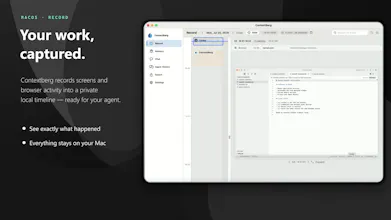
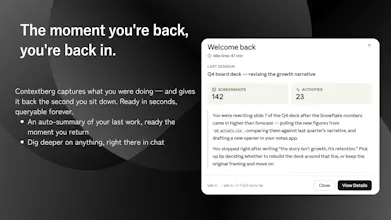
Contextberg is a local AI agent memory app for macOS and Windows. It captures screens, browser history, and agent conversations into a private, searchable archive, then serves relevant context to Codex, Claude Code, Cursor, and other agents via MCP. Search screenshots with OCR, exclude any app or source, and use your existing Codex sign-in, Gemini/OpenRouter API key, Contextberg Cloud, or a local model. Your archive stays on-device; only selected context goes to your chosen provider.



The MCP angle is smart , instead of re-explaining context every session, agents just pull what they need. Curious how Contextberg handles sensitive data that shows up in screen recordings, like passwords or private chats. Also wondering if there's any control over what gets stored vs ignored. This could genuinely change how I use Claude Code day-to-day.
Contextberg
Congrats, @screenest_ai. Persistent memory for agents is the piece nobody's solved cleanly yet. Most workflows still require you to re-explain the whole codebase every new session. The passive capture approach makes sense, but I keep thinking about what gets indexed. If it's pulling from all your open files in the background, there has to be some kind of data boundary. Does the memory stay local, or does it leave the machine at any point?
Contextberg
Would this work with hyperagent by air table?
Contextberg
@oliver_olibrice I researched it a bit more, and it looks like Hyperagent can act as an MCP client.
So if that’s the case, I can pass basically all memory/context through MCP.
The only things I wouldn’t receive back from the Hyperagent side would be browser history, keystrokes, and screenshots.
Cosmic
Persistent context across agent sessions is one of those things that sounds simple but completely changes what's possible, it's the difference between a smart tool and an actual teammate. The MCP approach is the right bet; curious how you're thinking about privacy boundaries for teams vs. individual devs.
Contextberg
Cosmic
@screenest_ai The three-level privacy grade model is exactly right, and the gradient approach is smart. Level 3 resistance is predictable but I'd bet the teams that opt in early will have a compounding advantage that's hard to explain to the ones who didn't. The interesting design question at Level 2 is whether you systematize from the top performers down or let the system discover patterns bottom-up. Top-down is faster to ship, bottom-up is more accurate over time. Which way are you leaning?
Contextberg
"your work as AI agent memory over MCP" is exactly the gap. claude/codex/cursor all forget context across sessions. distribution thought: ship a public template "contextberg for indie founders" - prebuilt memory schemas for product specs, customer feedback, marketing posts. plug-and-play for every solo founder using claude.
Mailwarm
congrats on your launch!
Contextberg