
Clientpulse
Voice of customer insights for PMs
95 followers
Voice of customer insights for PMs
95 followers
LLM-based clustering to organize support tickets into actionable topics. Monitor overall trends and drill down into individual mentions to uncover root causes. Built for PMs to understand customers at scale. Pricing starts at $0.02 per ticket.


Free Options
Launch Team / Built With


Tines The single, secure environment for agents, apps, and automations.
Promoted
This could save teams a lot of time. Does your tool work with popular helpdesk platforms like Zendesk or Intercom or is it designed to be a standalone solution?
@jesus_porter We primarily focus on integrating with Zendesk and Intercom to import and regularly sync new ones.
At the moment, we don’t send classified tickets back to the helpdesk as tags or custom fields, but it’s on our roadmap!
Wow! It's great that analytics allow for quick product improvements without the need for manual calculations of support tickets. Please tell me from which support systems it will be possible to get data?
@ailankh Right now, we’ve launched the first version with Zendesk integration, and in the next few weeks, we’ll be adding Intercom and Freshdesk as the 3 most popular helpdesk platforms.
We can also build custom integration, if this is relevant for you, feel free to message me on LinkedIn - happy to discuss!
Support tickets is amazing source of isights! Usually I spend 3-5 hours per month to review tickets. With your tool I believe this process will be more effective! Good luck with the launch
@nikolay_golos Great practice! Used to do the same. I think beyond a certain scale, it becomes really difficult to keep up. From talking to different teams, I’ve seen that once you hit about 1k tickets per month, manual review becomes too time-consuming, and quantitative approaches become more useful.
Amazing idea for product managers who want to get fast and clear insights without data analysts
Congrats Alex, looks great from the video. Will spread the news to friends who are PMs :) Congrats on your first launch with Clientpulse.
This is a major win for PMs. Does it merge similar issues into one topic?
@hina_siddiqui Great question!
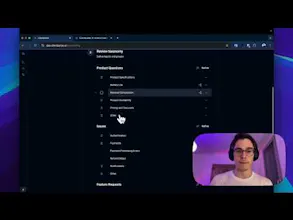
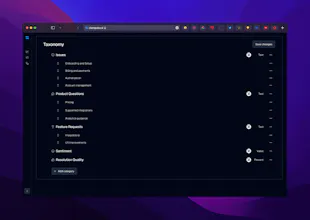
We define a topic as a unique issue or request, formulated like a task name for development or resolution. If multiple users report the same problem, their feedback will be assigned to the same topic.
At the same time, related topics can be grouped into subcategories—for example, all issues related to notifications can be grouped together to track overall trend. That’s why we built a flexible taxonomy that can be adjusted as needed.
These rules are handled at the prompting level, and as LLMs improve, accuracy gets even better.