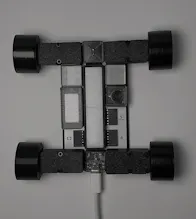
Hardware is still built with processes that are 10-100 years old. Software got layers of abstraction decades ago while hardware never did. Atech is Lego for real electronics. Snap modules together, describe what you want it to do, and we generate the firmware. Idea to working device in minutes. No datasheet deep-dives, no soldering, no wondering "why doesn't it work?"
Hey Product Hunt!
We built Atech because getting from "I have an idea" to "working electronics" still takes weeks of soldering, datasheets, and firmware debugging, even for engineers. And It shouldn't.
Atech is collection of hardware modules + AI that writes the firmware for you. Describe what you want, and Atech picks the modules and generates the code. Snap them together. Done.
We're starting with makers, students, and hardware tinkerers, but the bigger vision is making electronics as approachable as Lego, real projects, for ordinary people
Would love your feedback, especially:
What would you build first?
What modules would you like to see introduced?
Happy to answer anything else as well!
The Atech team
Report
The idea of making hardware feel like LEGO is really interesting. But feels like the real challenge starts when things don’t work as expected.
Debugging in hardware is usually where most of the friction is. Curious how you’re thinking about that part?
@munevver_ertuncccc 90% of the problems in hardware are human made, swapping wires etc etc. We have "removed" the possibility to do these mistakes and it just works! It might take a couple of iterations to get it functioning the exakt way you want but its a working progress:)
Report
@gustavhugod That actually hits the core problem tbh most people don’t quit because of complexity, they quit because of frustration when things don’t work.
If you’re removing that layer, that’s a big shift.
Report
Hybrid deterministic modules with generative system logic is a sharp split. How do you version module firmware so an LLM regen does not break existing setups?
@borrellr_ Thanks! We write our own custom firmware for each module.
Report
Snap-together hardware with auto-generated firmware is a fresh take — most "easy electronics" stops at a USB cable to your laptop. The bit I'd want pressure-tested is the firmware-by-prompt loop. When the generated code doesn't quite work on a specific module, can you inspect and edit it, or do you reroll the whole prompt? And how does it handle timing-sensitive logic where AI-generated code can quietly miss interrupt windows?
Report
🔌 Plugged in
Genuinely unique idea. I've spent way too many late nights hunched over Arduino boards, scrubbing through bad YouTube tutorials trying to build stuff that should not be that hard to build. Looking back in a few years this idea is going to seem sooooo obvious - hardware shouldn't be harder than vibe coding. Loved the vision so much I just vibed my first hardware on the site. Can't wait for the kit to show up and test the upper limits?! I wanna vibe build freaking rockets 😅
The framing of hardware never getting the abstraction layers software did really lands. Curious about the boundary you draw between what the chat layer generates versus what is baked in at the module level. When I add a new sensor module, does the model see the schema and rewrite firmware on the fly, or is it more declarative than that?
@najmuzzaman Thank you and great question! I’d call it hybrid deterministic on the module level and generative on the system level. Plug in a temp sensor and say alert me if it exceeds 40°C, the module firmware is baked in, the logic tying it to your alert system is written on the fly.
@najmuzzaman Thank you and great question! I’d call it hybrid deterministic on the module level and generative on the system level. Plug in a temp sensor and say alert me if it exceeds 40°C, the module firmware is baked in, the logic tying it to your alert system is written on the fly.
Report
Very cool! Does your service also make predictions about how it will work? I recently wanted to build an AI device for the ear, and I needed to calculate how long the battery would last with different batteries. Is that possible?


Atech
The idea of making hardware feel like LEGO is really interesting. But feels like the real challenge starts when things don’t work as expected.
Debugging in hardware is usually where most of the friction is. Curious how you’re thinking about that part?
Atech
@munevver_ertuncccc 90% of the problems in hardware are human made, swapping wires etc etc. We have "removed" the possibility to do these mistakes and it just works! It might take a couple of iterations to get it functioning the exakt way you want but its a working progress:)
@gustavhugod That actually hits the core problem tbh most people don’t quit because of complexity, they quit because of frustration when things don’t work.
If you’re removing that layer, that’s a big shift.
Hybrid deterministic modules with generative system logic is a sharp split. How do you version module firmware so an LLM regen does not break existing setups?
Atech
@borrellr_ Thanks! We write our own custom firmware for each module.
Snap-together hardware with auto-generated firmware is a fresh take — most "easy electronics" stops at a USB cable to your laptop. The bit I'd want pressure-tested is the firmware-by-prompt loop. When the generated code doesn't quite work on a specific module, can you inspect and edit it, or do you reroll the whole prompt? And how does it handle timing-sensitive logic where AI-generated code can quietly miss interrupt windows?
Genuinely unique idea. I've spent way too many late nights hunched over Arduino boards, scrubbing through bad YouTube tutorials trying to build stuff that should not be that hard to build. Looking back in a few years this idea is going to seem sooooo obvious - hardware shouldn't be harder than vibe coding. Loved the vision so much I just vibed my first hardware on the site. Can't wait for the kit to show up and test the upper limits?! I wanna vibe build freaking rockets 😅
Atech
@christian_vestergaard Rocket module coming soon!;)
Nex
The framing of hardware never getting the abstraction layers software did really lands. Curious about the boundary you draw between what the chat layer generates versus what is baked in at the module level. When I add a new sensor module, does the model see the schema and rewrite firmware on the fly, or is it more declarative than that?
Atech
@najmuzzaman Thank you and great question! I’d call it hybrid deterministic on the module level and generative on the system level. Plug in a temp sensor and say alert me if it exceeds 40°C, the module firmware is baked in, the logic tying it to your alert system is written on the fly.
Atech
@najmuzzaman Thank you and great question! I’d call it hybrid deterministic on the module level and generative on the system level. Plug in a temp sensor and say alert me if it exceeds 40°C, the module firmware is baked in, the logic tying it to your alert system is written on the fly.
Very cool! Does your service also make predictions about how it will work? I recently wanted to build an AI device for the ear, and I needed to calculate how long the battery would last with different batteries. Is that possible?