A small founder update and a thank-you to AltaLab.
Over the past few weeks, AltaLab has pushed me to rethink how I explain A2Viz AI:
Less about listing everything we can build.
More about the specific customer, the painful workflow, the measurable result, and the proof that people actually care.
That discipline is already changing how I think about the company.
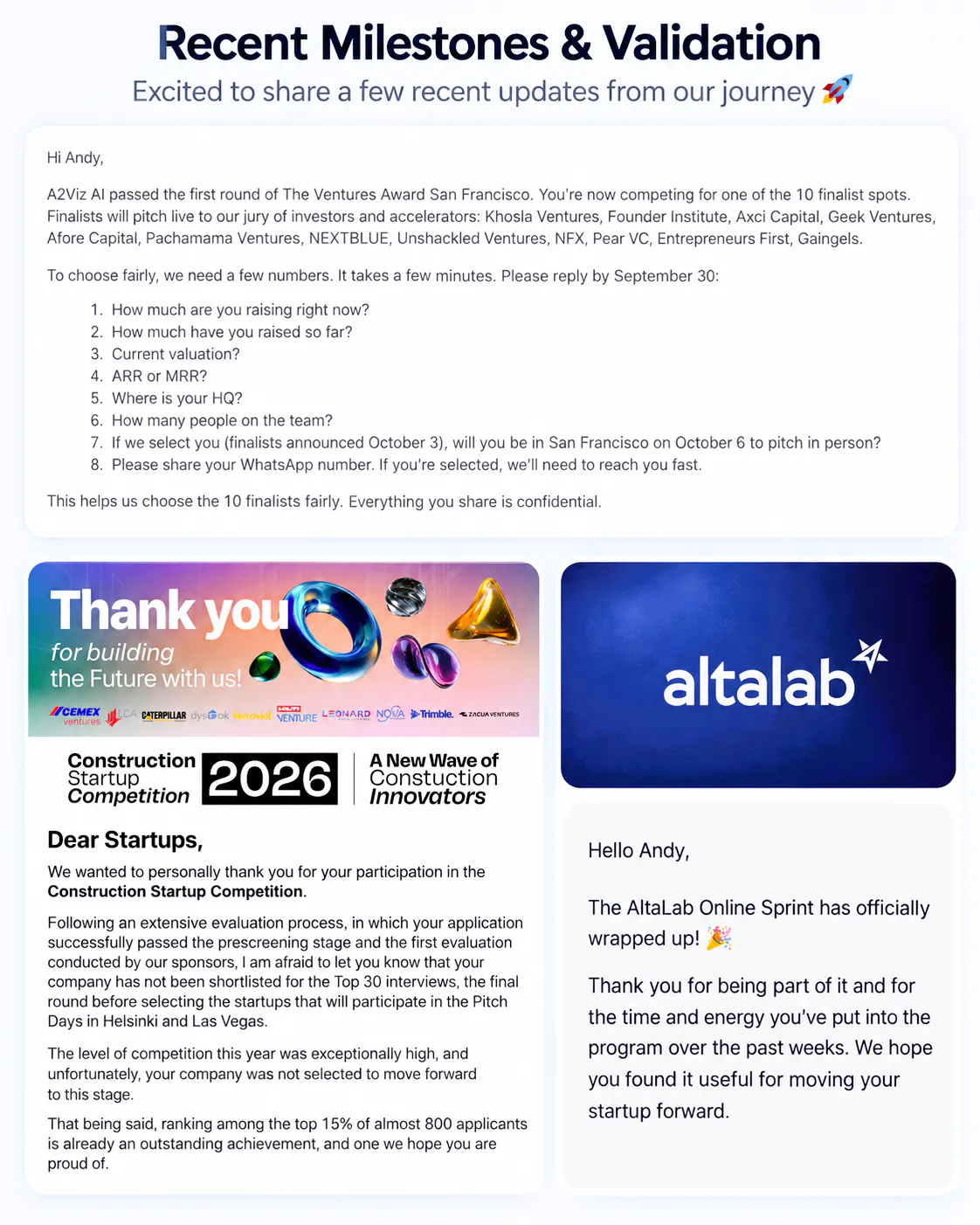
And this week, we received two encouraging external signals:
A2Viz AI finished in the top 15% of nearly 800 applicants in the 2026 Construction Startup Competition.
And now, A2Viz AI has passed the first round of The Ventures Award San Francisco.
We re still early. These are not finish lines.
But for a founder building, testing, talking to customers, refining the product, and constantly questioning the story, moments like this matter.
Thank you to AltaLab team, AltaIR Capital, Igor Ryabenkiy and the Fall 2026 cohort for challenging me to focus harder, test assumptions, and communicate more clearly
.The biggest lesson I m carrying forward:
Don t try to prove everything at once. Prove one important thing at a time.
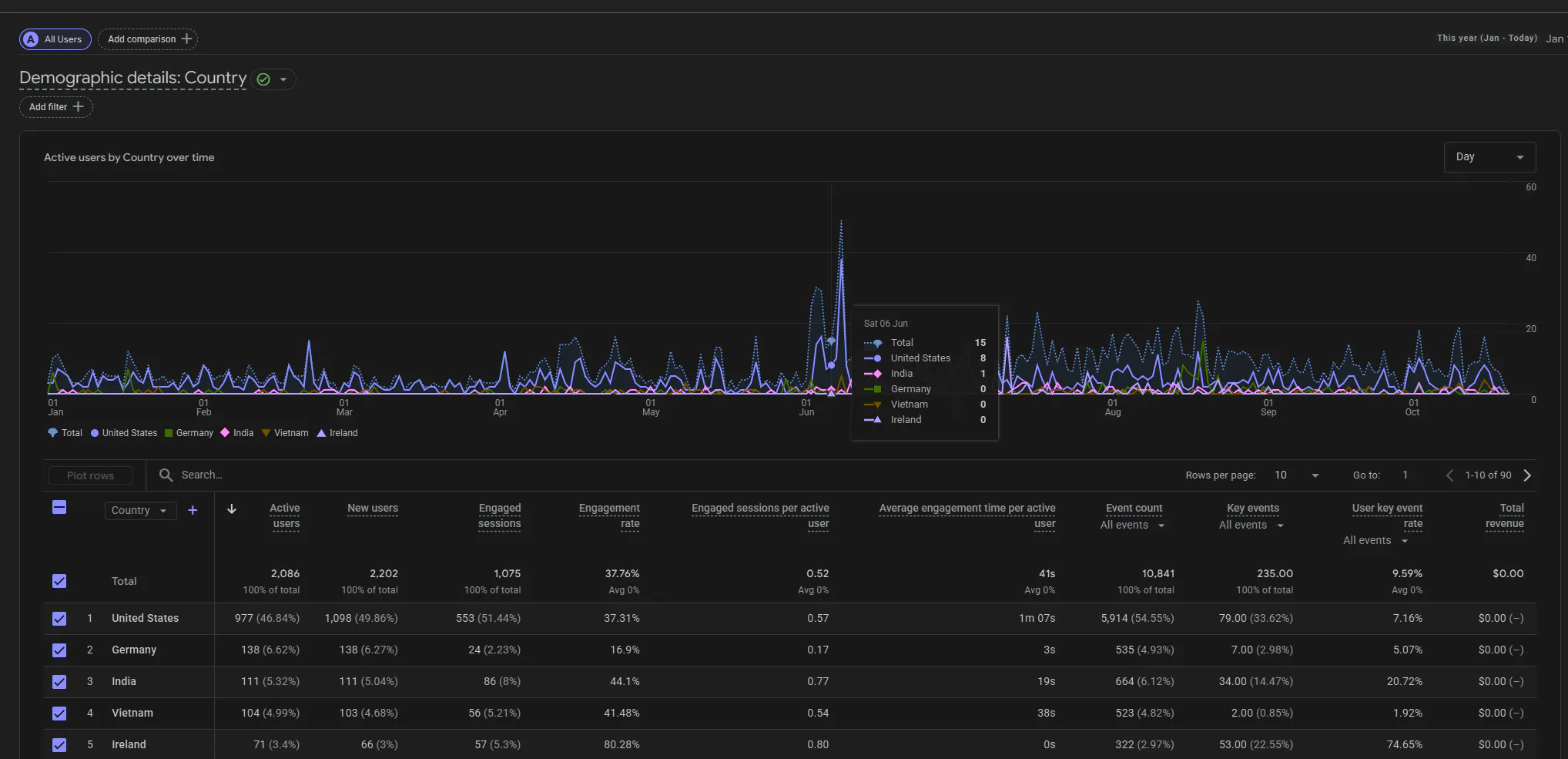
For A2Viz AI, that means staying focused on C2I adoption, repeat usage, company accounts, and real architectural workflows.
Still learning.Still refining.Still building.
Built for architects. Designed for workflow.
www.a2viz.com


Hi Product Hunt 👋
I’m Andy, founder of A2Viz AI.
After 25+ years in architecture and architectural visualization, working with 1,000+ client relationships across 25 countries, I kept seeing the same problem:
Architects already have the project information — but creating presentation-ready visuals still often means rebuilding or reconfiguring that work in another visualization pipeline.
That is the workflow we are focusing on with C2I — Concept to Image.
A2Viz AI helps architects start from the project information they already have:
Revit • SketchUp • CAD • plans • elevations • sections • camera directions • material and design references
and move toward controlled, client-ready architectural visuals while helping preserve:
geometry • scale • perspective • materials • composition • design intent
The workflow is simple:
Existing project context → choose the view → generate the architectural perspective
Need another camera angle?
Use the same project context and generate another view.
What we are learning now is not “how many AI features can we add?”
It is:
Can C2I become a repeatable workflow that architects and design firms use on real projects?
That means focusing on output reliability, project fidelity, repeat usage, firm adoption, and keeping the architect in control.
We are still early, and I would genuinely value Product Hunt feedback on one question:
What would C2I need to do consistently before you would trust it in a real architecture project?
Built for architects. Designed for workflow.
www.a2viz.com