

Why Web3 Transaction State Management is Broken (And Why useState is an Anti-Pattern)
Hey everyone! 👋
Most Web3 frontends still treat blockchain interactions like standard HTTP requests: fire an RPC call, trigger setIsLoading(true), and pray the user stays on the page until a receipt returns.
In reality, blockchains are asynchronous, distributed state machines. The moment you hit real-world network conditions, naive useState bindings collapse across several critical failure modes:
Component Unmounts: Route transitions kill the promise listener and destroy local component state, leaving users in the dark.
The Speed-Up Trap: When users speed up transactions in MetaMask, the wallet reuses the nonce with a new hash. Naive frontends await the orphaned hash indefinitely.
Browser Reload Amnesia: Ephemeral RAM memory wipes tracking on page refreshes while the transaction is still pending in the mempool.
Multi-Tab Desynchronization: Interactions initiated in one tab are completely invisible to others.
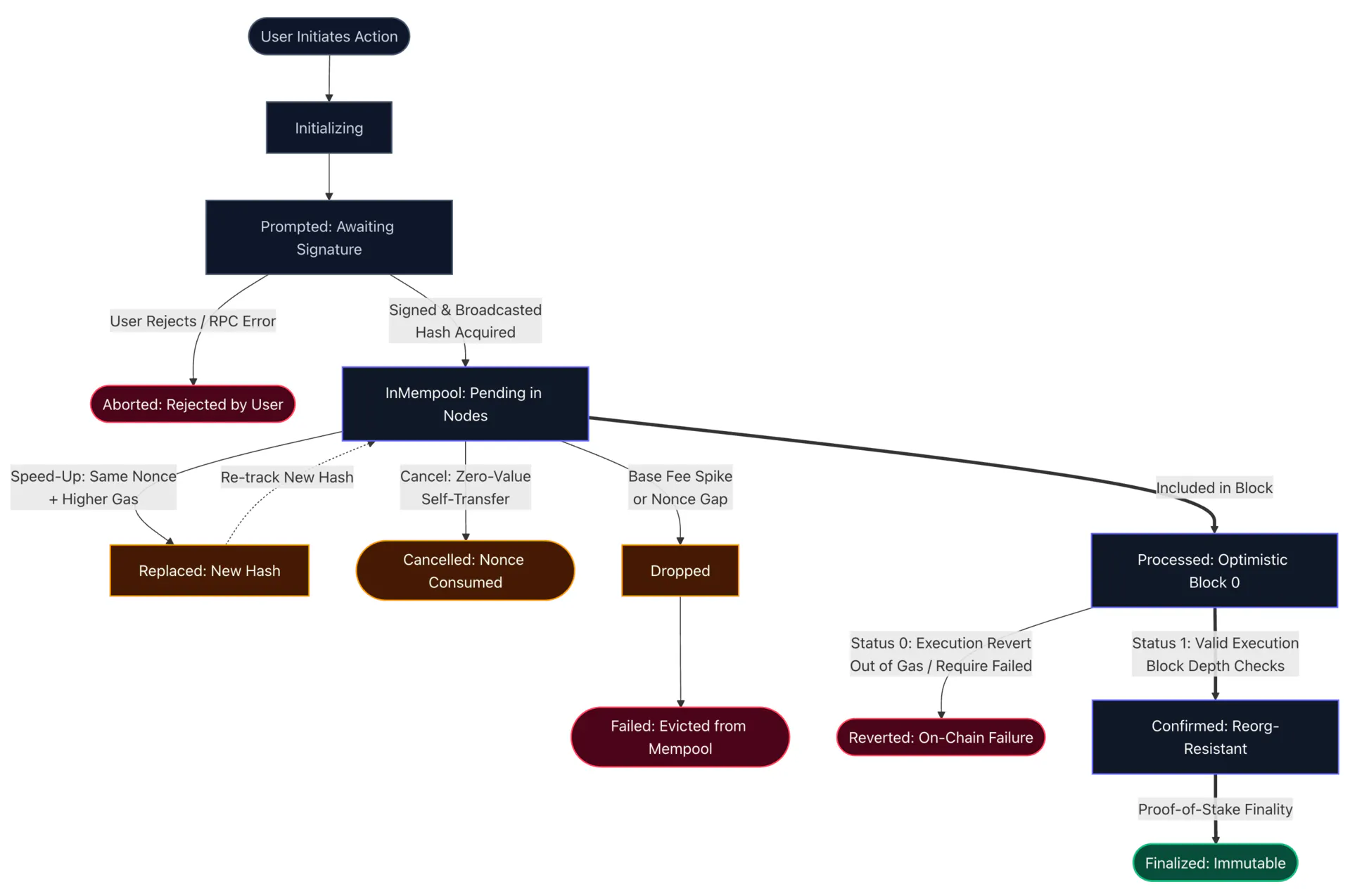
We just published our first architectural deep dive on the TUWA Guides hub, breaking down:
Why treating transactions as binary promises introduces severe technical debt.
The distributed state mismatch (complete with lifecycle flowcharts).
How to build decoupled, local-first state machines that track by nonce, handle replacements transparently, and persist through reloads.
Read the full guide with architecture diagrams and code recipes:
🔗 https://docs.tuwa.io/guides/why-web3-transaction-state-is-broken
Would love to hear how your teams currently handle dropped nonces and cross-device sync in production dApps!
Replies
Be the first to reply
Have a question or a thought to share? Add a comment above to start the conversation.