

We’re open-sourcing Quasar: sovereign Web3 transaction infrastructure under Apache 2.0
True decentralization requires sovereign infrastructure. If the client stack is open-source and non-custodial, the transaction indexing and synchronization backend has no right to remain a closed black box.
We have officially kicked off the transition of Quasar Engine to Open Source (Apache 2.0)! 🛰️⚡
The Quasar Community Edition is not a stripped-down demo. It is a full enterprise-grade sovereign infrastructure node designed to be self-hosted with zero vendor lock-in.
What is currently in active development for the OSS Community release:
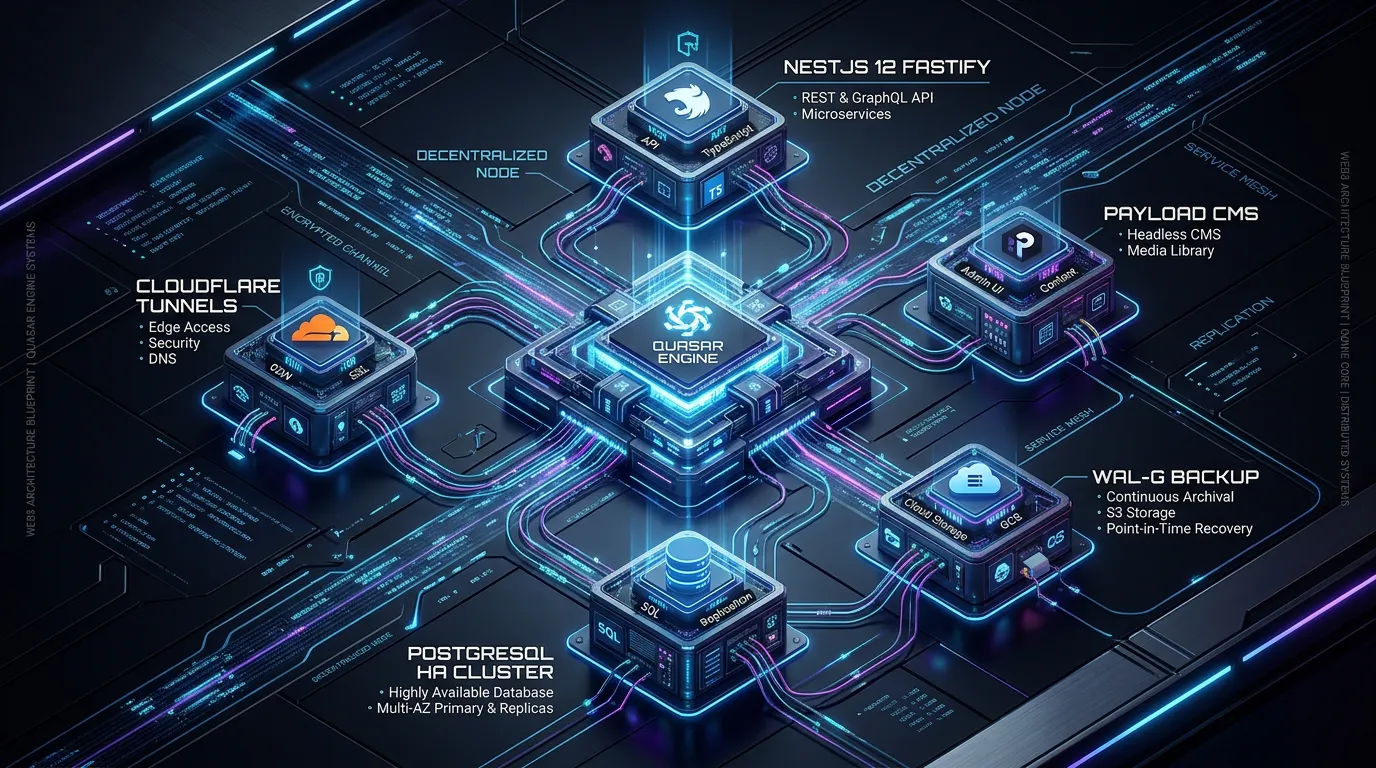
• High-Performance Engine: NestJS 12 + Fastify for sub-millisecond Pulsar sync and BullMQ transaction workers.
• Headless Admin Panel: Payload CMS (Next.js 16 App Router) for self-hosted API key lifecycle, apps, and webhook routing.
• Enterprise HA Cluster: PostgreSQL 16 (repmgr + PgBouncer) with continuous WAL-G stream archiving and Point-in-Time Recovery (PITR).
• Full Observability & Centralized Logs: Prometheus + Loki + Grafana 11 with correlated data links for instant root-cause analysis.
• Proactive Incident Alerting: Pre-configured Alertmanager rules for sync lag, queue spikes, and failover dispatches to Telegram and Discord.
• Zero-Open-Port Security: Fully secured inbound perimeter via Cloudflare Tunnels (no exposed 80/443 ports). • Universal Parity: 100% feature compatibility with @tuwaio/quasar-sdk.
The architectural blueprint is locked, and active development is rolling out. Run your own sovereign node, retain 100% control over transaction metadata, and eliminate cloud lock-in.
Check out the ecosystem: https://www.tuwa.io/
Would love to hear your thoughts: what are the biggest friction points your team encounters when managing self-hosted Web3 infrastructure and transaction indexing?
Replies
Be the first to reply
Have a question or a thought to share? Add a comment above to start the conversation.