

Why we’re building Spixor Forge: a clearer way to diagnose, plan and validate product work
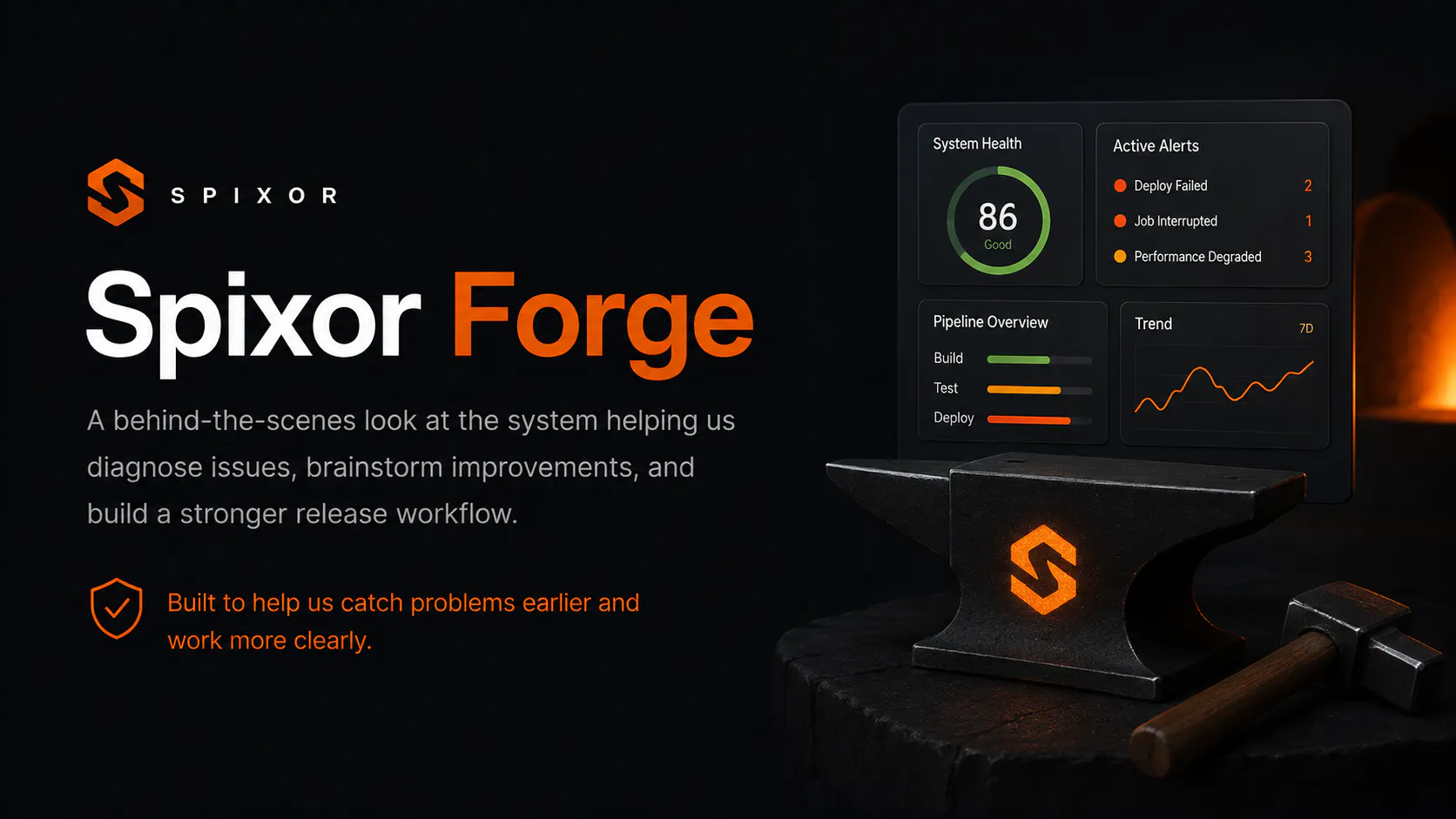
We’re building something behind the scenes at Spixor. It’s called Spixor Forge.
Forge is not another website-building feature, and it is not an autonomous system deciding what gets shipped. It is an internal operating environment designed to help us understand our product more clearly before we make and release changes.
Why are we building it?
Over time, we’ve run into issues that were difficult to diagnose from the surface. Performance bottlenecks, unexpected interactions between systems and optimization problems could take a long time to trace back to their actual cause.
A fix might solve the visible symptom without addressing the underlying structure. Research could become fragmented across conversations, notes, code and test results. By the time we understood the full problem, a lot of time had already been spent rebuilding context.
Spixor Forge is our attempt to create a better workflow around that.
It uses AI-assisted analysis to examine code structure, connected systems and existing product rules. Based on that context, Forge can help us:
identify potential risks, bottlenecks and weak points;
brainstorm possible causes and practical fixes;
explore functions or safeguards that may still be missing;
turn findings into structured research and implementation plans;
keep those plans within the technical and product boundaries of Spixor;
prepare clearer validation steps before a change reaches release.
The important part is not simply “using AI.” The important part is creating a controlled process around it.
Forge is intended to keep ideas, diagnostics, requirements, research, progress and review evidence connected in one place. Instead of blindly generating a solution, it should explain what was found, what is still uncertain, what should be investigated next and how a proposed change should be checked. Human review remains central.
Forge does not decide what belongs in Spixor, visually approve a result or release changes on its own. It helps us prepare the work, understand the risks and create a clearer path toward a decision.
We especially want it to improve three parts of our workflow:
Earlier diagnosis: Spot structural risks and possible causes before they become long investigations.
Better planning: Turn loose findings and brainstorms into practical step-by-step work plans.
Safer releases: Create a clearer review trail before approved changes are moved into a release.
We are still actively shaping Forge, including its interface, diagnostics, visual progress views and the way it helps organize future work.
This is not a public Forge release announcement yet. It is a behind-the-scenes look at why we believe this system is worth building.
Our goal is simple:
Spend less time rediscovering problems, understand changes more clearly and release Spixor with more confidence.
How do you currently organize AI-assisted research, product decisions and release validation without losing context or control?
Replies
Be the first to reply
Have a question or a thought to share? Add a comment above to start the conversation.