I m building an email sending platform and considering a pay as you go model instead of subscriptions. My reasoning is that many people don t send emails every month, so charging only for usage feels more fair.
However, several founders have warned me that this model may be a mistake from a business perspective.
If you ve built or used similar tools, I d appreciate your thoughts on:
StreamVision is a high performance, professional grade IPTV player built for a seamless experience on Android phones, tablets, Android TV and FireStick. It s built around three core principles: Performance, Stability, and Transparency.
Key features
100% free & ad free no subscriptions, no hidden fees, zero ads.
Leanback UI fully optimized for remote navigation on Android TV / Google TV / FireStick.
Multi source support M3U playlists (URL or local file) and Xtream Codes API.
Advanced content management dedicated sections for Live TV, Movies, and Series with automatic season/episode grouping and resume.
Reworked EPG clearer schedule, better navigation through programs.
Subtitle support for movies and series.
Hardware decoding (GPU) for optimal image quality and fast zapping, even on large playlists.
Multilingual UI full English and French support.
Picture in Picture (PiP).
Maxed out Google Cast support cast streams reliably to Chromecast and cast enabled devices.
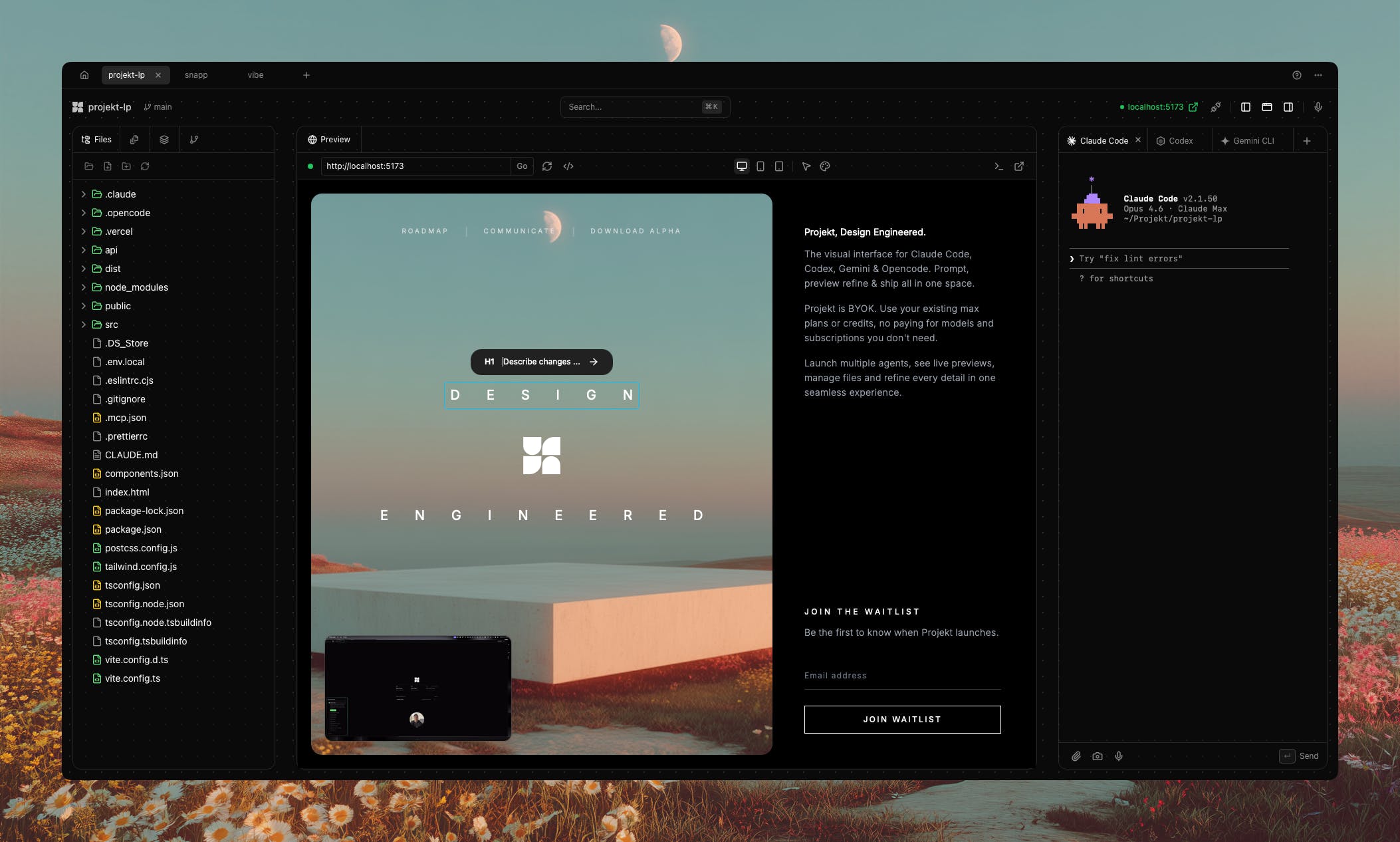
At the end of last year, I completely fell in love with using Claude Code. After I found out how accurate it was in translating my context into functional products. I was hooked and immediately launched two products Vibe & Snapp However, I quickly realized that there was an opportunity to improve the building experience that IDEs didn't quite address? I wanted a very simplified IDE with the quality of life improvements that a lot of no-code tools gave you but without the lock-in they seem to have and agnostic to my stack.
I ve seen a lot of VR and AI projects in healthcare get rejected or ignored on Product Hunt because they lead with technology instead of learning outcomes. So I want to approach this differently.
This Idea Usher review looks at VRion Lab, a virtual reality based learning platform designed to simulate science and healthcare labs when physical infrastructure is limited. I m not posting this as a launch or a showcase. I m posting it as a discussion about where VR genuinely works in healthcare education and where it doesn t.
The real problem VRion Lab is trying to solve
In healthcare and science education, the biggest bottleneck is not content. It s access.
AI agents got smarter. Their interfaces didn't. Ask an AI to analyze your sales pipeline and you get three paragraphs. You should get a chart.
We've spent the last year building Generative UI used by 10,000+ developers, and the biggest lesson was that JSON-based approaches break at scale. LLMs keep producing invalid output, rendering is slow, and custom design systems are a pain to wire up.
So we built OpenUI Lang, a rendering spec inspired by code rather than data formats. LLMs generate it reliably the way they generate well-formed functions. The benchmarks: up to 67% fewer tokens, 3x faster rendering, streaming-native, and safe by default (no arbitrary code execution).
Today we're open sourcing it. Model-agnostic, framework-agnostic, design-system agnostic. Show us your support by starring or contributing to our repo - https://github.com/thesysdev/openui
I built Caloez because I was tired of calorie tracking apps that feel more like social media platforms. Most options today are packed with ads, community feeds, and require too many taps just to log a simple meal. I wanted an app focused entirely on tracking, without the bloat.
To make logging as frictionless as possible, I integrated computer vision. Instead of searching through massive databases, you just snap a picture of your plate. The app identifies the food, estimates the portion size, and logs the macros and calories instantly.