
 •
3mo ago
Built an AI Visibility tracker for ChatGPT, Claude, Gemini & Perplexity
Been building DevnDespro SEO Tool, a multi-client dashboard I use to go deeper on full-stack dev and SEO. What started as a way to learn the stack properly has turned into a fairly complete platform, so figured I'd share what's in it.
The part I'm most excited about is the AI Visibility feature. Since search is shifting toward AI answer engines rather than just Google, I built a 6-tab dashboard (Summary, Questions, AI Responses, Competitors, Recommendations, History) that tracks how often a brand gets mentioned when people ask ChatGPT, Claude, Gemini, and Perplexity about a topic. It also compares visibility against competitors and surfaces recommendations on how to improve mention rates, since this side of SEO barely existed a couple of years ago and the tooling for it is still pretty thin.
Beyond that, the platform covers the more traditional SEO workflow too:
Site Audit: checks grounded in Core Web Vitals, W3C, and schema.org standards rather than an arbitrary composite score
Backlinks Overview: pulls link data via DataForSEO to track link profile health
Keyword Tracking: rank tracking with custom filtering to cut out irrelevant/junk keyword suggestions
Domain Rank & Link Score: authority metrics sourced from DataForSEO
 •
3mo ago
Most property portals sell visibility, then hide how the ranking works.
I built Outseen to do the opposite.
Every project shows:
its RERA disclosure status
the exact sponsored amount affecting its position
a direct WhatsApp route to the project
Money can move a project s position. It cannot buy verification.
 •
3mo ago
How I built Shape in 6 months
I had the idea for Shape about 6 months ago.
At the start, development was painfully slow. I d build something, look at it, hate the UI, change it, then change it again 5 minutes later.
The UI looked absolutely horrible.
I also ran into some of the simplest bugs that somehow became incredibly difficult to fix (a basic terminal height bug took me an entire week).
 •
11mo ago
From weeks of alignment to hours of creation — the story behind Loki.Build
Working as a designer sounds simple: you design a landing page, you ship it, everyone s happy. But in reality, designing is the fast part. Everything around it is painfully slow. You can design a great landing page in a couple of hours, a few days, or sometimes weeks. But before you even open Figma, you need discovery calls to understand the product and audience. Then comes the structure, the alignment, the references, the decisions about direction.
You start your first iteration and it doesn t feel right. When the design is finally approved, you hand it off to development. You create specs and styles, the developer builds it, something s off, more fixes, more waiting. And when the page finally goes live, the client might still say: It looked better when you showed it to us. Can we adjust a few things?
So that one fun day of pure design becomes almost a month. I like fast, creative work and quick feedback loops. This process was the opposite of that.
That s where Loki.Build came from.
 •
3mo ago
Title: I built an AI shopping assistant that can tell you not to buy
Every shopping tool on the internet is designed to end up in a purchase. Search it sells Comparison sites take you to checkout Reviews it
But, before any of that, most of us are asking a different question:
So do I buy this, really?
TickClip answers that question. It says price history, marketplace signals, seller context, timing, and how much uncertainty is left in the data -- and then issues a verdict, not a hedging bet:
Tick Buy now, data backs it Clip Wait or rethink, price/timing is wrong Skip Don t buy this
What gave the verdict its meaning was what we gave up. TickClip today earns no affiliate commission, and no seller can purchase a better score or a friendlier verdict. If the evidence does not support buying, then the answer is just "don't."
We re now live on Amazon products and building toward an independent decision layer across e-commerce and soon inside AI assistants via MCP.
Three things I would really like from this community:
Would you use a tool whose best answer is sometimes no ?
What would make you trust a verdict -- price history, sourced reasoning, a confidence score, other?
Which platform do you want us to cover next? eBay, Walmart, AliExpress, Shopify stores? https://www.tickclip.ai
I m the founder and I ll be in the comments all day. Happy to get into methodology, data sources or the obvious one - how a no commission model is supposed to pay for itself.
 •
3mo ago
Why EchoPM is one product for both sides of the lease (and not another PM dashboard)
Hey Product Hunt I m Walker, founder of EchoPM. We launched here last week and it was quiet. This is the why we built it this way version, not the feature list.
The problem we kept seeing
Independent landlords and small PM shops don t fail because they lack software. They fail because the job is five products that don t share a record: list somewhere, applications in email, screening in another tab, a lease from a third tool, then rent collection and a portal the tenant will hate. Enterprise suites price like you re a 2,000-unit shop. Point tools are cheap until you spend Sunday reconciling them.
We wanted one system a 40-door operator could actually finish: vacant unit first rent payment, without an implementation project.
 •
3mo ago
Elections happen every 4 years. Opinions form every day.
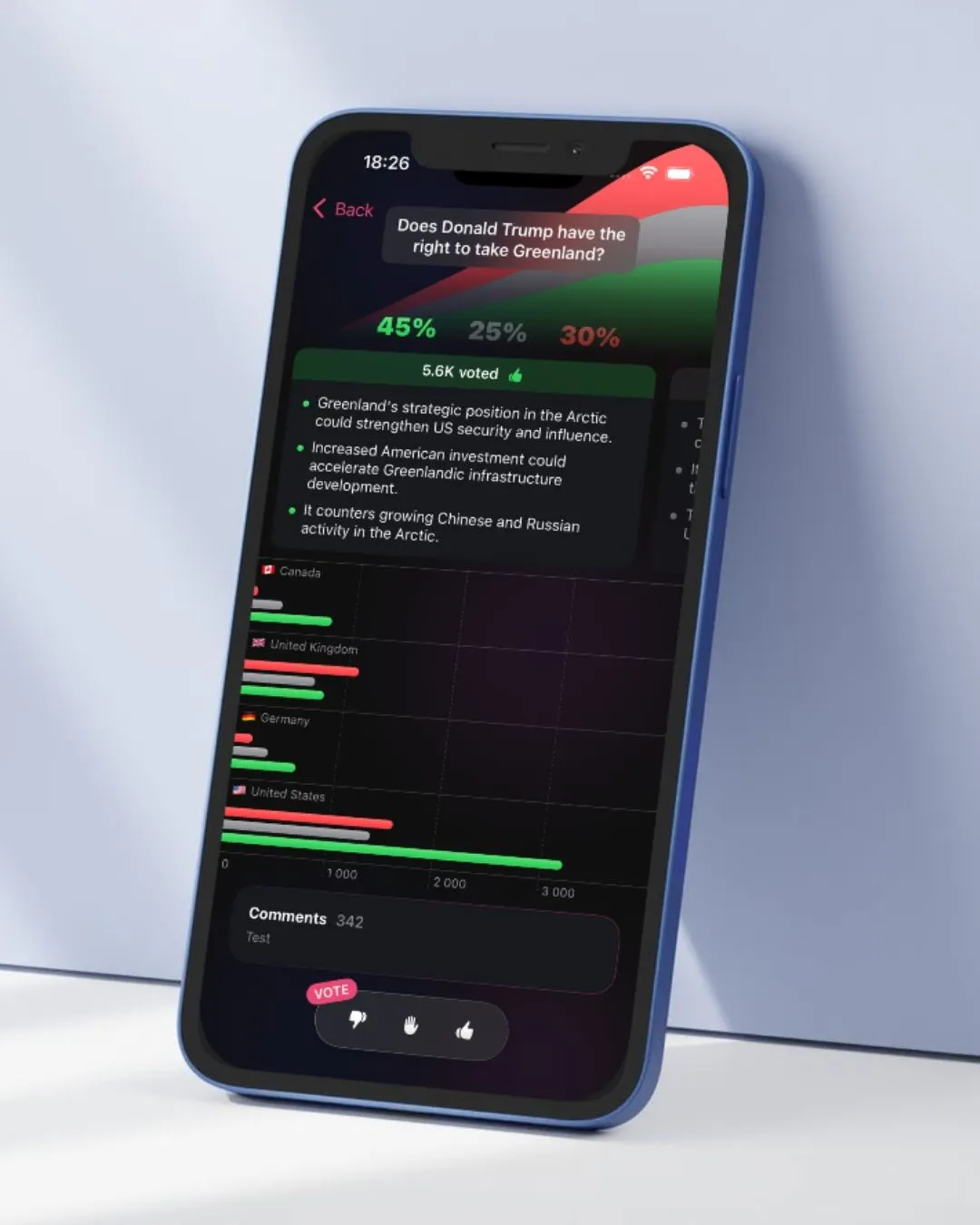
I'm building a brand new Votap feature: Question of the Day
 •
6mo ago
agency-os skill: a visual workflow board for working with AI (Notion + your agent)
AI tools generate ideas faster than anyone can sort them. I kept ending up with Slack threads, half-finished docs, and twelve tabs of "things to look into" - and no clear picture of what was actually shipping.
So I built agency-os. It turns Notion into a single board for working with AI:
You talk through ideas with the agent. It pushes back, asks clarifying questions, and scopes the work into tasks and subtasks on the row.
You approve before anything runs. Nothing dispatches autonomously - every execution is operator-gated.
Agents pick up approved rows, work in parallel respecting dependencies, and close them with result links.
The board is the source of truth. The agent is just an executor.
 •
3mo ago
What if the next frontier of AI isn’t a bigger model, but 100,000+ models working together?
Hey Product Hunt
I m building Ailin Collective Intelligence, and the idea behind it challenges one of the assumptions that has shaped the current AI industry.
 •
3mo ago
I’m building FounderMind to answer a harder question than “Is this a good startup idea?”
I've spent a lot of time experimenting with AI for startup research, and I kept running into the same problem.
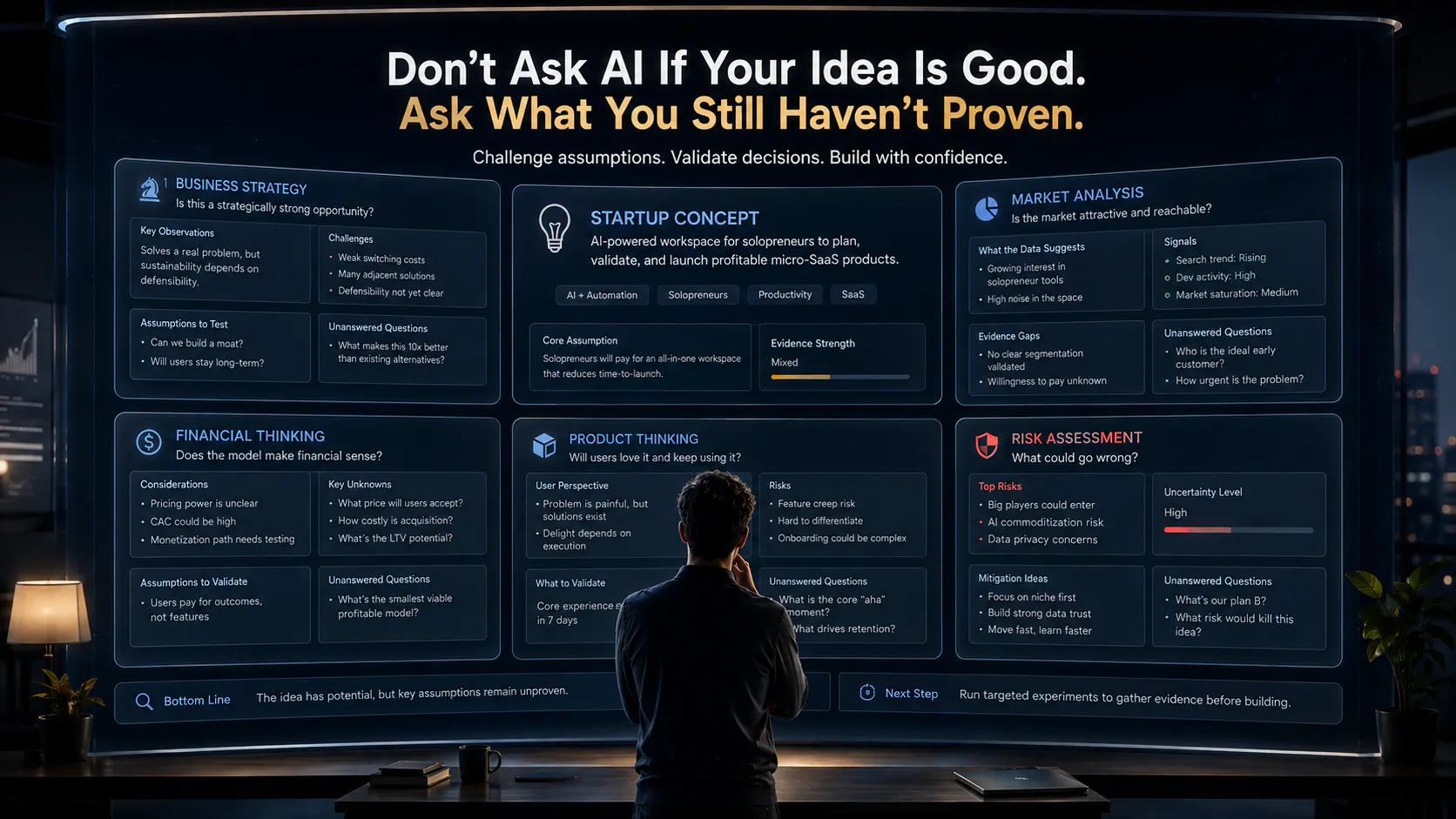
You can ask an AI: