

We added a card draft to a dice race. Did we reduce the luck or just add more?
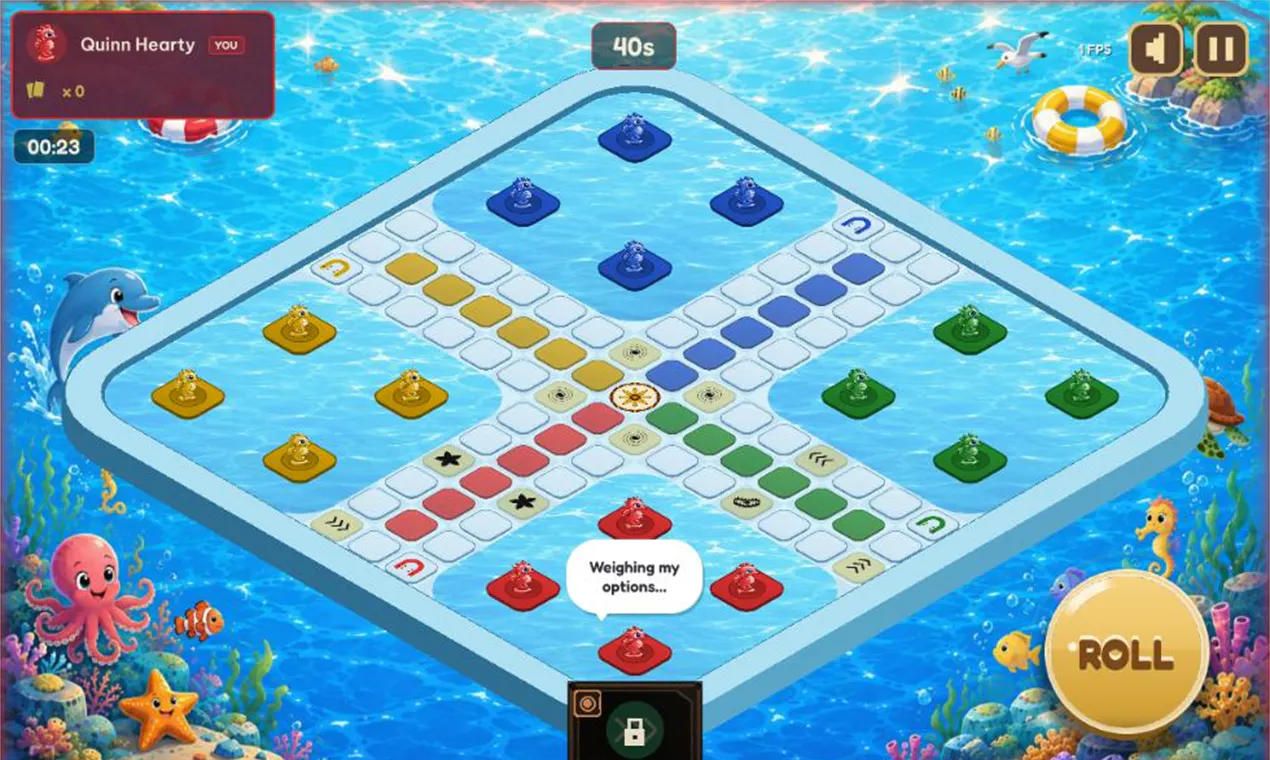
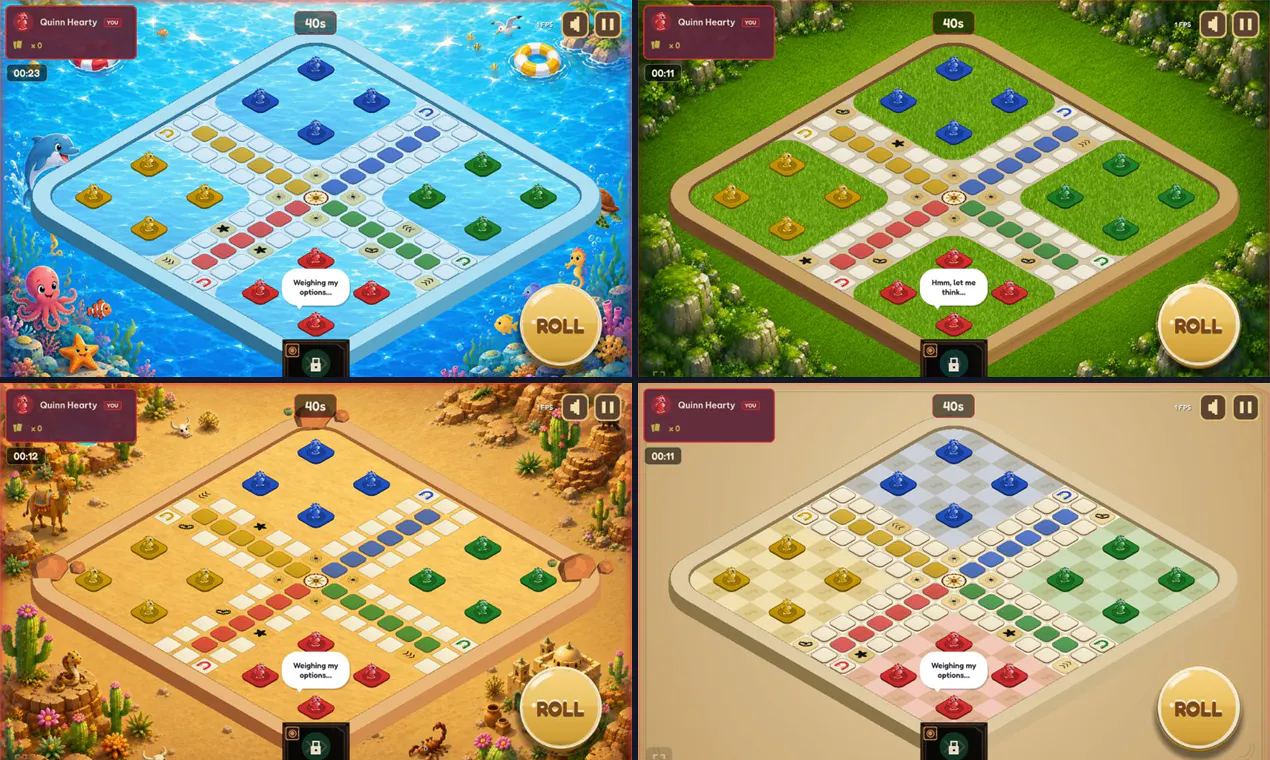
We're the studio behind Ludo Chess, a four-player board race that runs in the browser. The base is the game everyone knows: roll, move, land on someone and they go back to the start.
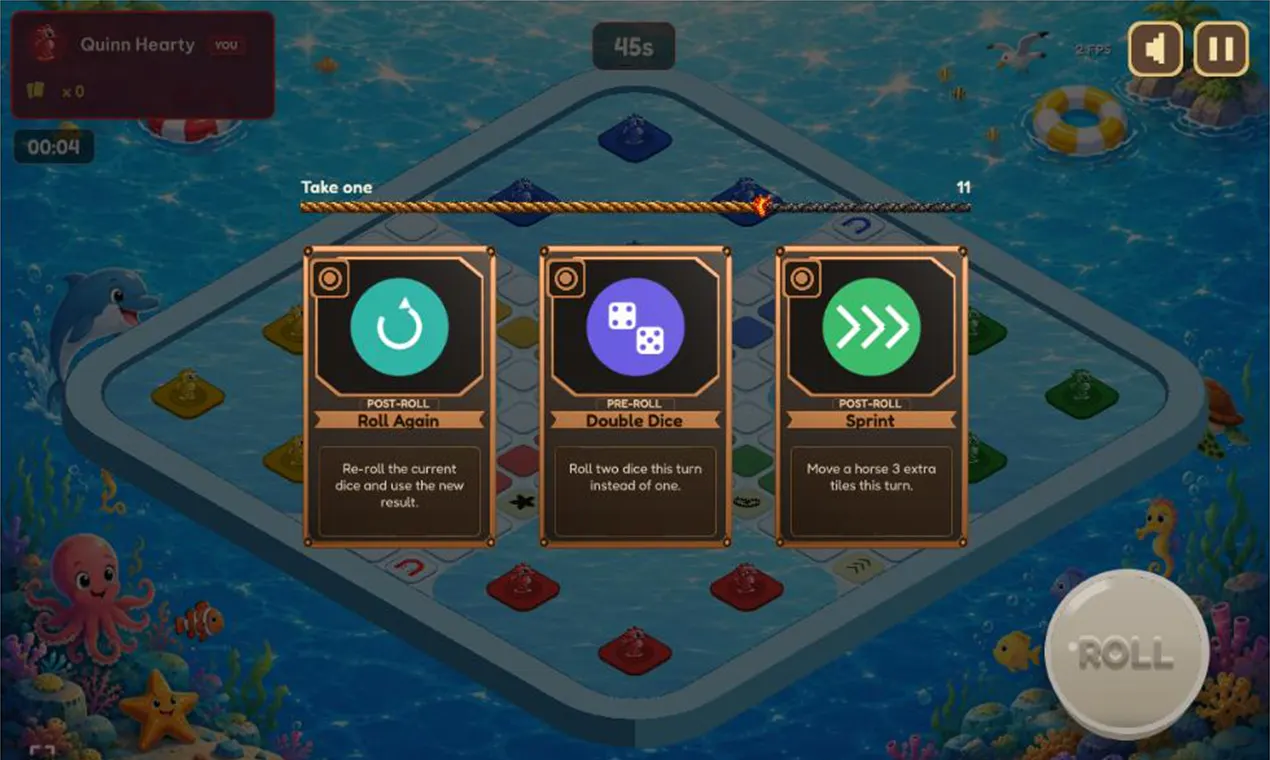
The complaint we kept hearing about that genre is that the dice play the game for you. So every six rounds the match pauses, each player is privately offered three skill cards, and all the picks flip at once. Early drafts are mild. The longer the match runs, the nastier the offers get.
A few of them:
Double Dice: roll two dice this turn instead of one.
Launch: put a fresh piece straight onto your start tile. If an opponent is sitting there, they go home.
Swap: trade places with any piece on the board. It never counts as a capture, so you can take someone's spot right outside their home without sending them anywhere, and they get yours.
Bomb: aim it at an enemy piece and it blows up that tile and the one on each side. Everything standing there goes home, including your own piece if you parked it next door.
Shield: the next capture or bomb against that piece does nothing. The attacker gets pushed backwards to the nearest empty tile, and if there isn't one, all the way home.
That last pairing is our favourite. Bombing a shielded piece is a very expensive way to learn to read the board.
Here's the part we can't settle internally. Strictly speaking, we added more randomness, not less: random cards, and hazard tiles placed fresh every match. But to us it feels less like luck, because you get to respond to what the dice did.
So, a question for anyone who has designed or just played a lot of casual multiplayer games: is "luck you can answer" a real distinction, or is it a nice story we tell ourselves?
If you want to judge for yourself: app.ludochess.online
Replies