

From Floor Plans To Living Worlds: Why We Built VirtualSpaces
We are two engineers who had no business caring this much about floor plans. Yet here we are.
When we first explored AI for real estate, everyone told us the same thing. Start with photos. Run AI virtual staging. Make the images “pop.” It sounded reasonable. It also felt wrong.
Photos are the last mile. Blueprints are the source. Every 2D floor plan already knows the truth about a space. Where light can travel. Where sound might leak. How people will actually move. We kept asking ourselves, why isn’t this the default input for AI 3D visualization.
VirtualSpaces is our answer.
With our Foursite-powered pipeline, you can convert floor plans to 3D and convert blueprints to 3D in a few minutes. We go from 2D to 3D by reconstructing the space as a navigable model, not just a render. Think of it as taking your floor plans and giving them a spine and nervous system.
Once the structure is alive, AI interior design becomes a different game. You are not just applying AI interior décor on a single perfect photo. You are experimenting across an entire home. You can walk through it. You can test AI interior decor in the kitchen, then flip the same design language into the bedroom in seconds.
We built AI visualization tools that understand rooms as connected entities. So AI 3D visualization can keep context as you move from space to space. This makes virtual staging feel less like a trick and more like a design conversation.
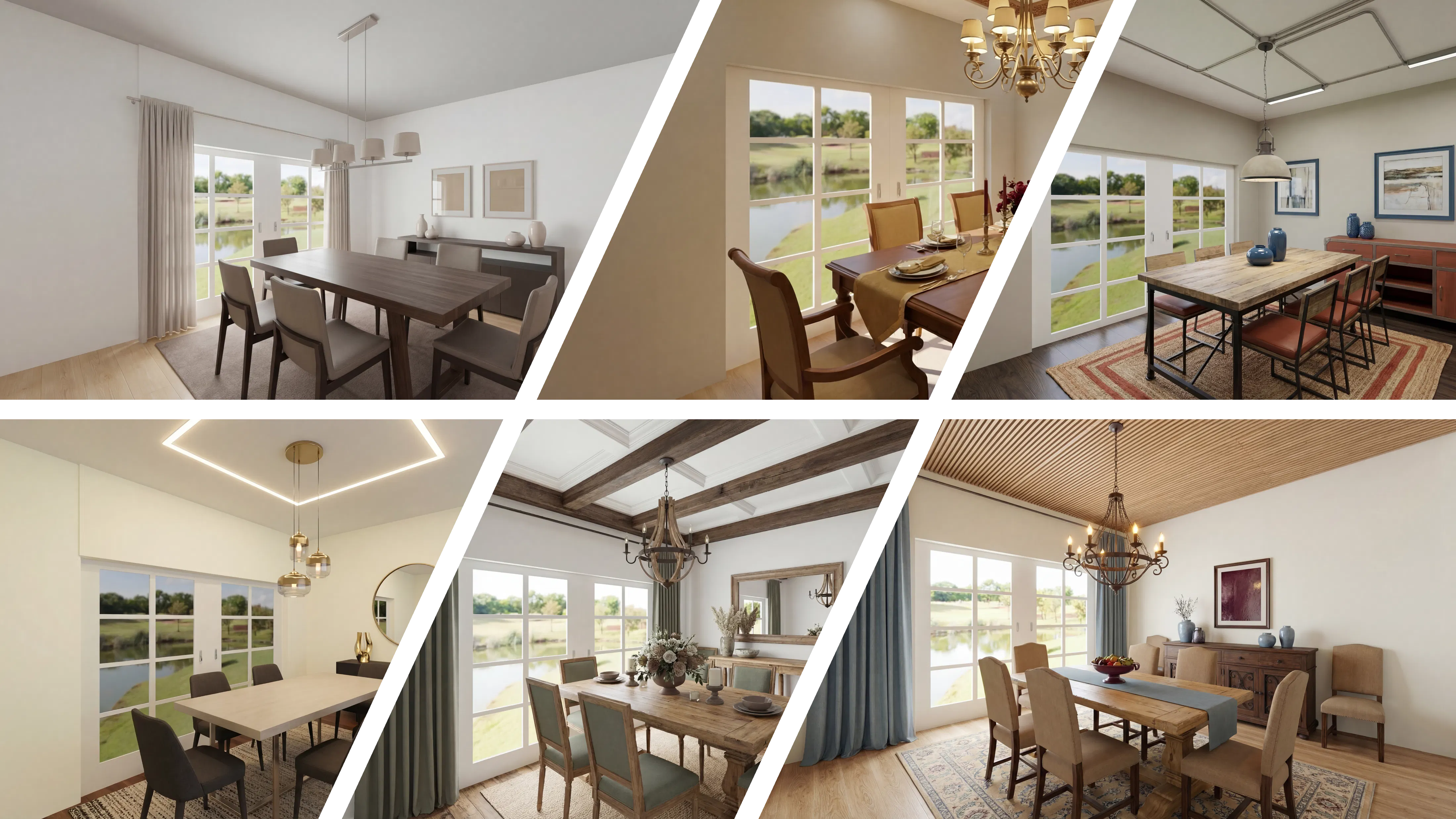
Why does this matter. Because decisions about space are expensive. Because people sign leases and mortgages based on imagination, not just data. Because today’s workflows still jump between blueprints, 2D floor plans, static 3D visualization, and scattered PDFs.
We want VirtualSpaces to collapse that gap. One place where floor plans, 3D Visualization, AI virtual staging, and AI visualization all meet. One place where a non-designer can feel confident asking “what if” questions without touching CAD.
We are still techies at heart. We obsess over pipelines, latency, and edge cases. But underneath that, there is a simple belief. Space should be easier to think about.
If that resonates, our blog goes deeper into why we think blueprints are the most underused asset in real estate and how we are trying to change that, one floor plan at a time.
Read more: Real Estate Photography isn’t enough
Cheers!
Replies