

I started tracking assumptions instead of features when deciding what to build
I've noticed a pattern in my own product work:
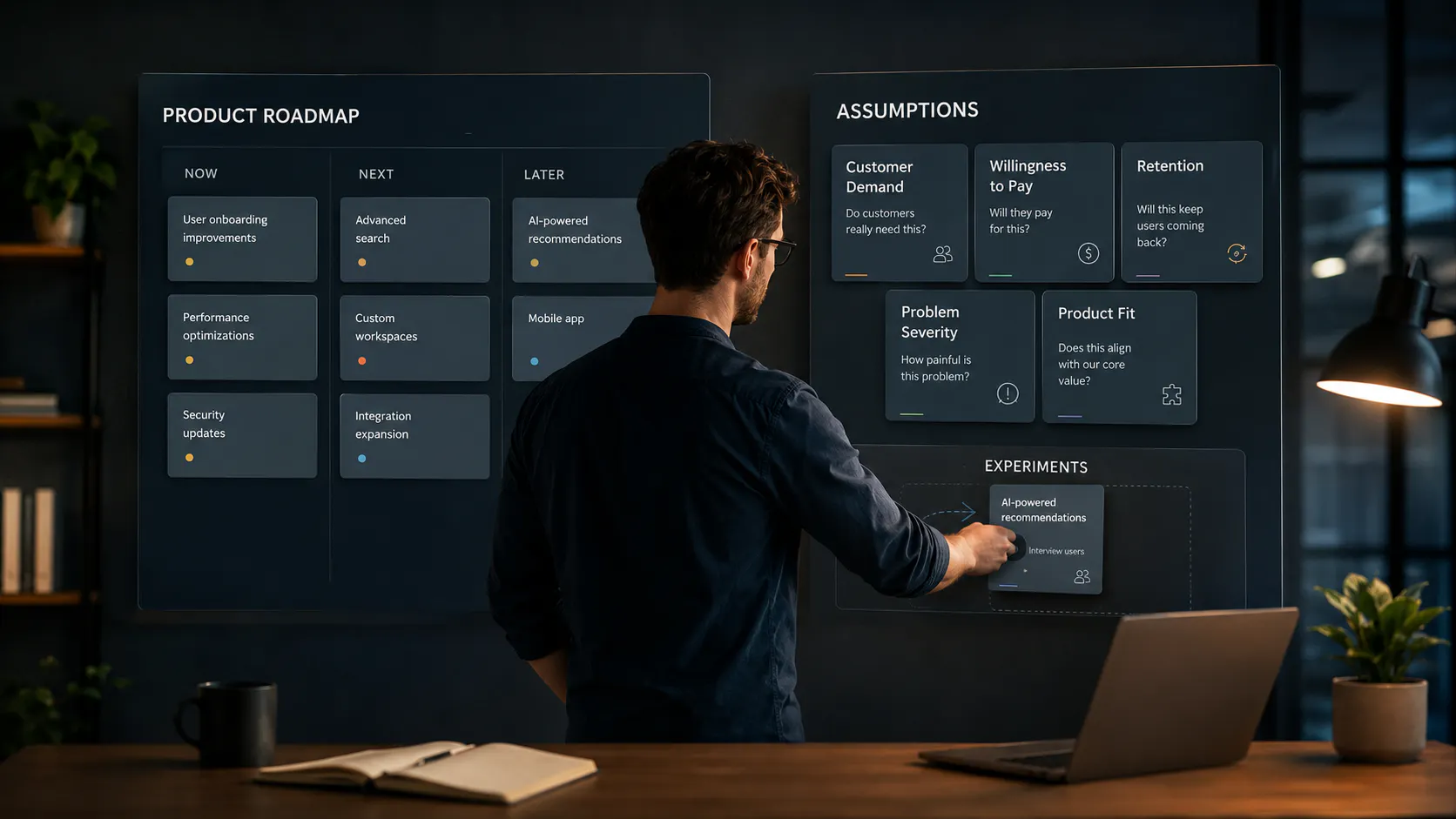
When I'm deciding what to build next, it's very easy to make a feature list.
"Add this."
"Improve that."
"Users might need this."
So I tried changing the question.
Instead of asking:
"What feature should we build next?"
I ask:
"What assumption are we still uncertain about?"
For example:
If we think users will pay for a product, the uncertainty isn't "should we add Stripe?"
It's:
"Will someone actually pay for this problem to be solved?"
If we think a feature will improve retention, the uncertainty isn't "how should we implement it?"
It's:
"Is this actually the reason users aren't coming back?"
That changes what I build next.
Sometimes the answer is a feature.
Sometimes it's a customer conversation.
Sometimes it's a small experiment.
And occasionally the right decision is to build nothing and investigate the assumption first.
I've found this especially useful while working on AI products, because AI makes it so cheap to turn an idea into something that looks finished.
The harder part is deciding whether the next piece of work will actually reduce uncertainty.
How do you decide what deserves to be built next: user requests, roadmap priorities, metrics, intuition, or something else?
Replies
Be the first to reply
Have a question or a thought to share? Add a comment above to start the conversation.