
The Roundup
by Product Hunt
Sunday, Jul 26
Sunday, Jul 26
Jack Dorsey has entered the chat
gm legends. It’s Sunday.
This week, six alternatives to Slack, three new pieces of hardware, infinite endings to your favorite book series, and tons of joy from watching your AI agent make dumb mistakes. Plus, five of our favorite launches from the past week.
See how this newsletter ends, legend. Read on.
P.S. Launching soon? We’d love to hear about it → editorial@producthunt.co 🫶
Return of the Slack

This week, Twitter and Block cofounder Jack Dorsey announced Buzz, a new app he says is “built to reduce our dependency on Slack and Github.”
The app, which is decentralized and open source, puts humans and AI agents together in the same workspace. Teams can then customize it and add features to fit their own workflows.
Chances are, you’re already logged onto Slack right now. But if you’re looking to link up with your crew elsewhere, here are some team collaboration software alternatives (besides Microsoft Teams):
- PromptQL: Launched this week, PromptQL also brings AI chats and Slack chats together into one workspace. Buzz is in dev preview, but PromptQL is live.
- Pumble: Veteran app Pumble may not integrate much AI, but it has a free tier that makes it super comfy for teams with simple needs.
- CodeNearby: If Slack helps you connect with an existing team, CodeNearby (v 2.0 launched this month) helps you find your team. It’s “Tinder for developers.”
- Kollab: The product of the day for April 23, Kollab puts “agents inside your IM like Slack without switching apps.”
- Twist: Around for a decade, Twist stresses asynchronicity — think a team messaging app that’s more like email, allowing people to drop into deep work.
- Zulip: Open source and free (if you self-host it), Zulip looks a bit like Discord and is used by big-name foundations and research organizations.
Your phone is dumb

There’s a non-zero chance you’re reading this newsletter on your smartphone. But there are plenty of developers who think we spend way too much time on devices. Here are three launches from this week to help you reduce screen time:
- Light Phone is a dumbphone pioneer, and this week it launched its very first flip version — with Bluetooth, wifi, and 5G. Best of all: It’s got a headphone jack.
- UltraPod converts your iPhone into “a music-first dumbphone without abandoning the useful parts of a modern device.”
- Garmin CIRQA Smart Band is a fitness tracker that doesn’t have a screen at all, though you’ll need a phone to check your HRV, SpO2, and other health metrics.
Also, your agent is dumb
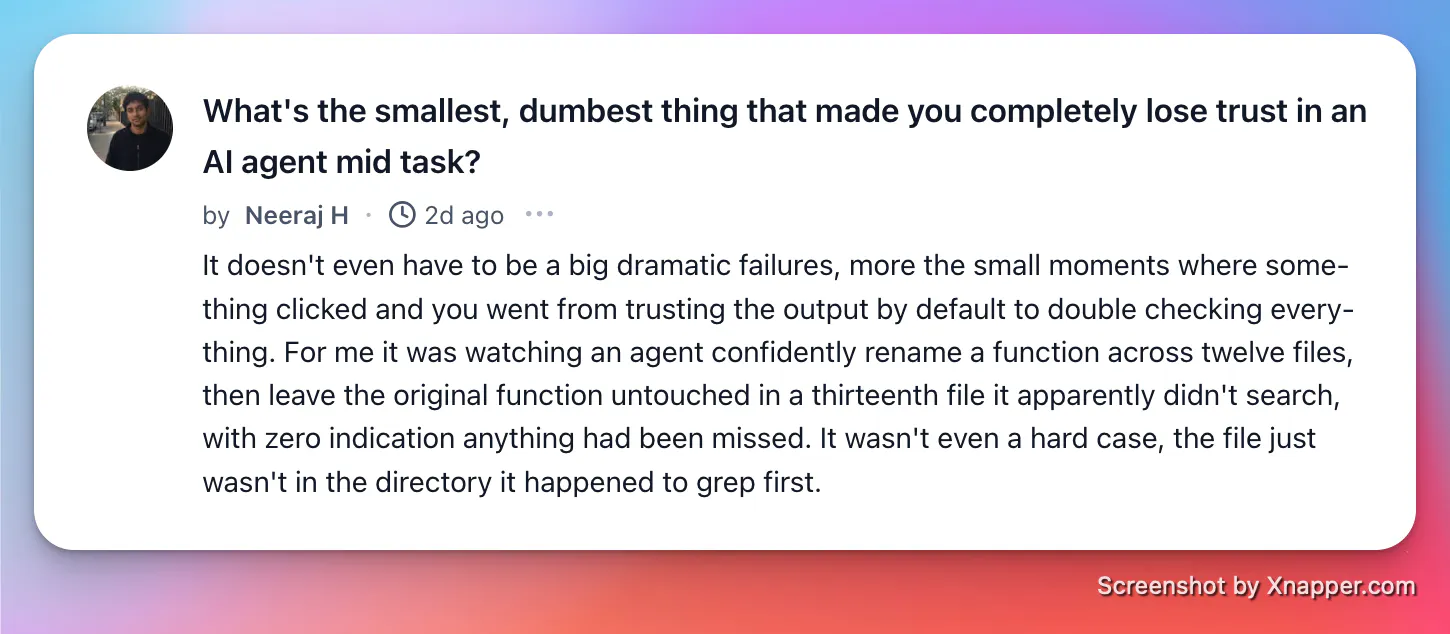
Agents. They give us so much: time, increased productivity, and a depleted stack of tokens. They also bring us joy when we get to watch them make crazy mistakes. Neeraj has been cataloguing some. He asks: What's the smallest, dumbest thing that made you completely lose trust in an AI agent mid-task?
The answers he’s been getting are gold: agents generating code from nonexistent APIs, looking at every file except the one you asked it to, and deleting files it just created.
What’s your agentic horror story?
Crowdsource your own adventure

by Dimitar Amski of Chillpen
We were bored of reading stories that only move in one direction.
What if Harry Potter was sorted into Slytherin? What if Carrie Bradshaw never met Mr. Big? What if thousands of writers could build the same fictional world together and readers could decide which path becomes canon?
Leaderboard highlights


