When mass layoffs started in tech, many people suggested that:
The layoffs were happening because, during COVID, companies hired too many people for online and remote roles.
That AI was attacking jobs.
And I still keep seeing statements from creators of various AI tools saying: No, AI won t replace you. Employees will just have time for more meaningful tasks in a company.
I am a Computer Science student doing research into how solopreneurs and small startups create new apps and what their stack looks like. Particularly, I'm interested in how you handle things like authentication, billing, and permissions/authorization in your apps.
Let me know what you're working on below and how you're going about it -- I'd love to connect for some quick calls to learn about your product and talk about your process in building it!
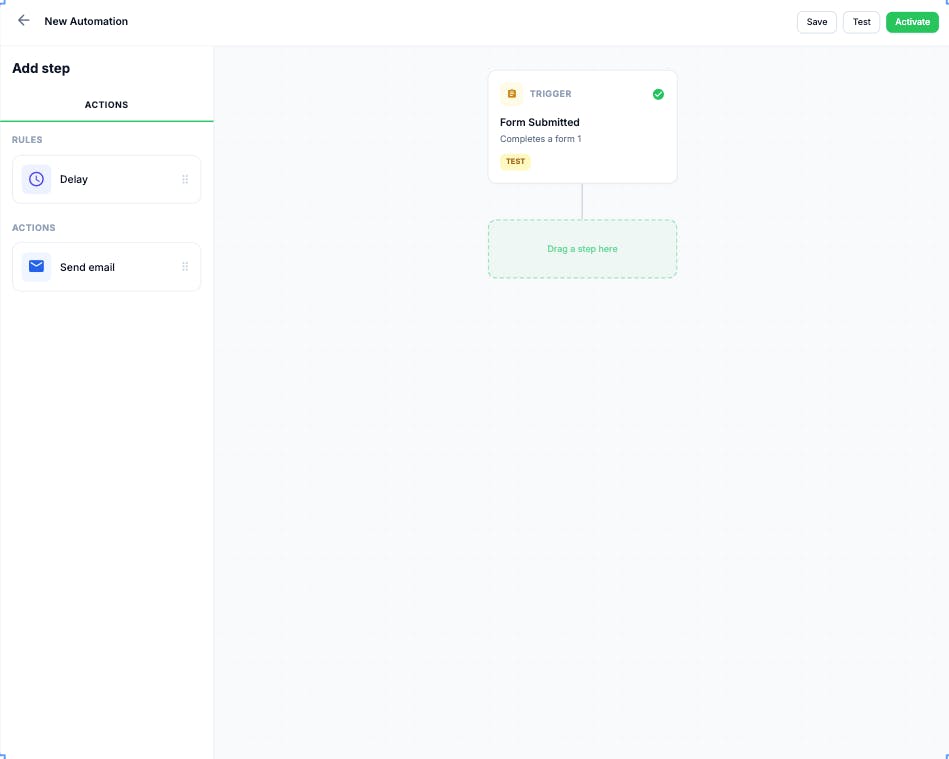
I continue building UI pages for my email marketing platform using AI, and I wondered if AI generated UI designs are good enough for production apps?
They seem to work great on mobile devices and desktop screens. They load fast. They behave normally. I m personally perfectly fine and happy to use them in production, but what is your opinion? Am I missing something? Should I be worried about using them in production? To build UI I use Lovable and Google Stitch. I go feature by feature, and for each feature I create a separate Git branch. This way I m more careful that one update does not break my entire website. P.S. The attached screenshot is a work in progress design that I created using Google Stitch for the Email Automation and Sequencing feature.
There s a common assumption that job applications are mobile-first now. Before moving into building a mobile app, we wanted to test that assumption with data rather than rely on intuition..
First, we looked at real usage. In our GA4 data, mobile accounts for ~22% of active users. But desktop dominates engagement and core actions, longer sessions, more events, and more consistent usage over time.
I noticed something surprising early on. Some users want maximum control and transparency. Others want speed and automation. The same product triggers trust for one group and friction for another. Do you design one clear path and accept churn? Or support multiple mental models and risk complexity? How have you handled this tradeoff?
Most founders pivot too late. Here s the data threshold when you must change direction.
Every founder talks about pivots, but very few discuss the real technical signals that force one. We recently hit those signals ourselves and had to redesign a core part of our product, not because we wanted to, but because the data left us no room to rationalize.
This is not a promo. This is a breakdown of the pivot logic, the user research behind it, and the exact framework we followed so other teams can use it.
Most successful tools start simple, one clear promise, one strong action. Yet over time, we add layers of features, dashboards, and options until even we can t explain the core value anymore.
Why is it so hard to keep things simple, ego, pressure from users, or fear of missing out? What s your way to protect simplicity when your product starts to grow?
As AI tools become more common in everyday workflows, I keep noticing the same tension: people want speed and efficiency, but they also worry about accuracy, privacy, and how these systems make decisions. Even small misunderstandings around data handling or AI limitations can quickly affect whether someone feels comfortable using a product long-term.
A lot of teams and product builders talk about transparency, clear communication, and setting realistic expectations, but actually putting that into practice seems much harder. Especially when users expect both powerful automation and high levels of control.
We've been thinking a lot about the chaos of the modern job search. Juggling dozens of applications, follow-ups, and resume versions in messy spreadsheets is a huge source of burnout for so many professionals. We're curious to hear how you're managing it all.
What's your take on a few key things?
Quality vs. Quantity: Are you focused on sending out a high volume of applications, or a smaller number of highly tailored ones?
Tracking Methods: What's your current system for tracking applications? Is it a spreadsheet, a Trello board, or something else?
Follow-Up Cadence: How do you decide when and how often to follow up after submitting an application?
When I started digging into today s job market, the numbers were staggering, hundreds of applications for a single role, weeks of silence, and endless uncertainty for qualified candidates. The process felt broken.
After talking to 25+ job seekers, one thing became clear: people spend more time fighting the system than showcasing their skills. The job search has turned into a full-time admin job, endless forms, messy spreadsheets, and burnout before you even get a chance to shine.
When I started digging into today s job market, the numbers were staggering, hundreds of applications for a single role, weeks of silence, and endless uncertainty for qualified candidates. The process felt broken.
After talking to 25+ job seekers, one thing became clear: people spend more time fighting the system than showcasing their skills. The job search has turned into a full-time admin job, endless forms, messy spreadsheets, and burnout before you even get a chance to shine.
When I dug into the current job market, the numbers were staggering: hundreds of applications for every role, months of silence before a rejection, and endless uncertainty for job seekers.
To understand the real pain points, I went beyond the stats and spoke with more than 25 job seekers. What I heard was consistent: the search is mentally draining, tailoring every resume eats up time and energy, most people lose track of their applications, and there s little trust in recruiters or outreach.