I m curious! How do you document the different iterations of your app so you can revisit them later for enhancements or debugging?
Do you stick to traditional docs, use wikis, or something more creative?
As a solo dev, my app is getting bigger and more complex with multiple automations and moving parts, and I often struggle to remember all the implementation details. Do you also save the prompts you used to develop certain features, or have your own system for keeping track?
One for chatbot templates in 2018 that was used by 700+ marketing agencies.
Another in 2020 for job seekers in the U.S., which reached 5.5M users.
So let s suppose I have some experience. You can read about me on Bootstrappers, TechCrunch, Dev to.
Now I m considering building a marketplace where creators can list their vibe-coded projects along with the code, a live demo link, etc. The idea is to target:
Finden has obtained the Google CASA 2 certification, for those unfamiliar, CASA (Cloud Application Security Assessment) is Google s benchmark for security and compliance. Level 2 means our systems meet higher standards of data protection, risk controls, and user safety.
If you re trusting AI tools with sensitive workflows, security isn t a 'nice-to-have', it should be essential. This milestone is just one step in our commitment to building trusted, transparent AI infrastructure.
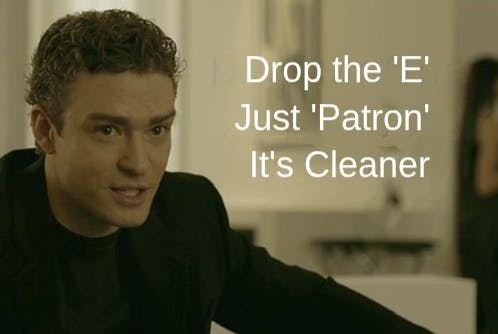
After my AI startup (trieve) got acquired, I returned to an old idea: building a better Patreon for content creators making serial content like long running comics, shows, or books. The domain patron.com was perfect, but it was owned by World Media as an investment. Instead of assuming it was impossible, I cold emailed the owner Gary Millin through LinkedIn and regular outreach.
Last year @Clustr looked healthy with 10,000+ active users, 10-minute sessions and $20,000 in MRR. Yet users churned quickly traction didn t equal stickiness. After hundreds of growth experiments we finally pulled the plug, trimmed the team from 12 to 2, and plunged into pivot hell.
Dozens of dead ends later, I flew to San Francisco hunting for answers. On a quick walk in Dogpatch, Tom Blomfield (Monzo Bank/GoCardless) hit me with the line that finally cut through the fog:
Thank you to everyone who supported the launch! We ranked 6th yesterday.
For those just discovering us: GitArsenal solves that painful moment when you find a cool GitHub repo but spend hours fighting dependency hell instead of actually running the code. Our AI agent automatically handles the entire setup process, from analyzing the codebase to debugging errors to provisioning the right hardware. What features would make you actually use this?
VSCode/Cursor integration so it opens right in your IDE?
Team sharing so your whole company can run the same environments?
Docker export for deployment?
Something else entirely? Also Coming very soon: Full GitArsenal app with GUI, better logging, and way more control over the setup process.
Current status: CLI working, tested on 100+ repos from simple scripts to complex ML research. We're iterating fast based on real user feedback, and testing more on different categories of Repos.
Yes, we had this talk on Product Hunt countless times, about whether Apple is behind in AI.
Apple is in early talks with Google to potentially use Gemini AI to power a revamped version of Siri, as part of efforts to catch up in generative AI. They have been considering Anthropic s Claude and OpenAI s ChatGPT + testing their own models.
I ve been wondering about this a lot lately.... If LLMs keep pulling from blogs, news platforms (and obviously other content sources) -> this results in ad revenue keeps shrinking for most folks reliant on this source of income -> what is the pivot for these creators?
My wife runs a food blog that s heavily ad traffic based. Right now her niche (make based content seems to be some of the safest on the internet.. likely way worse for someone with an information based blog) hasn t been hit too hard, but it feels like something that could change quickly. That s got us thinking about what a pivot could look like.
My name is Ravi and I m the co-founder of confe.io.
This project has truly been a labor of love that built in late nights, designed by feedback from our team and social media managers, and (let s be honest) more than a few cups of chai (Tea) and coffee.
Whenever I m about to buy something (especially something more expensive), I can be easily influenced by recommendations from people I trust and know. That might be well-known accounts on X or suggestions from friends.