Azvya Erstevan

PingPollsPingPolls
Co-Founder of PingPolls

Forums

Building PingPolls Together With Our Users

We realized that while most online services are getting more effortless to use, form builders have stayed the same. Most forms are still slow to build and boring to fill out.

Part of the problem is the mental model people have for online forms. Most people expect something like Google Forms, even though its format is not how people actually spend their time. We are much more comfortable with the chat format we use every day on WhatsApp or ChatGPT.

•

8d ago

PingPolls v1.0 - AI Forms that feel natural, not just conversational.

Forms feel like paperwork. PingPolls makes them feel like a chat. We replaced stiff inputs with a natural messaging UI and AI voice notes to boost response rates. Includes Certiscoreâ„¢ for deep preference analysis and 'Ask AI' to chat with your results instead of reading spreadsheets.
Elena Mira•

5mo ago

How do you test an idea before talking to users?

Genuinely curious: what s your first-mile approach before you book those early interviews?

Do you start with Reddit deep-dives? Reverse-engineer reviews? Talk to personas in your head?

Nika•

5mo ago

How much are you willing to pay for influencer promotion of your product?

At a time when everyone allows themselves to build any solution using AI, it is difficult to differentiate themselves, and makers are betting on more aggressive distribution.

Some differentiate themselves with good tech support, some build their personal brand as a founder, and some pay influencers.
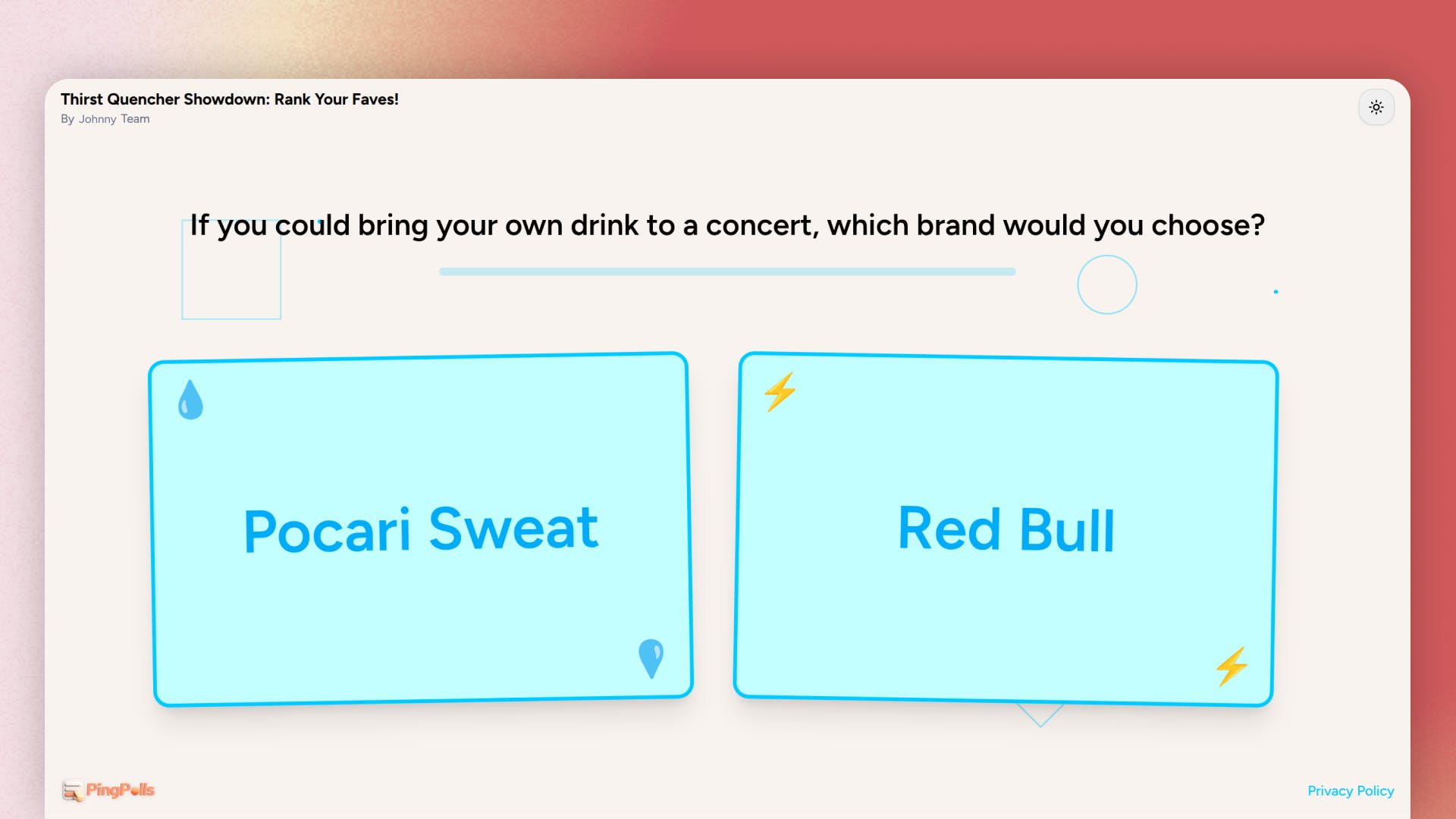
How To Grab Attention (inc. some cool YC-founder templates)

I wrote last week about how we re building Ting on two axes: one to get attention, the other to build the product.

On attention, we re doing pretty well in 3-weeks:

  • 1k on the waitlist.

  • 200 people have joined meetings booked by Ting already.

  • 375 invites sent out so far...

Sean Howell•

5mo ago

Building AI Products that Work, -1 to 0

I spend a lot more time on PH at the moment to see what indepedent makers are spending their time on. I've noticed some patterns and also want to share a little bit about my journey at South Park Commons. Most startup stories begin at zero when there s already a team, an idea, maybe even a prototype. But at South Park Commons (SPC), the philosophy is different: people gather in the -1 to 0 stage. That liminal space where you don t yet know what you re building or even if you should build at all. It s a place for exploration, experimentation, and being brutally honest about what s working and what s not.

A hallmark of SPC is how often industry leaders drop by to share what they ve learned in the wild. Recently, I was in a small chat with Tyler Payne former Google and LinkedIn AI lead, startup builder, who has spent the last decade helping teams actually ship real-world ML systems. We're always talking about what's being launched at SPC.

Nika•

5mo ago

What marketing activities can you do before the Product Hunt launch?

@byalexai asked in his recent forum post when to submit your product on PH.

Earlier, I said there are two groups of people.

Those who:

•

6mo ago

As a founder, surveys are easy to build, but how do you get quality responses?
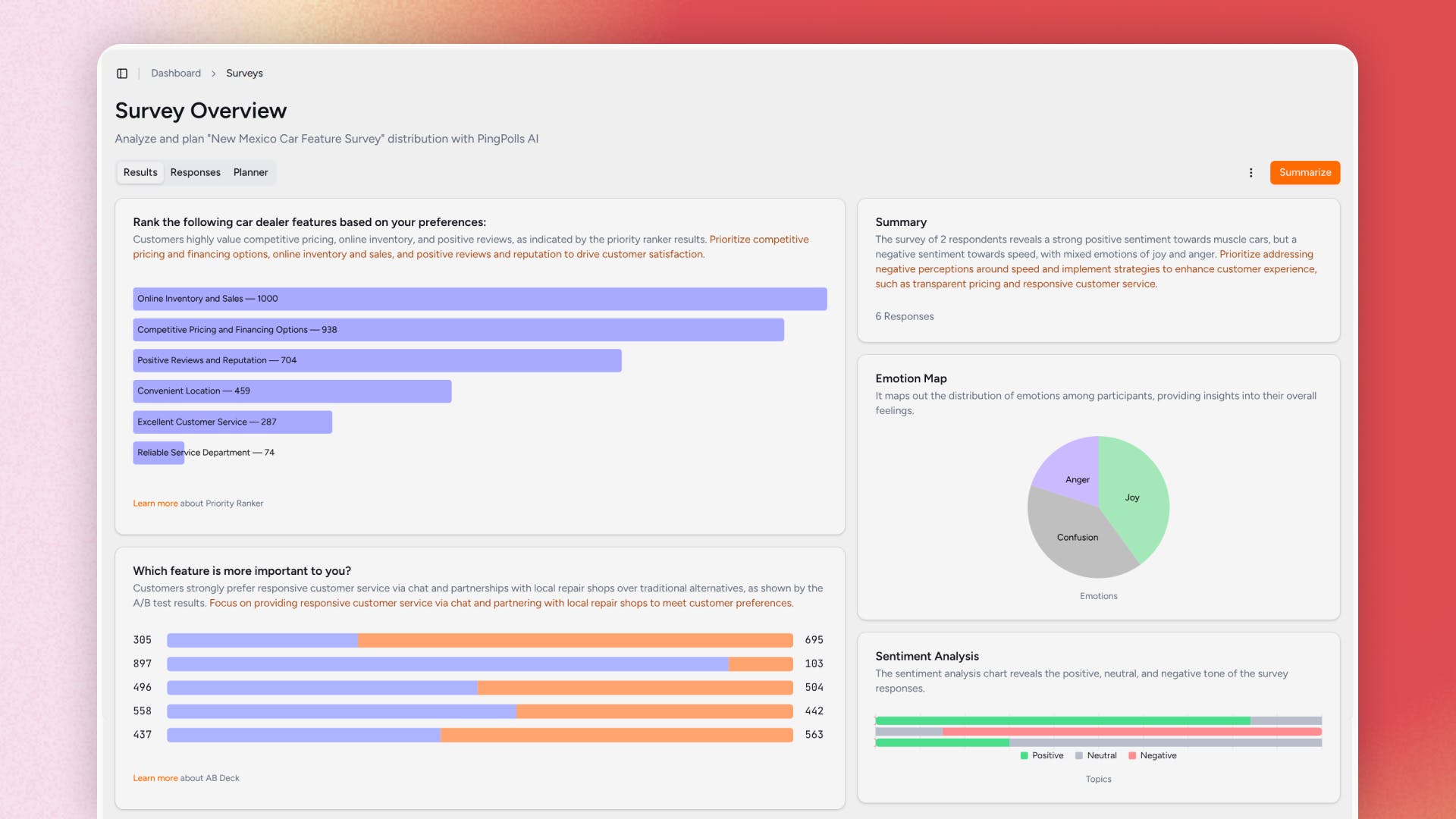
I ve been creating online surveys for pilot studies and market validation, and honestly... making the survey isn t the hard part. Distribution is.

•

6mo ago

My Struggles, when trying to market research
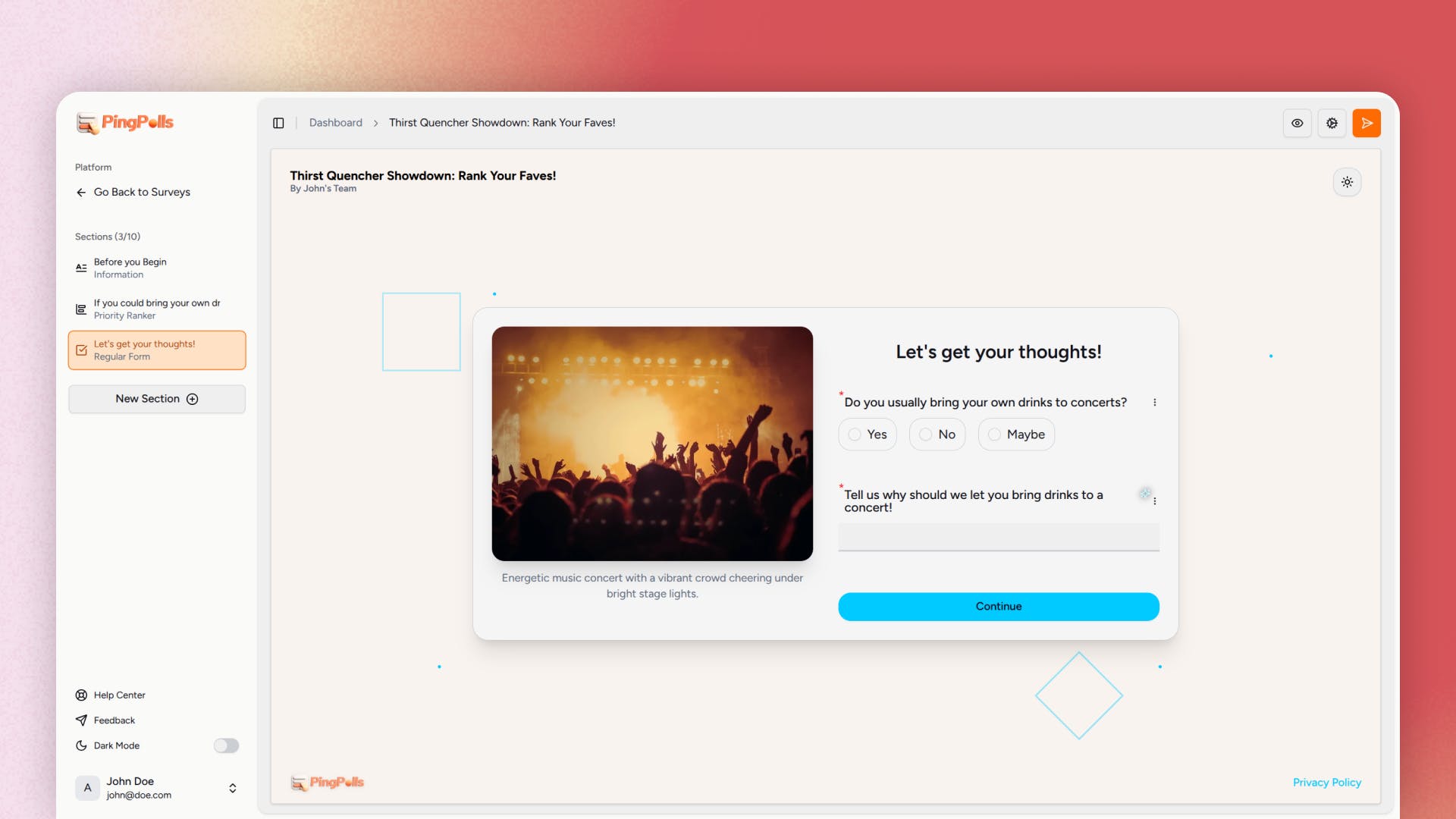
Hey everyone I'm Azvya. I used to built multiple SaaS for an entire year and the main thing i always have been struggling as a Product Owner is MARKET RESEARCH, then a framework comes up to my mind.

•

5mo ago

PingPolls v0.1 - AI Form and surveys for everyone, but efficient

PingPolls is not just another AI form builder. The best survey tool that goes beyond with a new method. We provide deep insights with a sentiment-analyzing feature, tailored for customer-oriented experience, and get data that truly matters
•

8mo ago

Kuqus - Turn your surveys into fun games

Kuqus lets you create fun 'this or that' surveys to collect real audience insights or host meme battles and voting games - fast, simple, and engaging.
Charles Yang•

5mo ago

What Are the Steps to Creating an AI Tool Website?

After developing and launching a few tool websites recently, I've gathered some insights and experiences that I d like to share here. The following content isn t just for AI tool websites; it applies to any website. First. Identify the Need The first step is to clearly define what kind of website you want to create and what problem it will solve. This problem could be your own or someone else s. For example, the AI image enhancer I made was created to solve a problem my wife was facing. 1. Solving Your Own Problem I believe this is the best type of need to address. When you're solving a problem you personally encounter, you become your own user, using the product daily. This ensures that the need is real and encourages you to stick with the project. Even if you don t gain many other users, at least you ve solved your own issue. This approach has the highest chance of success. 2. Copying a Successful Competitor and Adding Unique Value This method has the advantage of entering a proven market with existing examples to follow. It s the quickest way to see results and avoid pitfalls. However, you need to clearly identify what your unique value proposition is. Can you better understand user needs, offer a superior experience, or attract more traffic than the original? 3. Analyzing Search Keywords to Find Unmet Needs Use tools like Google Trends, Semrush, or Similarweb to analyze search keywords and find unmet needs. In simple terms, look for high search volume topics that aren t yet well-served by existing websites. However, finding such unmet needs can be challenging since most common problems are already addressed. 4. Coming Up With Your Own Idea This approach involves creating a product based on your understanding and assuming a need exists. It s the most difficult because you don t know if the need is real or if anyone is willing to pay for it. Without proper validation, there's a high risk of failure, as the idea might be a false need that only you care about. My first website was based on such an idea it took me months to develop, but in the end, hardly anyone used it. Second. Develop the MVP Quickly create an MVP (Minimum Viable Product) version of your tool. New products have a high failure rate, so to increase your overall success chances, you need to boost your output. In the lean iterative process, someone who can release 12 MVPs a year has a fourfold advantage over someone who can only release 3. One key point here is to make smart use of third-party SaaS services don t build things from scratch if you don t have to. Also, developing based on open-source projects can save you a lot of time. Third. Launch Once the MVP features are ready, you can purchase a domain and launch the site. The simplest setup involves buying a domain, using Vercel for hosting, and Cloudflare for DNS management. Fourth. Promotion I think this is the hardest part, but fortunately, there are platforms that can help with a smooth launch, like Product Hunt, Hacker News, and Reddit. These platforms are great for promotion and can help you quickly gain users. When introducing your product, be sincere. Don t just write a one-liner; give a proper introduction. People need to understand what problem your product solves, what advantages it has, and why they should use it. There are also other promotion methods, such as SEO, social media, and advertising, which require time and effort. I plan to expand on these topics in the future when I have more time. So, what do you think is the hardest part of developing a website? By the way, my latest site is also live on Product Hunt. You can check it out here: Product Hunt