We're excited to announce a major upgrade to Layercode: support for Deepgram Flux: the world's first transcription system built specifically for voice agents.
Building voice AI agents is tricky. There s lots to remember: even when developing locally with a tool like Layercode, you need to remember to run a tunnel and add the correct URL to your dashboard so Layercode can send webhooks.
Dropping a bunch of frequently asked questions and answers here: How does Layercode work?
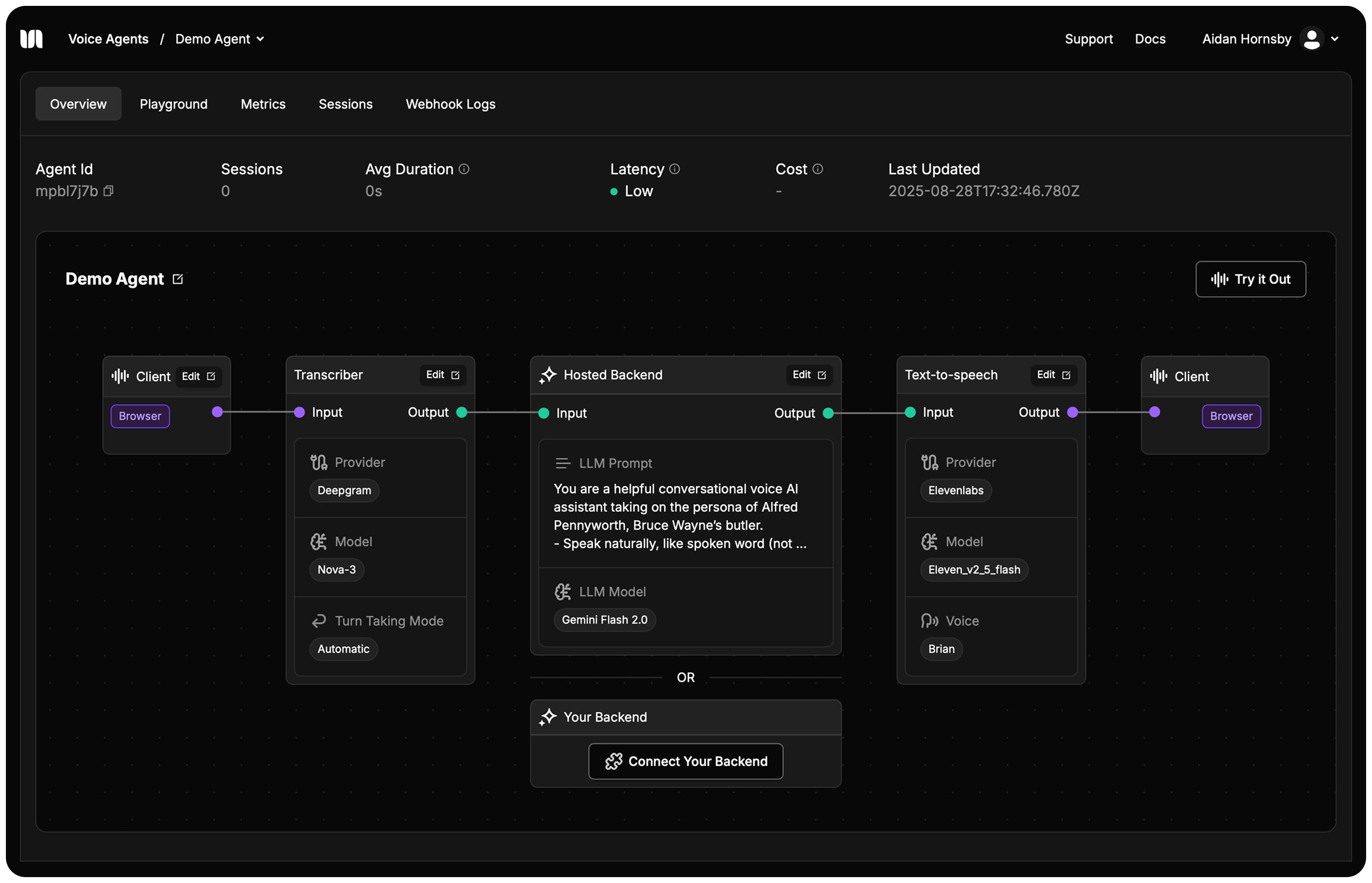
Layercode uses a chained voice pipeline approach to give LLM-powered AI agents the ability to listen to a user s speech, transcribe and process the input, and respond with speech.
We believe every developer with a vision deserves the tools to build it. We're launching a Startup Program to give early-stage companies building innovative voice AI experiences access to world-class voice infrastructure.
Anyone building voice AI agents knows how hard it is to stay up-to-date with the latest text-to-speech voice models.
We spend time testing and experimenting with all of the available paid and open-source text-to-speech voice AI models and consolidated our own notes and experience testing different models into a single guide for developers evaluating multiple models.
Anyone building voice AI agents knows how hard it is to stay up-to-date with the latest text-to-speech voice models.
We spend time testing and experimenting with all of the available paid and open-source text-to-speech voice AI models and consolidated our own notes and experience testing different models into a single guide for developers evaluating multiple models.
We created a tactical guide sharing a bunch of best practice for developers on how to tune your prompts to make your voice agent's speech more conversational. Sharing the fundamentals here
Written and spoken language are fundamentally different in a number of ways that impact how you should approach building voice AI agents.
Consider how a human might communicate the same information: