
Keep.coffee
Fundraising for AI builders
14 followers
Fundraising for AI builders
14 followers
Keep is onchain fundraising built for solo builders, indie hackers, and small teams. Raise directly from your backers; your token is tradable the moment the raise settles — no liquidity to seed, the contract locks it for you. If the launch doesn't work out, the contract automatically refunds most of the money to backers. Non-custodial, live on Solana mainnet.




How does the refund mechanism actually work if the launch fails partway through, and do backers need to manually claim their refund or does the contract push it back automatically?
@sleymanseklke1
Good question — there are two failure paths:
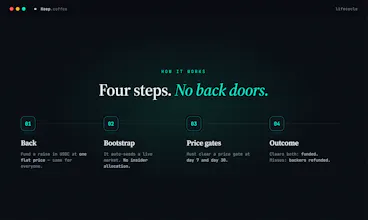
1. Raise doesn't fill within the 24h window: it gets cancelled automatically (a keeper does this, no human decision involved), and 100% of your USDC becomes claimable immediately.
2. Raise fills but the token later misses a price gate (it has to hold at least 85% of launch price at day 7 and day 30, measured as a 1-hour TWAP so a thin pool can't fake it): the contract settles the failure and refunds become claimable — about 95% at the day-7 gate, about 85% by day 30, weighted by the tokens you still hold.
On manual vs push: it's a one-click claim from the dashboard, not a push. We're fully non-custodial, and your refund amount depends on what you still hold at settlement — so the contract computes your entitlement and you sign one transaction to collect it. What matters: nobody can block, pause, or negotiate the claim. There are no admin keys in the money path.
Full mechanics: keep.coffee/how-it-works
Tried it out yesterday and the auto-refund feature is genuinely reassuring for backers, something most fundraising tools skip over entirely.
@rdvanf8c1
Thanks for actually trying it rather than just reading the pitch. The refund path is the whole reason this exists — failure priced in and enforced beats failure as a promise. If you hit any friction anywhere (wallet flow, docs, anything confusing), I genuinely want to hear it — that's what gets fixed next.