If I asked you to name the top five tech innovations of the past two decades, you d probably start with the iPhone, then move on to driverless cars , 3D printing, gene editing , and reusable rockets .
But no technology has impacted our daily lives like the iPhone did in 2007. It completely redefined what a smartphone could be, creating a clear distinction between "before" and "after."
Meanwhile, websites the cornerstone of the digital world have remained largely the same.
Yes, websites have gone through cosmetic changes over the years. They look better, they re easier to navigate, and they load faster. But their fundamental purpose has remained constant:



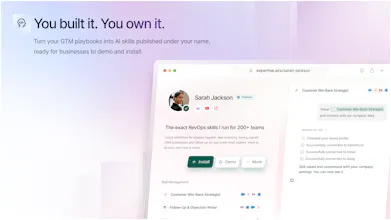
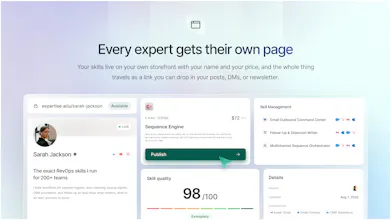



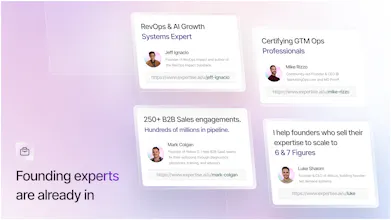
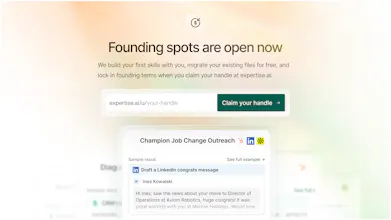


What caught my attention is the shift from building another agent to sharing the actual workflow behind it. That feels like the more valuable layer.
Expertise AI
@shirley_mouWe see it the same way. The agent is just the interface. The real value comes from the decisions, steps, and experience behind the workflow.
Expertise AI
@shirley_mou Agents and models will keep changing, but a proven way of getting work done can stay valuable for years. That’s the layer we want experts to own and share.
Expertise AI
@shirley_mou Exactly. Everyone's racing to build agents, but an agent with no expertise behind it is just a very confident intern. The workflow layer is also the part that survives, because when the next model generation lands, the agents get swapped out and the expert's process moves right over. Betting on the layer that outlives the tooling felt like the safer place to build.
I would try this first for the recurring tasks that currently require five tabs, three tools, and a lot of copying between them.
Expertise AI
@phoenixhu Five tabs and three tools sounds very familiar. If the process repeats often, a skill can handle the tool switching and let you focus on the decisions that actually matter.
Expertise AI
@phoenixhu That’s a perfect first workflow to test. Anything that involves the same steps, the same tools, and constant copy-pasting is a strong candidate for turning into a skill.
Expertise AI
@phoenixhu You've described the exact shape of task skills were built for. Browse the expert storefronts and there's likely already a skill covering your workflow, you can demo it before installing anything. And if your process is one nobody's covered yet, tell me what it is, I'd love to route it to one of our experts as a request.
The CRM plus email combination makes the stalled-deal example feel practical rather than like a generic agent demo.
Expertise AI
@tiantian_liu1Glad that came through. Stalled deals rarely live in one system. You need both the CRM history and the actual conversation to understand what’s happening and decide what to do next.
Expertise AI
@tiantian_liu1That was important to us. A useful skill needs real context from the tools where work happens, not just a polished prompt and a generic response. Combining CRM and email makes the recommendation something a rep can actually use.
I'm one of the engineers at Expertise. The thing that still feels a little like magic to me: the same expert skill installed by two different companies produces genuinely different, correct output for each , because at install it learns your ICP, your stack, and your pipeline, not a generic template. The expert writes the judgment once; the execution is yours. Demoing one impressive run is easy. Making one playbook adapt to a thousand different businesses without the expert doing setup calls is the actual product.
@seturaj_matroja “The thing that still feels a little like magic to me” brother, you helped build it 😂
@josh_hamburger1 ha, fair 😂 but you know better than anyone how big the gap is between "it produced an answer" and "it just works." Crossing that gap is the magic, we just happen to know how many commits it took.
@seturaj_matroja We're lucky to have a magician on the team 🧙
@josh_hamburger1 @seturaj_matroja you guys make it look way easier than it probably was behind the scenes 😂
@seturaj_matroja This is the part I wish more people dug into: the install-time adaptation is what separates a skill from a template, and it's the hardest thing to get right at scale. Curious what others think, though: if the expert writes the judgment once and the system localizes the execution, where does accountability sit when the output is wrong, with the expert's playbook or the buyer's context?
@adam_lin4 This is exactly the right question and part of why we gate the risky parts. Our split: expert owns the judgment, system owns applying it to your context correctly, buyer owns the decision because writes and sends require your approval before they happen. And when something's off, run traces show whether the playbook logic or the injected context was at fault, so "who's accountable" is inspectable, not a debate.
A lot of the sharpest GTM operators have no interest in filming a course, and you found them a way in through the work itself. Really glad to see this one out today.
Expertise AI
@ben_kahan Such a good point. Not every great operator wants to become a content creator. They should be able to turn what they already do well into something others can use and pay for. Really appreciate the support today!