
EKOS
Turn GitHub repos into MCP servers
11 followers
Turn GitHub repos into MCP servers
11 followers
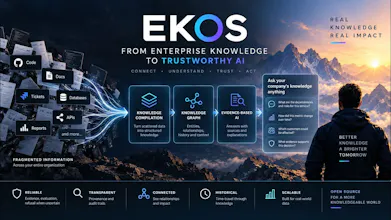
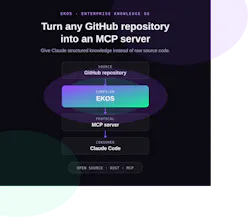
EKOS is a compiler for enterprise knowledge — not another code index. It turns your codebase into structured, evidence-linked facts AI agents can actually trust, each one traceable back to the exact commit it came from. Served to Claude and other AI assistants through a read-only MCP server. The first step toward one auditable knowledge layer spanning an entire enterprise's systems.


Maker update — distributed storage + a real query engine landed this week 🚀
Two big pieces shipped since launch, both proven against real workloads, not just unit tests:
1. Distributed storage & query is feature-complete (v1). EKOS can now split a knowledge base across partitions and serve reads/writes from independent worker nodes backed by S3/Azure/local object storage — a coordinator hands out write leases, query workers cache and serve partitions, and cross-shard search does a real BM25 top-k merge instead of a naive concat.
We didn't just call it done and move on — we ran two full autonomous end-to-end tests against real 90+ partition workloads (MinIO, live LLM provider, the works). They found 8 real defects unit tests never caught: a runtime panic on the object-store path, a query worker that took down the whole cluster when killed, a heartbeat interval that silently expired write leases mid-pipeline. All 8 are fixed with regression tests, and the reports are public in the repo. If a demo only shows the happy path, it's marketing, not evidence — so we publish the failures too.
2. A real compiled-knowledge query engine, not just "dump some JSON at the LLM." Natural-language questions now compile into a typed query plan, execute against structured facts + graph + search, and hand the model a flat set of atomic, source-cited claims — file, line, extractor, confidence — instead of whole objects for it to re-derive structure from. This is the same "compile once, trust the artifact" philosophy applied to retrieval itself.
Both are on main today. As always — open source, evidence-backed, gaps documented rather than hidden. Happy to answer questions about either piece below 👇