You can gain an understanding of what's happening with your health and receive high-quality recommendations. At its core, it works like having a doctor in your pocket. Our vision is to expand Doctorina into a comprehensive AI-powered telemedicine platform.
No reviews yetBe the first to leave a review for Doctorina
Maker
📌
Doctorina: AI-Powered Telemedicine for Everyone, Everywhere 🚀
For years, I worked on providing medical support for children with genetic neuromuscular diseases in a country with an underdeveloped healthcare system. I saw firsthand how families and patient advocacy groups often knew more about their conditions than the doctors treating them.
One of these diseases is spinal muscular atrophy (SMA) and Duchenne muscular dystrophy—conditions that slowly rob children and adults of their ability to move and breathe as motor neurons die. Time and again, I witnessed tragic cases where doctors, unfamiliar with rare diseases, missed early symptoms, failed to offer life-saving treatments, or simply lacked the expertise to help.
💔 14 preventable deaths. That’s how many I personally encountered, caused by medical recommendations that didn’t account for the natural course of SMA. Over time, it became clear: the lack of medical expertise isn't just a funding problem—it’s a knowledge distribution problem.
But this issue isn’t just about rare diseases. Cancer, cardiology, chronic illnesses—millions of patients worldwide face the same struggle. They lack access to the right knowledge at the right time. I saw this firsthand when my own mother’s cancer was misdiagnosed for six months, simply because a doctor misinterpreted her symptoms. By the time they realized, she had pleural metastases. If only someone had suggested a CT scan earlier, the outcome could have been different. Now, every time I check Doctorina, I run my mother’s scenario. And every time, I feel a deep sense of satisfaction—because Doctorina consistently suggests getting a CT scan. If she had access to it back then, we would have done the scan earlier, and everything could have been different.
🌍 The global healthcare gap is massive. More than 4 billion people around the world lack access to essential health services, meaning they cannot receive timely medical consultations. Our co-founder, Hanna Plotnitskaya, saw this crisis up close while working as a medical director in charitable clinics across Guatemala and Nicaragua. She witnessed firsthand how people struggle to access even the most basic medical advice, because doctors simply aren’t available or are simply impossible to reach.
📅 Healthcare Delays and a System Under Strain When my family relocated to Germany, I encountered a new challenge: long wait times—regardless of whether you have private or public insurance. Weeks, months, even half a year just to see a specialist. For highly specialized doctors, the wait times are even longer. The issue isn’t just bureaucracy—it’s a shortage of doctors and an overwhelming demand for consultations.
This experience made it clear: the problem isn’t limited to underserved regions. Even in developed countries, access to timely medical expertise is broken. That’s why we built Doctorina—to bridge the gap between people and the medical knowledge they need, when they need it.
🏥🤖✨What is Doctorina Beta ?
It’s a real AI doctor, already functioning as the first stage of a full-fledged AI-powered telemedicine platform. It analyzes symptoms, provides consultations, and helps users navigate their conditions.
Our engineers are working day and night to create a perfect system—one that doesn’t hallucinate, provides structured consultations, and delivers high-quality, reliable medical recommendations.
🚀 Doctorina is still in beta, and every user helps make it better. There is still a lot to improve and add, but we believe that what we’ve already built is a real benefit for people who have no access to a doctor. By trying Doctorina, you’re not just getting access to advice and support—you’re contributing to a future where medical knowledge is available to everyone, no matter where they are.
More Than Just ChatGPT
This is a question we hear from 2–10% of our audience (often investors). Our answer is simple: ChatGPT (and similar models) are not designed for medical consultations. Unlike a real doctor, ChatGPT doesn’t guide a patient from initial symptoms to a logical conclusion. It doesn’t ask clarifying questions, test hypotheses, or adjust the direction of the consultation. If we use a metaphor: LLM models, computer vision, and machine learning are like a scalpel—powerful, but useless on their own. A scalpel doesn’t heal; a doctor uses it to perform surgery. And that’s the key difference—Doctorina is the doctor, and AI is just one of the tools we use. Our system is developed in close collaboration with medical specialists, featuring an advanced multi-agent structure to provide recommendations or integrate findings into diagnoses and ensuring that the system mimics real doctor interactions by dynamically asking medically relevant questions and leveraging expert medical knowledge.
💬 What’s the biggest healthcare challenge you or your loved ones have faced due to lack of access, misdiagnosis, or long wait times? Your story could help shape the future of Doctorina. Let’s talk! 👇🚀
Just tried Doctorina app and I'm genuinely impressed! The app is intuitive and provides such detailed medical guidance. L This is exactly what healthcare needs - a solution that's accessible anytime, anywhere. Amazing project with huge potential. Wishing the team great success as they continue to develop this game-changing platform!
@darya_tsaryk1 Incredible work, Darya! Doctorina tackles one of the most urgent global challenges with empathy and cutting-edge tech—bridging the medical knowledge gap where it’s needed most💙
From my medical experience in low-income countries like Guatemala, the challenges can be stark. Many people don’t have access to a doctor, just because it’s simply not possible. The reasons are countless: 🔺 They might not have the money to see a doctor in a private system and there is no governmental clinics or any clinics nearby. 🔺 Roads could be blocked by protests, something common across Latin America. 🔺 Climate disasters could cut off entire communities for days. ( Sometimes it’s just a damaged road )
In addition, there I had time to work with doctors from all over the world and felt that despite the different backgrounds of our countries and different amounts of funding, we have many common problems - inaccessibility of care and overload of medical facilities, medical errors, burnout.
Have you or someone you know ever faced difficulties accessing medical care?
Report
Maker
We’re on the edge of a massive shift in healthcare: telemedicine is booming, AI is finally moving from hype to reality, and there’s a trillion‑dollar market up for grabs. People want a faster, simpler way to stay on top of their health—without endless waitlists or bureaucratic headaches. And honestly, so do I. I’m busy, sometimes a bit lazy, and I want a single platform that spots health issues early so I don’t have to waste time dealing with problems that could’ve been prevented.
But it’s more than just convenience. My co-founders have seen the devastating consequences of people not getting the right medical expertise when they need it—tragedies that were 100% avoidable if someone had simply connected the dots sooner.
I’m in this because my health—and that of my closest loved ones—is what matters most. I want us to stay healthy without wasting time on things that no longer need to be a hassle. Collecting information, getting updates, monitoring, setting appointments, exploring options, even asking "stupid" questions—it should all be effortless. Healthcare should be a path of curiosity and control, not stress and uncertainty.
It’s a huge business opportunity—possibly the biggest one we’ve seen so far. When we build something that truly helps people prevent illnesses before they even start, we won’t just improve lives—we’ll redefine an entire definition of "being healthy" and boost the whole industry that’s ready for exponential growth.
That’s the vision behind Doctorina: an AI-driven telemedicine tool that doesn’t just react to health issues but stays one step ahead of them. And that’s why I’m all in.
What about you—are you ready to take control of your health and take full responsibility for it?
Report
I believe it is a very meaningful approach to access medical services! Everything for people! Congratulations on the launch!
Report
Maker
@den_coj Thank you so much for your kind words and support! We're committed to putting people first and making medical knowledge truly accessible. Your encouragement inspires us to keep going — we're just getting started! 👏
Hi team! Medical literacy levels vary. How does the service adapt recommendations to ensure they are understandable for everyone?
Report
Maker
@artyom_zhuravlev Hi! Great point — medical literacy really does vary widely, and we take that seriously.
Doctorina is designed to adjust its language and complexity based on how the user communicates. It breaks down medical terms into simpler concepts when needed, avoids jargon, and uses relatable examples. If users ask for more detail, it can provide that too — in layers. We’re constantly working to make the experience more inclusive, because we believe that medical knowledge should be accessible to everyone, not just experts.
@darya_tsaryk1@hanna_melini@melnichek
Love the vision of making healthcare accessible anytime, anywhere 🚀🚀🚀
Wishing you the best of luck with the launch! Hope it all goes smoothly!
Report
Maker
@hanna_melini@melnichek@artyom_trofimuk1 Thank you so much, Artyom! Your support means a lot to us. We're truly passionate about making healthcare more accessible, and kind words like yours keep us going. Fingers crossed for a smooth launch!
Wow! This is such a meaningful idea, especially for people who don’t have easy access to healthcare. I think you’re genuinely making a difference. I love it! Congrats on the launch, guys!


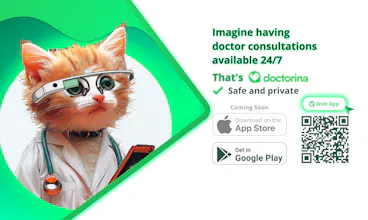

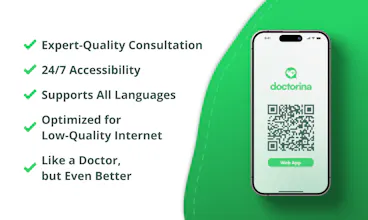
Doctorina: AI-Powered Telemedicine for Everyone, Everywhere 🚀
For years, I worked on providing medical support for children with genetic neuromuscular diseases in a country with an underdeveloped healthcare system. I saw firsthand how families and patient advocacy groups often knew more about their conditions than the doctors treating them.
One of these diseases is spinal muscular atrophy (SMA) and Duchenne muscular dystrophy—conditions that slowly rob children and adults of their ability to move and breathe as motor neurons die. Time and again, I witnessed tragic cases where doctors, unfamiliar with rare diseases, missed early symptoms, failed to offer life-saving treatments, or simply lacked the expertise to help.
💔 14 preventable deaths. That’s how many I personally encountered, caused by medical recommendations that didn’t account for the natural course of SMA. Over time, it became clear: the lack of medical expertise isn't just a funding problem—it’s a knowledge distribution problem.
But this issue isn’t just about rare diseases. Cancer, cardiology, chronic illnesses—millions of patients worldwide face the same struggle. They lack access to the right knowledge at the right time. I saw this firsthand when my own mother’s cancer was misdiagnosed for six months, simply because a doctor misinterpreted her symptoms. By the time they realized, she had pleural metastases. If only someone had suggested a CT scan earlier, the outcome could have been different. Now, every time I check Doctorina, I run my mother’s scenario. And every time, I feel a deep sense of satisfaction—because Doctorina consistently suggests getting a CT scan. If she had access to it back then, we would have done the scan earlier, and everything could have been different.
🌍 The global healthcare gap is massive.
More than 4 billion people around the world lack access to essential health services, meaning they cannot receive timely medical consultations. Our co-founder, Hanna Plotnitskaya, saw this crisis up close while working as a medical director in charitable clinics across Guatemala and Nicaragua. She witnessed firsthand how people struggle to access even the most basic medical advice, because doctors simply aren’t available or are simply impossible to reach.
📅 Healthcare Delays and a System Under Strain
When my family relocated to Germany, I encountered a new challenge: long wait times—regardless of whether you have private or public insurance. Weeks, months, even half a year just to see a specialist. For highly specialized doctors, the wait times are even longer. The issue isn’t just bureaucracy—it’s a shortage of doctors and an overwhelming demand for consultations.
This experience made it clear: the problem isn’t limited to underserved regions. Even in developed countries, access to timely medical expertise is broken. That’s why we built Doctorina—to bridge the gap between people and the medical knowledge they need, when they need it.
🏥🤖✨What is Doctorina Beta ?
It’s a real AI doctor, already functioning as the first stage of a full-fledged AI-powered telemedicine platform. It analyzes symptoms, provides consultations, and helps users navigate their conditions.
Our engineers are working day and night to create a perfect system—one that doesn’t hallucinate, provides structured consultations, and delivers high-quality, reliable medical recommendations.
🚀 Doctorina is still in beta, and every user helps make it better. There is still a lot to improve and add, but we believe that what we’ve already built is a real benefit for people who have no access to a doctor. By trying Doctorina, you’re not just getting access to advice and support—you’re contributing to a future where medical knowledge is available to everyone, no matter where they are.
More Than Just ChatGPT
This is a question we hear from 2–10% of our audience (often investors). Our answer is simple: ChatGPT (and similar models) are not designed for medical consultations. Unlike a real doctor, ChatGPT doesn’t guide a patient from initial symptoms to a logical conclusion. It doesn’t ask clarifying questions, test hypotheses, or adjust the direction of the consultation. If we use a metaphor: LLM models, computer vision, and machine learning are like a scalpel—powerful, but useless on their own. A scalpel doesn’t heal; a doctor uses it to perform surgery. And that’s the key difference—Doctorina is the doctor, and AI is just one of the tools we use. Our system is developed in close collaboration with medical specialists, featuring an advanced multi-agent structure to provide recommendations or integrate findings into diagnoses and ensuring that the system mimics real doctor interactions by dynamically asking medically relevant questions and leveraging expert medical knowledge.
On that note, I’m inviting you to download the app and share your feedback with us!
🔗Try it now → https://app.doctorina.com and be part of the change!
Website →https://doctorina.com
🔗Try it on Google Play: Doctorina: https://play.google.com/store/apps/details?id=com.doctorina.app.android.production
🔗Try it on Apple Public TestFlight : https://testflight.apple.com/join/KDY9VaWw
💬 What’s the biggest healthcare challenge you or your loved ones have faced due to lack of access, misdiagnosis, or long wait times? Your story could help shape the future of Doctorina. Let’s talk! 👇🚀
Happy hunting,
Darya
Unicorns Club
@darya_tsaryk1 Good luck!
@a_anastasiaaaa Thank you!
Just tried Doctorina app and I'm genuinely impressed! The app is intuitive and provides such detailed medical guidance. L This is exactly what healthcare needs - a solution that's accessible anytime, anywhere. Amazing project with huge potential. Wishing the team great success as they continue to develop this game-changing platform!
@lena_syksina Thank you!
@lena_syksina thank you so much!
@darya_tsaryk1 Incredible work, Darya! Doctorina tackles one of the most urgent global challenges with empathy and cutting-edge tech—bridging the medical knowledge gap where it’s needed most💙
Good luck!
@alina_shtroblia Thank you!
@sasha_buratynskyi Thank you!
InterSub
@darya_tsaryk1 All the best. Not an easy sphere you've chosen
@darya_tsaryk1 @mujaji that's for sure! Thank you so much!
From my medical experience in low-income countries like Guatemala, the challenges can be stark. Many people don’t have access to a doctor, just because it’s simply not possible. The reasons are countless:
🔺 They might not have the money to see a doctor in a private system and there is no governmental clinics or any clinics nearby.
🔺 Roads could be blocked by protests, something common across Latin America.
🔺 Climate disasters could cut off entire communities for days. ( Sometimes it’s just a damaged road )
In addition, there I had time to work with doctors from all over the world and felt that despite the different backgrounds of our countries and different amounts of funding, we have many common problems - inaccessibility of care and overload of medical facilities, medical errors, burnout.
Have you or someone you know ever faced difficulties accessing medical care?
We’re on the edge of a massive shift in healthcare: telemedicine is booming, AI is finally moving from hype to reality, and there’s a trillion‑dollar market up for grabs. People want a faster, simpler way to stay on top of their health—without endless waitlists or bureaucratic headaches. And honestly, so do I. I’m busy, sometimes a bit lazy, and I want a single platform that spots health issues early so I don’t have to waste time dealing with problems that could’ve been prevented.
But it’s more than just convenience. My co-founders have seen the devastating consequences of people not getting the right medical expertise when they need it—tragedies that were 100% avoidable if someone had simply connected the dots sooner.
I’m in this because my health—and that of my closest loved ones—is what matters most. I want us to stay healthy without wasting time on things that no longer need to be a hassle. Collecting information, getting updates, monitoring, setting appointments, exploring options, even asking "stupid" questions—it should all be effortless. Healthcare should be a path of curiosity and control, not stress and uncertainty.
It’s a huge business opportunity—possibly the biggest one we’ve seen so far. When we build something that truly helps people prevent illnesses before they even start, we won’t just improve lives—we’ll redefine an entire definition of "being healthy" and boost the whole industry that’s ready for exponential growth.
That’s the vision behind Doctorina: an AI-driven telemedicine tool that doesn’t just react to health issues but stays one step ahead of them. And that’s why I’m all in.
What about you—are you ready to take control of your health and take full responsibility for it?
I believe it is a very meaningful approach to access medical services! Everything for people! Congratulations on the launch!
@den_coj Thank you so much for your kind words and support! We're committed to putting people first and making medical knowledge truly accessible. Your encouragement inspires us to keep going — we're just getting started! 👏
@den_coj thank you ☺️
Remy AI
Hi team! Medical literacy levels vary. How does the service adapt recommendations to ensure they are understandable for everyone?
@artyom_zhuravlev Hi! Great point — medical literacy really does vary widely, and we take that seriously.
Doctorina is designed to adjust its language and complexity based on how the user communicates. It breaks down medical terms into simpler concepts when needed, avoids jargon, and uses relatable examples. If users ask for more detail, it can provide that too — in layers. We’re constantly working to make the experience more inclusive, because we believe that medical knowledge should be accessible to everyone, not just experts.
Skinive AI: Skin Scanner, health checkup
@hanna_melini @melnichek @artyom_trofimuk1 Thank you so much, Artyom! Your support means a lot to us. We're truly passionate about making healthcare more accessible, and kind words like yours keep us going. Fingers crossed for a smooth launch!
Skinive AI: Skin Scanner, health checkup
Zodier
Wow! This is such a meaningful idea, especially for people who don’t have easy access to healthcare. I think you’re genuinely making a difference. I love it!
Congrats on the launch, guys!
@elizavetakislova Thank you so much! 💙
@elizavetakislova making difference is why we started it, thank you!