Stop settling for robotic dubbing. Cutrix uses an Agentic workflow to translate videos while preserving the speaker's original emotion and natural pacing. Experience hyper-natural alignment without the steep learning curve. Sign up for free credits today!
No reviews yetBe the first to leave a review for Cutrix
Maker
📌
Hi Product Hunt! 👋 I'm Tristan, founder of Cutrix.
As video content goes global, we noticed a frustrating problem: most AI video translators sound like lifeless robots reading a script. They destroy the creator's original vibe, and the audio sync is often jarring to watch.
We built Cutrix to fix exactly that. We wanted a tool that doesn't just translate words, but translates feelings.
Here is how we do it differently:
🎭 Emotion-Preserving Voices: We don't just clone the voice; we map the original intonation. If you laugh, whisper, or yell, Cutrix matches that energy.
⏱️ Hyper-Natural Alignment: No more rushed sentences or awkward pauses. Our engine aligns translated audio naturally to the original timeline.
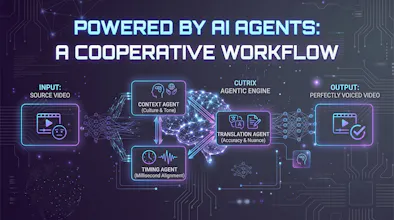
🤖 Powered by AI Agents: Instead of a simple linear translation, Cutrix uses a multi-agent architecture. Our agents autonomously handle context analysis, translation proofreading, and timing adjustments in the background.
🎁 Exclusive PH Deal (90% OFF): We want you to hear the difference yourself. Sign up today and get free credits instantly to translate your first video. Ready to upgrade? Use the invite code QWSQCV during registration or checkout to get a massive 90% off your first order. This is a limited-time offer just for the Product Hunt community!
We are actively shaping our roadmap and would love to hear your thoughts. Drop a video link you translated or your feedback in the comments below! I'll be here all day answering your questions. 👇
Report
💡 Bright idea
the intonation-mapping approach is interesting because it runs into a real wall with tonal languages. in Mandarin or Vietnamese, pitch contour isn't just emotional color, it's literally what word you're saying, the same syllable means something completely different depending on tone. if you map the source language's emotional pitch pattern onto a tonal target language, you risk fighting the actual linguistic tone system. is that something the timing/prosody agent accounts for, or is tonal-language output more of a known limitation right now
Report
Maker
@galdayan sharp observation. you clearly know your stuff with tts! thank you for raising such a great technical point.
you're completely right about the pitch contour issue. to avoid forcing source pitch onto tonal languages, we don't just do linear acoustic mapping. instead, our engine uses multimodal understanding, analyzing audio emotion, text context, and video cues simultaneously. it tries to find the best balance to inject emotional intensity, like energy and pacing, while respecting the native tone rules.
it handles most cases well right now, but to be totally transparent, it's a really tough problem and we still have edge cases where the linguistic constraints fight back. we are actively optimizing this.
really appreciate the deep dive. ❤️
Report
@tristan_huang the honesty about it being a hard, unsolved edge case is what makes this a good answer, most teams would've just said "we handle that" and moved on. multimodal cues (text context, video) as tiebreakers for emotional intensity is a smart way to sidestep the worst of it even if it's not a full solve. good luck with the tonal-language edge cases
Report
Maker
@galdayan really appreciate that. it's a tough but fun problem to crack, and having users who understand the technical nuance makes it worth it! 😊
Report
finally something that doesnt make every dub sound like a bored robot, the pacing on my spanish clip actually felt close to the original
Report
Maker
@fahribryam5g4c this just made our day! killing the 'bored robot' vibe was exactly why we built Cutrix. the natural pacing you noticed in your Spanish clip is actually our timing agent working under the hood to map the exact timeline of the original audio. thrilled to hear it nailed the sync for you. 😊
Report
my workout cues need to sound hyped, not monotone. dubbed a 20 min hiit video into spanish, energy carried over way better than my old manual stack. good balance between auto mode and the editor when i need to tighten a cue.
Report
Maker
@aslhangedi8oxh Love this use case — HIIT cues live or die on energy, not just translation.
Really glad the Spanish dub kept the hype and that auto mode + the editor gave you the right balance when you needed to tighten a cue. That's exactly how we hoped people would use it.
Thanks for trying Cutrix and for the thoughtful feedback! 🙏
Report
Maker
@aslhangedi8oxh that high energy retention is exactly why we built our own workflow instead of just wrapping a basic tts. workout cues need that punch. really glad to hear the balance between the auto generation and the manual editor worked out for your spanish dub. appreciate the support.😊
Report
dubbing animated explainer videos is painful since timing is everything. the per clip timeline and regenerate feature on individual lines makes it so i don't feel like i'm fighting the ui. completely usable as is.
Report
Maker
@hkristinabeoigp Animated explainers are a brutal test case — when visuals, beats, and narration all have to land together, timing is everything.
Really glad the per-clip timeline and line-level regenerate made it feel like you were shaping the dub, not wrestling the UI. That’s exactly the workflow we wanted: fix one awkward cue without redoing the whole video.
“Completely usable as is” is high praise on launch day. Thanks for putting a real explainer through it and sharing such a clear note. 🙏
Report
Maker
@hkristinabeoigp animation timing is incredibly unforgiving hahaha... we built the single-line regenerate specifically because re-running a whole timeline just to fix one awkward sentence is a nightmare🤯. really glad the logic clicked with your workflow and felt usable right out of the box.
Report
threw a 40-minute lecture recording at it and expected the voice to drift or lose clarity. consistency throughout was actually solid. processing took a while, but given the length, the output quality was worth the wait.
Report
Maker
@elabinboaqxmg really appreciate the patience on this one! building a pipeline that doesn't drift on massive files was a huge priority for us, since many tools break after a few minutes. we are definitely aware the processing time is still a bottleneck though💪. we're actively optimizing the infrastructure to speed it up. thanks for giving it a proper run.
Report
good start. pros: easy ui, clean exports, good emotion retention. cons: limited subtitle options and no lip sync yet. potential is definitely there, keeping an eye on future updates.
Report
Maker
@elifsugrgeiqxf Thanks for the honest review — pros and cons both noted.
Glad UI, exports, and emotion retention worked for you. Subtitle flexibility and lip sync are known gaps we’re pushing on — appreciate you calling them out and keeping an eye on us.
Report
Maker
@elifsugrgeiqxf spot on. you nailed our current bottlenecks❤️. advanced subtitle options are actually next on our list to ship. lip sync will take a bit longer but we hear you. thanks for testing it out and keeping tabs on us.
the intonation-mapping approach is interesting because it runs into a real wall with tonal languages. in Mandarin or Vietnamese, pitch contour isn't just emotional color, it's literally what word you're saying, the same syllable means something completely different depending on tone. if you map the source language's emotional pitch pattern onto a tonal target language, you risk fighting the actual linguistic tone system. is that something the timing/prosody agent accounts for, or is tonal-language output more of a known limitation right now
@galdayan sharp observation. you clearly know your stuff with tts! thank you for raising such a great technical point.
you're completely right about the pitch contour issue. to avoid forcing source pitch onto tonal languages, we don't just do linear acoustic mapping. instead, our engine uses multimodal understanding, analyzing audio emotion, text context, and video cues simultaneously. it tries to find the best balance to inject emotional intensity, like energy and pacing, while respecting the native tone rules.
it handles most cases well right now, but to be totally transparent, it's a really tough problem and we still have edge cases where the linguistic constraints fight back. we are actively optimizing this.
really appreciate the deep dive. ❤️
@tristan_huang the honesty about it being a hard, unsolved edge case is what makes this a good answer, most teams would've just said "we handle that" and moved on. multimodal cues (text context, video) as tiebreakers for emotional intensity is a smart way to sidestep the worst of it even if it's not a full solve. good luck with the tonal-language edge cases
@galdayan really appreciate that. it's a tough but fun problem to crack, and having users who understand the technical nuance makes it worth it! 😊
finally something that doesnt make every dub sound like a bored robot, the pacing on my spanish clip actually felt close to the original
@fahribryam5g4c this just made our day! killing the 'bored robot' vibe was exactly why we built Cutrix. the natural pacing you noticed in your Spanish clip is actually our timing agent working under the hood to map the exact timeline of the original audio. thrilled to hear it nailed the sync for you. 😊
my workout cues need to sound hyped, not monotone. dubbed a 20 min hiit video into spanish, energy carried over way better than my old manual stack. good balance between auto mode and the editor when i need to tighten a cue.
@aslhangedi8oxh Love this use case — HIIT cues live or die on energy, not just translation.
Really glad the Spanish dub kept the hype and that auto mode + the editor gave you the right balance when you needed to tighten a cue. That's exactly how we hoped people would use it.
Thanks for trying Cutrix and for the thoughtful feedback! 🙏
@aslhangedi8oxh that high energy retention is exactly why we built our own workflow instead of just wrapping a basic tts. workout cues need that punch. really glad to hear the balance between the auto generation and the manual editor worked out for your spanish dub. appreciate the support.😊
dubbing animated explainer videos is painful since timing is everything. the per clip timeline and regenerate feature on individual lines makes it so i don't feel like i'm fighting the ui. completely usable as is.
@hkristinabeoigp Animated explainers are a brutal test case — when visuals, beats, and narration all have to land together, timing is everything.
Really glad the per-clip timeline and line-level regenerate made it feel like you were shaping the dub, not wrestling the UI. That’s exactly the workflow we wanted: fix one awkward cue without redoing the whole video.
“Completely usable as is” is high praise on launch day. Thanks for putting a real explainer through it and sharing such a clear note. 🙏
@hkristinabeoigp animation timing is incredibly unforgiving hahaha... we built the single-line regenerate specifically because re-running a whole timeline just to fix one awkward sentence is a nightmare🤯. really glad the logic clicked with your workflow and felt usable right out of the box.
threw a 40-minute lecture recording at it and expected the voice to drift or lose clarity. consistency throughout was actually solid. processing took a while, but given the length, the output quality was worth the wait.
@elabinboaqxmg really appreciate the patience on this one! building a pipeline that doesn't drift on massive files was a huge priority for us, since many tools break after a few minutes. we are definitely aware the processing time is still a bottleneck though💪. we're actively optimizing the infrastructure to speed it up. thanks for giving it a proper run.
good start. pros: easy ui, clean exports, good emotion retention. cons: limited subtitle options and no lip sync yet. potential is definitely there, keeping an eye on future updates.
@elifsugrgeiqxf Thanks for the honest review — pros and cons both noted.
Glad UI, exports, and emotion retention worked for you. Subtitle flexibility and lip sync are known gaps we’re pushing on — appreciate you calling them out and keeping an eye on us.
@elifsugrgeiqxf spot on. you nailed our current bottlenecks❤️. advanced subtitle options are actually next on our list to ship. lip sync will take a bit longer but we hear you. thanks for testing it out and keeping tabs on us.