Arduino is an open-source hardware and software company, project and user community that designs and manufactures single-board microcontrollers and microcontroller kits for building digital devices.
This is the 7th launch from Arduino. View more

VENTUNO Q
Launching today
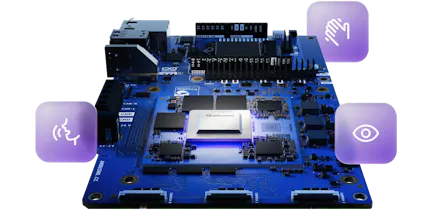
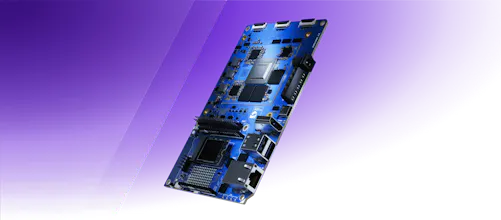
VENTUNO Q is the first single-board computer born from Qualcomm's acquisition of Arduino. Fusing a 40 TOPS Snapdragon NPU with an STM32 microcontroller creates a unified dual-brain architecture, perfectly balancing heavy AI inference with real-time robotics.


Payment Required
Launch Team


Flowtica Scribe
Hi everyone!
VENTUNO Q emerging as one of the first really serious Qualcomm x Arduino platforms hits the edge AI and robotics wave perfectly.
Combining up to 40 TOPS of local AI compute for vision, LLMs, and multimodal models with a dedicated STM32 real-time controller handles motors, sensors, and deterministic responses all on one board. Delivering a setup like this creates a massive advantage for anyone building AI systems needing to sense, decide, and act locally.
Bringing ROS 2 support, Arduino App Lab, and broad hardware compatibility arrives especially on time for robotics, industrial automation, and humanoid-style development.
Be careful, Raspberry Pi & NVDA Jetson!
@zaczuo That dual-brain architecture is really interesting. Splitting nondeterministic AI inference from deterministic real-time control feels like the right approach for robotics.
It seems like one of the biggest challenges in edge AI systems is making sure the AI layer doesn’t introduce unpredictability into time-critical control loops.
Curious how developers will typically structure that handoff between the NPU and the STM32 in real-world robotics projects.
The dual-brain framing is exactly the right abstraction — the NPU handles non-deterministic inference (what should happen) while the STM32 handles deterministic execution (what actually happens). In robotics, the gap between those two is where most failures live.
Curious about the inter-processor communication design: what's the latency profile on the bridge between them, and how does VENTUNO Q handle cases where the real-time controller needs to override an AI decision mid-execution?
How does the Arduino ecosystem maintain binary compatibility and consistent I/O mapping across its diverse range of official and third-party boards while utilizing different architectures like AVR, ARM, and ESP32?