Big news, Product Hunt fam we're launching Qik Office on July 4th, and we couldn't think of a more fitting day to declare independence from busywork!
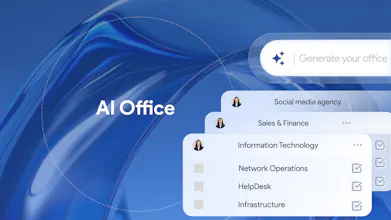
Qik Office is an AI-powered office where AI Project Managers run the show inside Agentic Rooms collaborative, intelligent workspaces that auto-assign tasks, track progress, and keep your team in sync around the clock. Think of it as your office, but supercharged with agents that actually get things done.
As part of our Qik Office launch on July 4th, I wanted to give the community a closer look at one of the features I'm most excited about: Agentic Rooms.
A big reason we built Qik Office was to solve the loss of context that happens as work moves between chats, docs, meetings, and tools every handoff drops a little bit of the story. Agentic Rooms are our answer to that.
As the Group CEO of the Bhargavarama Group, we handle multiple businesses spanning real estate development, managed offices, technology, infrastructure and investments. Coordinating hundreds of meetings, stakeholders, vendors and internal discussions was becoming increasingly difficult across different tools.
QikOffice has genuinely simplified the way we work.
The amount of fixes that go in because of regular feature updates. We need an in app what’s new button to know what changed or we should be asked if UI should be changed for us or kept as the old one as we generally are used to the UI and when a change happens we might want to take it slow or we might need option to hold on to earlier UI. Otherwise great product n great guys
What impressed us most is that it is not just another meeting application—it combines meetings, rooms, chat, notes, tasks, files, recordings, whiteboards and collaboration into a single workspace. Our teams no longer waste time searching through emails or multiple apps to find discussions or follow-ups.
Some of the features we now use regularly:
Dedicated rooms for every project and customer
Instant Qik Meetings without complicated scheduling
Shared notes and action items
Team collaboration and internal communication
File management within project rooms
Task tracking after meetings
Mobile access that keeps our teams connected even while travelling
The platform is surprisingly feature-rich while remaining simple enough for non-technical users to adopt quickly.
What deserves special appreciation is the responsiveness of the QikOffice team. Whenever we suggested improvements or required support, they were approachable, receptive and genuinely interested in making the product better. That level of customer engagement is becoming increasingly rare.
We have now started using QikOffice across multiple teams within our organization, and it has become an important part of our daily operations.
Congratulations to the entire QikOffice team on building an excellent product. We’re excited to see where the platform goes next and look forward to continuing our journey together.


Hey Product Hunters! 👋 Ravi here, founder of Qik Office.
I'll be honest - this is the best product we ever created.
I kept watching the same scene play out in almost every company: brilliant teams, drowning in coordination. Meetings with no follow-through. Decisions made and immediately forgotten. Work scattered across 12 different apps, none of which talked to each other. And everyone just... accepted it as normal.
We didn't.
Today we're launching something we've never seen anyone else build: **Agentic Rooms** — persistent environments where AI project managers and humans co-exist, share context, and actually execute work together. Not a chatbot. Not a notetaker. A real AI agent that lives inside your team room, knows your goals, manages your plans, and drives work forward — whether you're online, in-person, or anywhere in between.
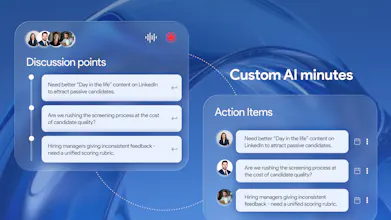
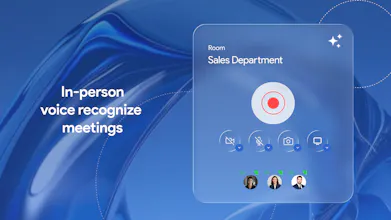
Here's what blew our early users' minds: you walk into a room, give one command, and your AI project manager spins up sprint boards, assigns tasks, schedules syncs, writes minutes, and follows up — automatically. Whether it's a standup, a board meeting, a client call, or an in-person session — the AI agent handles minutes for every type of meeting: customized to your context, written in your team's voice, and with action items auto-assigned to the right people. Recording works in-person too, recognizing 99 languages and distinguishing individual voices so nothing gets lost no matter where or how your team meets. It's the first time AI has felt like a teammate, not a tool.
**It's free to start. No credit card. Unlimited rooms. Unlimited AI project managers.**
If you've ever felt like your team's potential is being swallowed by coordination overhead — this is for you. 🚀
Would love your support today, and even more — would love to hear what you think after you try it. Drop your questions, feedback, brutal honesty — we're here all day. Let's build something great together. 🙌
@qik_ravi One feature I'm personally excited about is Agentic Rooms. Instead of starting from scratch every time, your AI Project Manager remembers your team's context, understands ongoing work, and helps execute it. It feels less like using an AI tool and more like collaborating with a teammate.
Would love for everyone to try it out and let us know what you think!
The shift from passive AI note-takers to an active agent that actually owns the room context is a really interesting direction. we always struggle with context drift between syncs and tracking tools, so having a persistent space where the AI actually drives the project board makes a lot of sense.
the hardest part with this kind of setup is usually noise management. if the agent is always present, how do you handle the threshold between a chaotic brainstorming session and an actual final decision? curious how you prevent the PM agent from auto-assigning tasks when the team is just throwing out half-baked ideas.
@andrasczeizel Hey Andras,
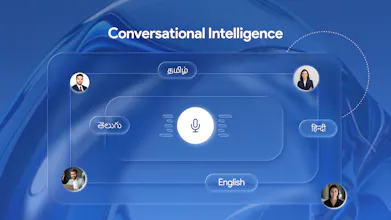
It's a wonderful question! In a nutshell, it's not just what you discussed in the current meeting, we capture and act on all the previous meetings. That's where our conversational intelligence engine comes in to the picture
I would suggest that you try our product to know more!
Thanks for asking!
Hi @andrasczeizel the current sprint context is always present with the agent along with room's context when it writes the next meeting notes. The agent isn't just present for one meeting, it carries the current sprint's context forward with it in the room. So when it's time to write the next set of meeting notes, it's already weaving in what's in flight, what's blocked, and what's changed since last time. Feels less like a notetaker and more like a teammate who never forgets the plot. Hope that helps.
@andrasczeizel This is honestly the hardest part of the whole system, and you've nailed the core tension. The agent isn't just transcribing what's said — it's trained to tell the difference between an idea being thrown around and an actual commitment. It looks for real decision signals: someone clearly owning something, a concrete "let's do X," or the room actively agreeing on a next step — not just any idea mentioned out loud. Open brainstorming stays as floating notes rather than jumping straight to the task board, so half-baked ideas don't accidentally become assigned work.
It's still early days for us, and getting that instinct right — knowing when a room has moved from exploring to deciding — is exactly the kind of intelligence we're most excited to keep sharpening. If you get a chance to run a messy real session through it, we'd genuinely love your take on how it felt. 🚀
Thanks for building this, Ravi and team. The Agentic Rooms concept stands out because it treats meetings as ongoing threads instead of one off recordings that get buried in a drive folder somewhere.
One concrete problem this could solve for us: after client calls, action items usually end up split between a call summary, a Notion page, and someone's memory, and half of them get missed by the next sprint. A persistent room that carries sprint context forward and auto assigns tasks from the conversation would close that follow up gap.
How does the agent handle a meeting that jumps between several unrelated topics, like a product review that turns into a hiring discussion? Does it split those into separate task threads or keep everything under one room log?
Looking forward to trying the command center and seeing how it holds up across a full sprint cycle.
@mbakgun Great question, Burak — and thanks for the detailed context on the follow-up gap, that's exactly the problem we built this for. When a meeting jumps between unrelated topics, the agent can spin up a new sprint board for the new topic on the fly, while auto-updating tasks on the current sprint board without duplicating anything — so a product review and a hiring discussion each end up on their own clean board with the right owners, instead of one tangled list. The room itself stays the single continuous log and context anchor, but the boards keep the actual work cleanly separated. Would love to have you try it on a real sprint and tell us where it breaks!
👋 Hi everyone! We're incredibly excited to finally share what we've been building...
We believe the future of work doesn't need to revolve around a physical office.
For decades, offices have existed because people needed a shared place to communicate, collaborate, remember decisions, and keep work moving. Today, with AI, we think all of that can happen in a digital workspace—and in many ways, even better.
That's why we built Qik Office.
Imagine a workspace where meetings don't disappear once they're over. Where AI Agents understand your team's context, Agentic Rooms remember everything that's happened before, knowledge is never lost, and projects and sprints naturally stay connected. Instead of switching between countless tools, your entire team's workflow lives in one intelligent workspace.
Our goal is to build an AI-powered office that helps teams collaborate from anywhere, without sacrificing productivity or connection.
We're excited to hear what you think. Do you believe the traditional office will eventually become optional, or do you think there will always be a need for a physical workspace? We'd genuinely love to hear your perspective and answer any questions about what we're building.
Thanks so much for checking us out and supporting our launch! 🚀
@karthick_sriram Congratulations on the launch.
@karthick_sriram @austinbuhl Thanks Austin. :) Please do try Qik Office. Would love to get your feedback.
love the idea of customizing the minutes to the team's voice, huge congrats for shipping this @qik_ravi qq . can we set specific templates or styles for the output?
@priya_kushwaha1 Thanks so much, Priya! 🙌 Yes — you can try the command center on the agentic room and just give commands like write a note or create a todo or create a project. You can also enable specific templates for your meeting minutes written by the agent. It has many built in templates and would love to customize more in the future. Happy to walk you through it if you'd like!
🚀 The way we work has changed. Maybe it's time the office did too.
For decades, the office has been the operating system for every organization—a place where people collaborate, make decisions, preserve knowledge, and move work forward.
But in the age of AI, does that operating system still need to be tied to a physical location?
That's the question behind Qik Office.
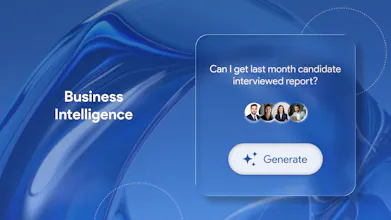
We're building an Agentic Workspace where AI isn't just another assistant—it's an active participant in how work gets done. Agentic Rooms preserve context across every conversation, AI Project Managers help teams execute without constant follow-ups, and the Command Center gives leaders a real-time view of everything happening across the organization. Instead of fragmented tools and disconnected workflows, every discussion, decision, project, and sprint becomes part of a shared organizational memory.
This isn't about replacing people. It's about eliminating friction. Less time searching for updates. Less context switching. More time creating, collaborating, and building.
We believe the future office won't be defined by desks or meeting rooms—it will be defined by intelligence, context, and continuity.
We're excited to finally share this vision with the Product Hunt community.
What do you think? Are Agentic Workspaces the next evolution of work, or will the traditional office always remain at the center of collaboration?
We'd genuinely love your feedback and can't wait to hear your thoughts. 🚀
I've been seeing a lot of AI agent products lately, and most of them share the same pattern - no strong proof it won't break something on a real work machine, no specific use cases, no video showing a real user with a real problem and how the result improves over iterations. Because nothing works perfectly the first time, and that's okay - but showing that journey builds so much more trust.
The teams that crack this will make a rocket jump. Curious where Qik Office is focusing first?
@julia_shtogren Really fair point, Julia, and honestly the kind of feedback we need to hear. We're focusing first on teams running recurring client work and managing advanced sprints — including strong support for real in-person, in-office meetings, not just digital-only setups, since that's where context usually gets lost fastest. You're right that we haven't shown the "messy first try → better over iterations" journey yet — that's on us to fix, and we're planning to share real usage walkthroughs (warts and all) rather than just polished demos. Appreciate you naming the gap directly and helping us in this journey. Cheers!
@qik_ravi It's great that you're planning this for the future. At the beginning it's hard to build everything at once. As a designer who works with early-stage startups I often combine long-term strategy with building visual systems. So if your team ever needs external help brainstorming the direction for your product, just drop me a line.


Dear Mr. Natrajan
Thank you so much for taking the time to write such a thoughtful and detailed review — and for trusting Qik Office to support something as complex as coordinating operations across the Bhargavarama Group's real estate, managed offices, technology, infrastructure and investment businesses. Hearing that we've genuinely simplified how your teams work is exactly the outcome we set out to build for.
We're especially glad the "single office" philosophy is landing the way we intended. Agents, meetings, rooms, chat, notes, tasks, files, recordings and whiteboards were deliberately brought together so teams stop losing context switching between apps, and it means a lot to hear that's translating into real time saved for your teams instead of chasing follow-ups across email threads.
On your feedback about update transparency: this is genuinely useful and something we're going to act on. You're right that we ship fixes and improvements frequently, and right now we don't do a good enough job surfacing what changed or giving users control over when UI changes reach them. We're added an "what's new" changelog in qikoffice.com website, so every update is clearly communicated, and we're improving the experience around UI changes so teams like yours, running mission-critical operations daily, aren't caught off guard mid-week without warning.
Thank you again for being such an engaged partner, for pushing us to improve, and for rolling Qik Office out across multiple teams in your organization. Feedback like yours is exactly what shapes our roadmap, and we're grateful you took the time to share it in such depth.
Looking forward to continuing this journey together.
Warmly,
Ravi
Founder, Qik Office