
Lattics
Brain-like knowledge base with AI writing & deep research
120 followers
Brain-like knowledge base with AI writing & deep research
120 followers
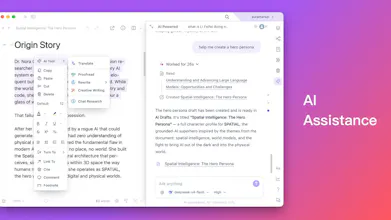
Three years ago, we launched Lattics as a "brain-like" knowledge management tool for writers and researchers. Today, we're back with something much bigger — AI-assisted writing that's deeply integrated into your research and creative workflow. *** 30% OFF DISCOUNT for Produnct Hunt, Limited for 50 *** Please check the discount code in the link :https://lattics.com/specialoffer/7fGKwQZEhV, You will get 30% discount code of Lattics Pro




Free
Launch Team / Built With


LightfieldAI-native CRM that builds itself and does work for you
Promoted
the privacy-first local storage plus AI writing combo is the part I'd want more detail on - the moment I right-click and ask for a rewrite or start an AI chat, that selection has to leave the machine to reach whatever model is doing the work, right? curious whether that's opt-in per action, and whether there's ever a local/offline model option for people who picked this specifically for the local-storage privacy angle in the first place.
@galdayan You can use Ollama or your own deployment model as AI provider
good to know, that keeps the local-first pitch consistent even for the AI parts - a lot of products in this space quietly become cloud-only once the AI features ship, so nice that you kept the opt-in path. will give the desktop app a spin.
@galdayan We look forward to you trying Lattics and writing a review. We've provided a Lattics Pro monthly membership redemption code: JDYFyF2KHg, which can be redeemed at this link: https://lattics.com/en-US/reseller/redeem
appreciate that, thank you. will grab the code and give the desktop app a real run before writing anything up - want to actually use it for a few notes/citations rather than just skim it first.
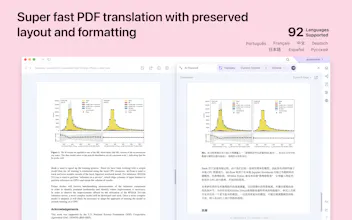
I noticed the PDF translation feature. Does the translated version stay aligned with the original document layout? And can it also translate text inside images or scanned pages?
@jerome2000 Yes, It keeps the layout same as original docs, and include scanned pages
Brain like knowledge base is a bold claim but the concept of non-linear note organization is genuinely useful. How does the AI writing side integrate with the knowledge graph, does it pull context automaticaly?
@abdurrahman_fakhrul Integrate with knowledge graph is our next step, and will be context perception automatically
The "brain-like" framing is interesting — most knowledge-base tools are still fundamentally folders and tags with search bolted on. Curious how the underlying structure actually works: is it building real semantic connections between notes over time (more like a knowledge graph), or is "brain-like" more about the retrieval/writing experience on top of a fairly standard store? That distinction matters a lot for how well it holds up as someone's knowledge base grows into the thousands of notes.
@abhineetarora Currently, users can create content non-linearly and visually, manually establishing connections between different parts. In the future, AI will enhance automation, but humans will still retain control.
@new_user_32e0ee271b Got it — so today it's manual, user-driven linking rather than the system inferring structure on its own. That's a reasonable starting point; the "brain-like" framing will really get tested once the automated connection-suggestion piece ships. Will be curious to see how that evolves — good luck with the launch!
curious how the AI writing layer plays with the brain-like graph structure over time - does it auto-link a new AI-drafted note into the right place in your existing knowledge graph, or do you still have to manually connect it after generating? that manual reconnection step is usually where these tools quietly turn back into a flat notes app once you've got a few hundred entries.
The way Lattics pulls my scattered notes into a visual map while I draft has genuinely changed how I approach long projects. The AI suggestions feel tuned to what I'm actually working on, not generic fluff.