CodaBridge lets you listen to real sperm whale recordings, shape a personal synthetic coda, compare timing patterns, and explore evidence in Context Lab. Astra can investigate the measurements using CodaBridge's evidence tools, connecting its explanations to source rows, controls, and uncertainty. The goal is to make exploration useful and traceable without treating similarity as translation.
Astra changed CodaBridge from a listening and timing-comparison tool into an interactive investigation environment. It can inspect source evidence, compare observed pairings with controls, and explain alternative interpretations while citing what it used.
That let me aim beyond a demo: CodaBridge became a test of how advanced AI can reason over scientific data while keeping provenance, uncertainty, and the boundary between measurement and interpretation visible.
Hi Product Hunt! I built CodaBridge around a question I kept coming back to: how can we use powerful AI models to explore scientific data without letting the explanation outrun the evidence?
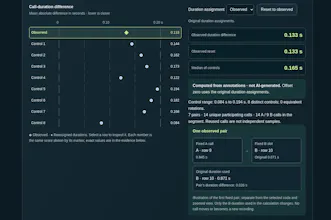
CodaBridge starts with real sperm whale recordings. You can listen to them, shape a personal synthetic coda, compare timing patterns, and then move into Context Lab to inspect annotated exchanges, controls, and prediction results.
Astra can investigate those measurements through CodaBridge’s evidence tools, but the source data, measurements, alternative explanations, and uncertainty remain visible separately from the generated interpretation.
This is not a whale translator. The goal is to make AI-assisted exploration useful while keeping the path from evidence to interpretation inspectable.
I’d especially love feedback on whether that boundary feels clear, and whether Context Lab makes the evidence easier to reason about.


CodaBridge
CodaBridge