Launching today
Bloka

Bloka

AI turns any object into your focus trigger

54 followers

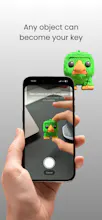
Bloka uses AI object recognition to turn everyday items into focus triggers. Point your camera at your laptop, coffee mug, or a book — Bloka recognizes it and instantly blocks apps like Instagram, TikTok, and YouTube. Scan again to unlock. Unlike blockers that rely on willpower or expensive hardware, Bloka creates a physical ritual with zero setup. No NFC tags to buy, no devices to charge. Just pick any object and start focusing. Your environment becomes your accountability partner.
Bloka gallery image
Bloka gallery image
Bloka gallery image
Bloka gallery image
Bloka gallery image
Free Options
Launch Team / Built With
Turbotic Automation AI
Build powerful automations without code. 1 Month Free!
Promoted

What do you think? …

Luca Flati
Hey everyone! 👋 I'm Luca, the maker of Bloka. Like most of you, I've tried every focus app out there — screen time limits, app blockers, you name it. They all failed me because bypassing them was too easy. There's no friction when it's just a toggle on the same device distracting you. Then I noticed something: the physical act of putting my phone in another room actually worked. The problem? I still needed my phone for work. So I built Bloka. It started with NFC tags — tap to block, tap to unlock. Simple and effective. But people kept asking "what if I don't have a tag with me?" Fair point. That's when I added AI object recognition. Now any object around you can become your "focus switch." Point your camera at your laptop, a book, or your coffee mug — Bloka recognizes it and blocks your distracting apps instantly. Scan the same object again to unblock. No hardware to buy, just whatever's already on your desk. It sounds almost too simple, but that's the point. The physical ritual creates a psychological barrier that pure software can't match. I'd love your feedback — what features would make this more useful for you? And happy to answer any questions!

@luca_flati Love the idea of turning focus into a physical ritual instead of a setting.

Curious if you’ve noticed a difference between blocking distractions and making people more aware of what they’re about to do next.


It feels like the object isn’t just a lock, but a moment of intentional pause – which might be the real behavior change here.

Luca Flati

@dmitry_petrakov That’s a great distinction. We’ve found that the 'physicality' of Bloka turns focus into a commitment. It's less about 'I'm not allowed to use my phone' and more about 'I have chosen to do this task.' Have you personally found physical cues more effective than digital ones in your own workflow?

@luca_flati Great question – for me, physical cues tend to work best when they slow me down, not when they fully block something.

I’ve noticed that digital constraints are easy to negotiate with mentally (“just this once”), while physical cues create a tiny moment of friction where intention has to surface.

What’s interesting is that the cue doesn’t need to be strict – it just needs to interrupt autopilot. That pause often does more than the restriction itself.

That’s something I’ve been exploring a lot lately: tools that don’t just prevent distraction, but make the choice visible again.

louis chen

@luca_flati I really like how this leans into behavior design instead of just stronger blocking.
The ritual aspect feels more important than the restriction itself.

Did you experiment with adding any visual or haptic feedback to reinforce that moment of “I’m entering focus mode”?

Luca Flati
@louis_chen5 I'm glad you caught that! Leaning into behavior design over 'stronger blocking' is our core philosophy. Regarding your question on feedback: we’ve actually been experimenting with a subtle haptic vibration to reinforce that shift into focus mode, right now when users scan the correct object they get confirmation haptics to confirm that their focus session has started. You’re 100% right that the ritual needs to feel significant to be effective. In your experience, do you find that a visual cue (like an animation) or a tactile one (like haptics) creates a stronger mental anchor for you? Or maybe we should combine both?
louis chen

@luca_flati That’s a great question.
For me, tactile feedback tends to create a stronger immediate anchor — it’s harder to ignore, and it marks a clear “state change.”
Visual cues are great for context, but I often mentally tune them out if they’re too subtle or too familiar.

My intuition would be: haptics as the primary signal, with a very minimal visual cue as reinforcement — not decoration.
Something that feels like confirmation rather than celebration.

Curious to see how users respond as you test this further.

Luca Flati
@dmitry_petrakov Exactly – you’ve nailed something we discovered while building Bloka. That “interruption of autopilot” is the core mechanism. We initially thought people wanted stronger locks, but what they actually needed was that moment where muscle memory breaks and conscious choice returns. What surprised us is how different objects create different psychological weight. Someone using their wedding ring as their focus object told us it added meaning to the ritual – like they were making a promise to themselves. What kinds of physical cues have you found most effective in your own setup? Always curious to hear what works for people beyond the app itself.

@luca_flati That resonates a lot – especially the idea of psychological weight.

In my own setup, the most effective cues tend to be the ones that already carry meaning outside productivity: a notebook that’s not for tasks, a specific pen, even a place rather than an object.


What seems to matter is that the cue doesn’t scream “focus now”, but quietly asks “what am I choosing to do?”. When the object already has personal context, that question lands much deeper.


The wedding ring example is powerful – it makes the ritual less about control and more about identity. That feels like a very different (and more sustainable) behavior change lever.

Luca Flati
@louis_chen5 That’s super helpful – “confirmation rather than celebration” is the exact framing we needed. We’ve been leaning toward haptics as primary too, but you’re right that the visual should reinforce, not compete for attention. Right now we do a quick checkmark animation, but we might strip it down even further based on this. One thing we’ve noticed: the haptic pattern matters more than we expected. A single sharp tap feels different than a gentle double-pulse. Still testing which creates that “state change” feeling without being jarring. Since you’re clearly thinking deeply about this stuff with PurrrrrFocus – are you on Product Hunt? We just launched today and would love your perspective there. Always valuable to hear from other makers in the focus space
louis chen

@luca_flati Thanks, glad that was helpful!
Totally agree — subtle haptics as the anchor, with visuals as gentle confirmation feels just right.
I love that you’re experimenting with different patterns; it’s interesting how small changes in haptic feedback can create very different “state change” experiences. I'm excited to see how this evolves and how users respond!

JoJo
😹 LOL

Haha, clever! and you seem like a Duolingo fan(I learned how to play chess there).
btw. my object would be 👇

Luca Flati

@jojo_li Haha, that's incredible! 🤩 I love the stars in its eyes. It looks like it's already in deep focus mode. If that’s your focus trigger, I’m 100% here for it. Does it have a name? Also, respect for learning chess on Duolingo—that owl is a ruthless motivator!

EricLens

Honestly this feels like magic just point my phone at my coffee mug and boom social apps are blocked. No more endless scrolling.

Luca Flati
@eric_lens That 'magic' feeling is exactly what we were aiming for! 🪄 There is something very satisfying about turning a morning staple like a coffee mug into a physical gatekeeper. It transforms a mundane habit into a clear signal to your brain that 'it’s time to work.
Mathews Simons

Love that it doesn’t just rely on willpower. Using a real object as a focus trigger actually makes it feel like a ritual rather than just another app blockers.

Luca Flati
@mathews_simons Spot on, Mathews! Willpower is a finite resource, and most app blockers fail because they ask you to use even more of it to stay disciplined. By shifting the burden to a physical ritual, you’re essentially automating the transition into deep work. It’s less about 'trying hard' and more about 'starting the ritual.' If you had to pick one object on your desk right now to be your permanent 'focus totem,' what would it be?"
Jennifer Klepper

I've used Brick, which is effective for the reasons you mention--physical ritual to block/unblock, becomes a positive habit. I love your approach to use AI to eliminate the need for the NFC tag, this really opens this concept up and adds an element of fun to it. I look forward to trying it out!

Luca Flati
@jennifer_klepper That is great to hear, Jennifer! Brick definitely paved the way for showing how powerful a physical ‘key’ can be for focus. The big shift we wanted to make with Bloka was removing that dependency on a specific hardware tag. By using AI to let any personal object become your ‘key,’ we’re hoping to make the ritual feel more personal and accessible—plus, as you mentioned, there’s something fun about choosing your own ‘focus totem’. Since you’ve used hardware-based blockers before, do you find that you prefer a dedicated device, or does the idea of turning a favorite desk object into your 'lock' feel more integrated into your workspace?
Jennifer Klepper

@luca_flati I love the idea of choosing my lock/unlock focus totem. It absolutely needs to live outside of my workspace. And because I travel a lot, I'd need a focus totem I'm likely to transport with me, but that wouldn't be so omnipresent it's too easy to unlock. It's fun to think about what that might be.

Luca Flati
@jennifer_klepper That is a fascinating constraint, Jennifer! You’ve touched on a core 'spatial' psychology: if the key is too close to the keyboard, the friction disappears. The beauty of using AI instead of a dedicated NFC tag is that your 'totem' can be anything that fits your travel kit but stays tucked away—maybe a specific souvenir, a small personal item or a piece of equipment you only keep in your luggage. It allows the ritual to travel with you without being 'omnipresent' on your desk. Since you’re a writer, I’m curious: do you have a specific activity you do that signals the end of a writing session for you? That could be the perfect candidate for your 'unlock' totem!
Jennifer Klepper

@luca_flati great idea!