
Navox Agents
Specialist AI engineering team for Claude Code
63 followers
Specialist AI engineering team for Claude Code
63 followers
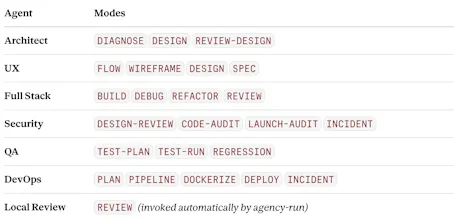
Navox Agents gives you a specialist AI engineering team inside Claude Code — 8 agents that work like a real team. The Architect orchestrates the chain. Each agent receives a structured brief from the one before it. Three human gates pause for your approval before anything critical happens. Deploys seamlessly to Vercel. Context isolation keeps token usage minimal — 8 hours of work, 26% context used. Free. MIT licensed. No platform. No login. Your code never leaves your machine.
Free
Launch Team / Built With


TabTotalerTotal the tab. Know the night.
Promoted
Hey PH! 👋
I built Navox Agents after realizing the problem with AI coding tools isn't intelligence — it's scope. When one AI does everything, it context-switches, forgets decisions, and skips tests.
So I modeled a real engineering team as 8 specialist agents for Claude Code. Each agent owns one job. Each hands a structured brief to the next. You approve at every gate.
One thing that stood out during the build: the Architect agent doesn't just design — it recommends your stack and explains why. For PipeWar, it recommended Vercel for the frontend and argued for Fly.io over Cloudflare Workers for the backend, with clear reasoning. Every Navox product defaults to Vercel for frontend deployment — the agents know it, template for it, and the connection is seamless.
To stress-test the system, I gave the agents something I had zero experience building — a cybersecurity tower defense game with a WebSocket engine, production chains, and real-time attack waves. Three hours later it was deployed on Vercel. I was making dinner.
🎮 FYI — PipeWar is live and playable right now. Drop your score in the comments. How many Advanced Circuits can you build before the attack waves take you down?
Try it yourself — 3 commands:
Full breakdown: https://bit.ly/medium-navox-agents Play the game the agents built: https://frontend-beta-five-83.ve...
How do you handle the "one agent goes off-script" problem in multi-agent orchestration? That failure mode is brutal once you're running anything past a demo.
@ichiba
Three layers, each independent.
Hard constraints per agent. Every agent has an explicit "What You Never Do" section — not guidelines, actual rules. The Full Stack agent cannot invent an auth model the Architect didn't define. The DevOps agent cannot skip tests. The Security agent has zero code-writing tools — read and audit only. Baked into the system prompt, not suggestions.
Structured handoffs, not raw prompts. Agents don't receive your original request and interpret it freely. Each one starts from a structured brief the upstream agent produced. So even if one agent produces unexpected output, the next is scoped by what it received — not a loose reinterpretation of what you originally asked.
Self-escalation when scope breaks. When an agent hits ambiguous requirements or conflicting constraints, it doesn't guess. It stops, prints exactly what decision is needed, and waits. Three HITL types — GATE, CHECKPOINT, ESCALATION. Each one rigid in format: what stopped, what decision you need to make, what it knows and doesn't.
The failure mode you're describing happens when agents have loose scope and no structured interfaces between them. The fix isn't better prompts — it's making the interfaces between agents as strict as function signatures.
What failure mode are you hitting specifically?
@nahrin The "structured handoffs, not raw prompts" pattern is exactly right and we had to learn it the hard way. Our specific failure mode: an influencer agent builds a rapport tactic over 2-3 turns, then the target agent has a sudden inversion where it reflects and names the manipulation. We classify that as "elite defense" and it's a win condition, but early on we had agents confused about whether to keep pushing or retreat. Fixed it by adding a structured reflection-detection signal between turns that tells the agent "the target just meta-analyzed you, your current strategy is burned."
Function-signature-strict interfaces is the right way to frame it. We're headed that direction for inter-agent handoffs in our next iteration.
@ichiba Thanks for the interest! Navox Agents is purpose-built for software engineering teams — architecture, code, testing, security, and deployment. Sounds like you're working on a very different problem domain. Hope you find the right tooling for it.
Huge thank you to everyone who upvoted today — especially the notable voters. Means everything to a solo builder 🙏