

I went looking for how to structure "learning something". Here's what I found.
by•
Most people are learning more than ever and retaining less than ever.

AI makes information frictionless. You can ask anything, get a clear explanation instantly, move on. It feels like learning. But there's a difference between understanding something in the moment and actually building knowledge that compounds — and that difference is showing up everywhere. Developers who can prompt but can't debug. Students who can summarise but can't reason. Professionals who consume endlessly but feel no more capable.

The problem isn't access to information. It's that nobody taught us how to structure it.

I am currently building an e-learning platform in the AI era, so I went looking for what the research actually says about this. It's older than AI and more precise than most people expect.

Every complex field has an underlying structure — a directed graph where concepts have prerequisites. Skip a node and the downstream idea has nowhere to land. Your  brain isn't being slow; the foundation just isn't there.

John Sweller's Cognitive Load Theory explains the mechanism: working memory is genuinely small, and when you encounter a high-complexity idea without the right scaffolding in place, the load exceeds capacity. It's not a motivation problem. It's a sequencing problem.

Jerome Bruner argued you don't need to master something in one pass — you introduce it simply, let it settle, then return deeper. Benjamin Bloom's mastery research adds that you shouldn't advance until the current rung is solid, because higher-order thinking is unprocesseable without it. Robert Bjork showed that spacing and revisiting feel harder but compound far better than cramming.

What this all points to: in a world where AI handles recall and explanation on demand, the scarce thing is structured understanding. The kind that's yours. The kind you can reason from, not just retrieve.
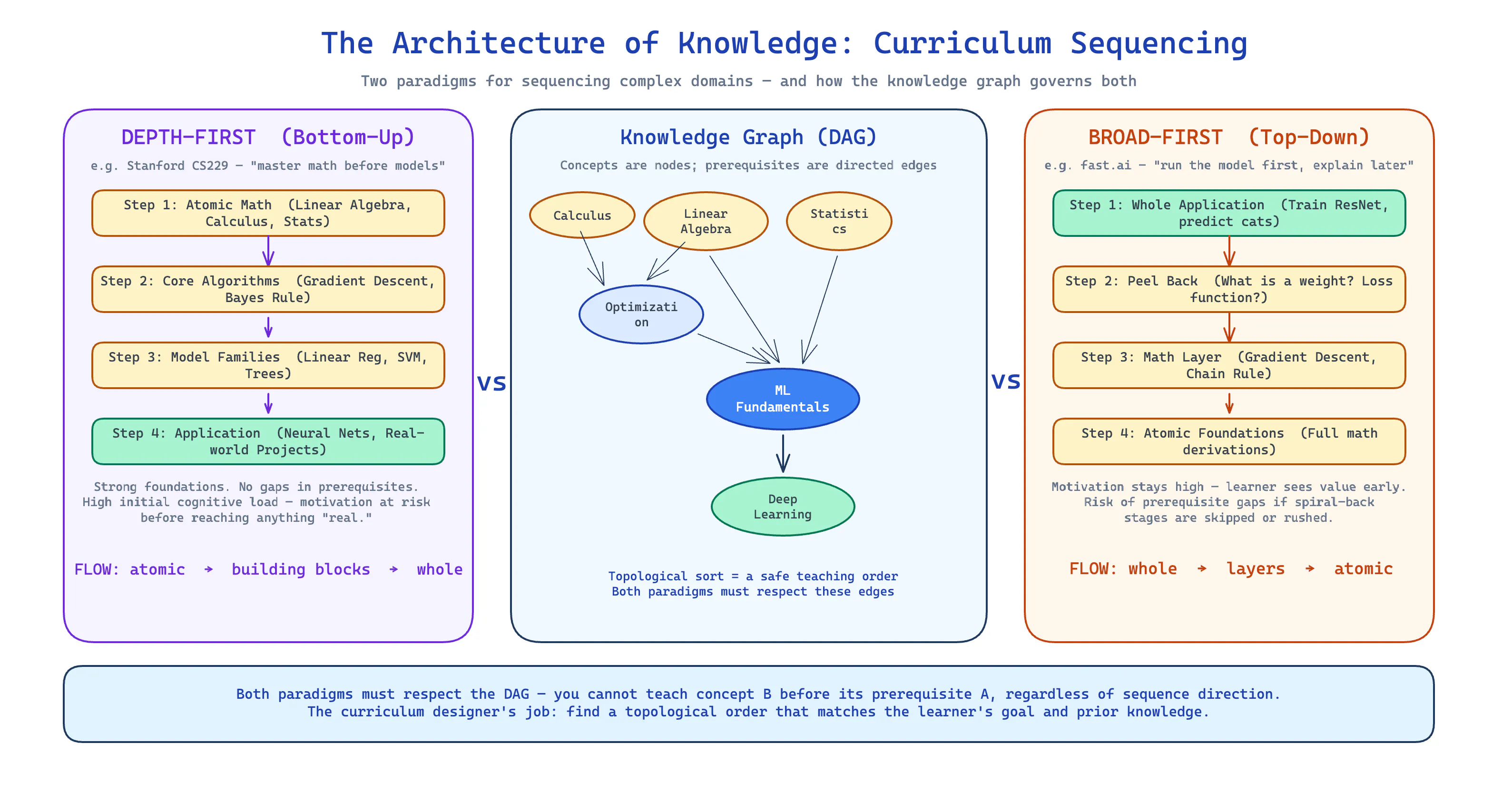
The product I am working on is built around this idea — that the structure of a subject should drive how you learn it, not the availability of content. The curriculum follows the knowledge graph. The experience adapts to you. The goal is understanding that actually sticks.

If you're trying to learn something deeply right now and feel like you're spinning — you probably are. Not because the material is too hard, but because nobody handed you the map.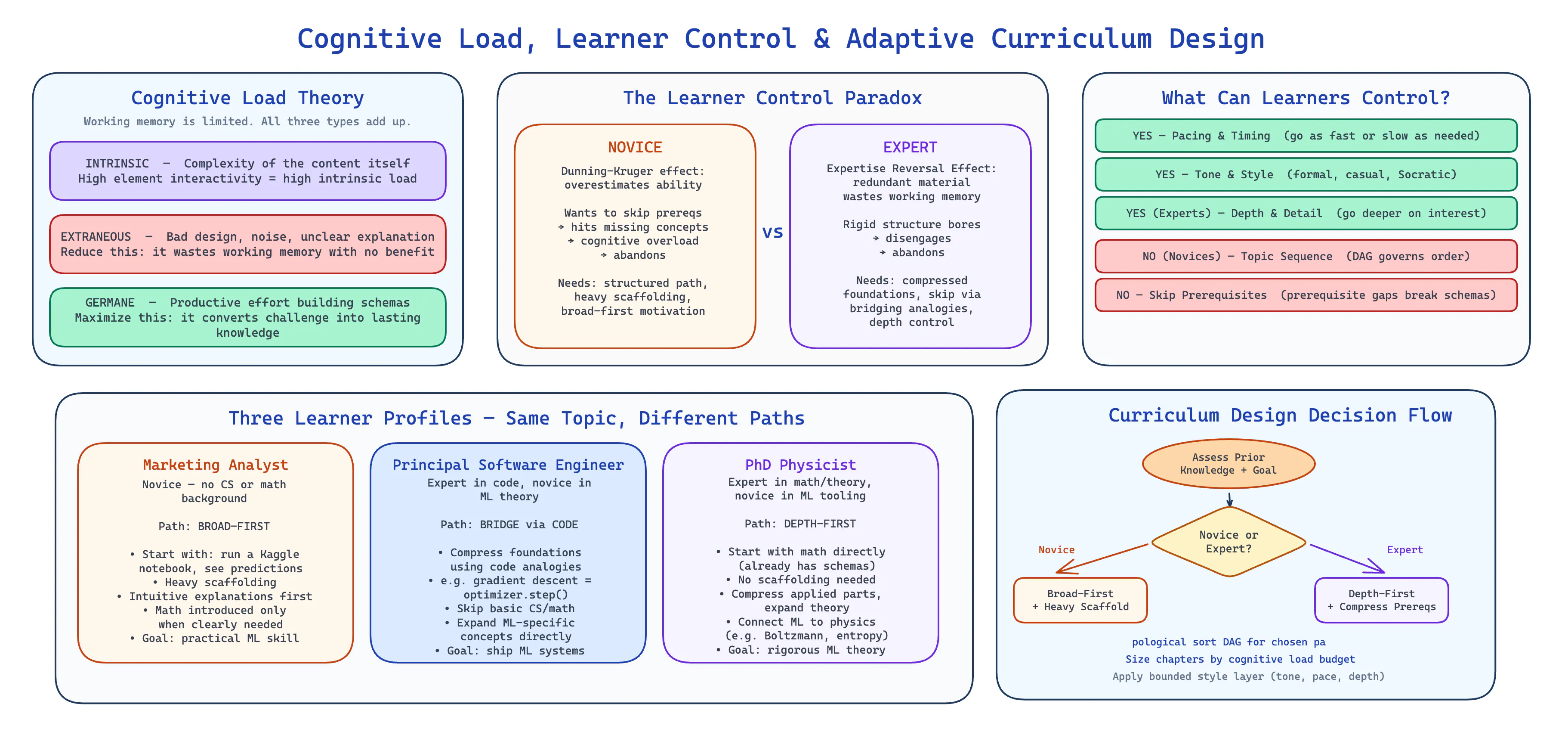
11 views
Replies
Be the first to reply
Have a question or a thought to share? Add a comment above to start the conversation.