

We're bringing AI into manual QA testing — what's your biggest pain point before a release?
Hey Product Hunt community,
I'm Alex, the founder of Evaficy Smart Test — an AI-powered QA platform built specifically for manual testing teams.
Before our launch today, I wanted to start a conversation around something I've been thinking about a lot while building this:
Manual QA testing is still one of the most underserved areas in software development tooling.
Everyone's talking about AI for code generation, AI for automated testing, AI for CI/CD — but the teams still doing structured manual QA? They're largely stuck with the same spreadsheets and disconnected bug trackers they've been using for years.
I want to ask the community directly:
What's your biggest pain point when preparing for a release from a QA perspective?
Is it writing comprehensive test cases fast enough to keep up with dev velocity?
Knowing which scenarios are highest risk and deserve the most attention?
Keeping defects properly linked to the test cases that caught them?
Getting sign-off from POs and Tech Leads before test cases go live?
Pushing defects to Jira without losing context?
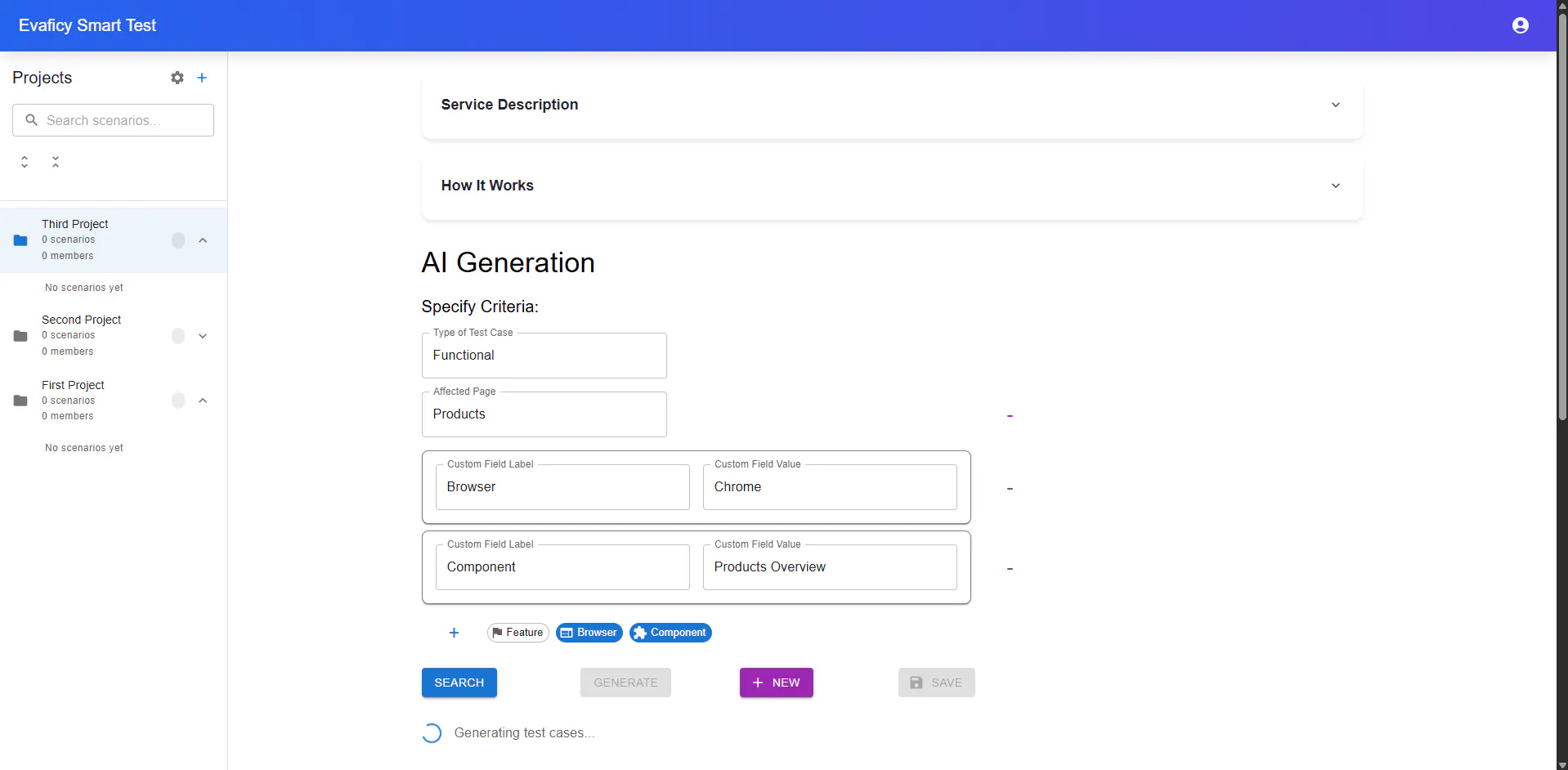
For us, all of the above were problems worth solving — and they're exactly what Evaficy Smart Test tackles with a combination of structured workflow and AI assistance.
We go live on Product Hunt in less than 7 hours — I'd love to hear your thoughts, challenges, or questions about QA tooling before then. Every answer here genuinely shapes how we prioritize what to build next.
Drop your thoughts below — and if this resonates, keep an eye out for our launch today.
Try it early: https://app.evaficy.com
Replies
As someone working in manual QA, I think one of the biggest challenges before a release is balancing speed with confidence.
When deadlines get tighter, it's easy to spend too much time creating or updating test cases instead of focusing on the actual testing. Another recurring issue is making sure everyone shares the same understanding of what has been tested, what still needs attention, and how defects relate to specific requirements.
From my experience contributing to Evaficy Smart Test, I've found that AI is most useful when it helps generate an initial structure for test cases or suggests scenarios that might otherwise be overlooked. It doesn't replace the tester's judgment, but it does reduce repetitive work and lets us spend more time validating business logic and exploring edge cases.
I'm curious how other QA engineers approach this. If you had an AI assistant for manual testing, which task would you want it to handle first?
We're officially live on Product Hunt today. If this conversation resonated with you, we'd love your support and feedback here: https://www.producthunt.com/products/evaficy-smart-test?utm_source=other&utm_medium=social