gm legends, happy Wednesday.
Someone strapped a Linux computer to their face, a robotics platform dropped its two-week setup to zero, and a search tool found the thirty seconds that matter in any video.

Wednesday, Jun 10
Presented byCloudflare Clairic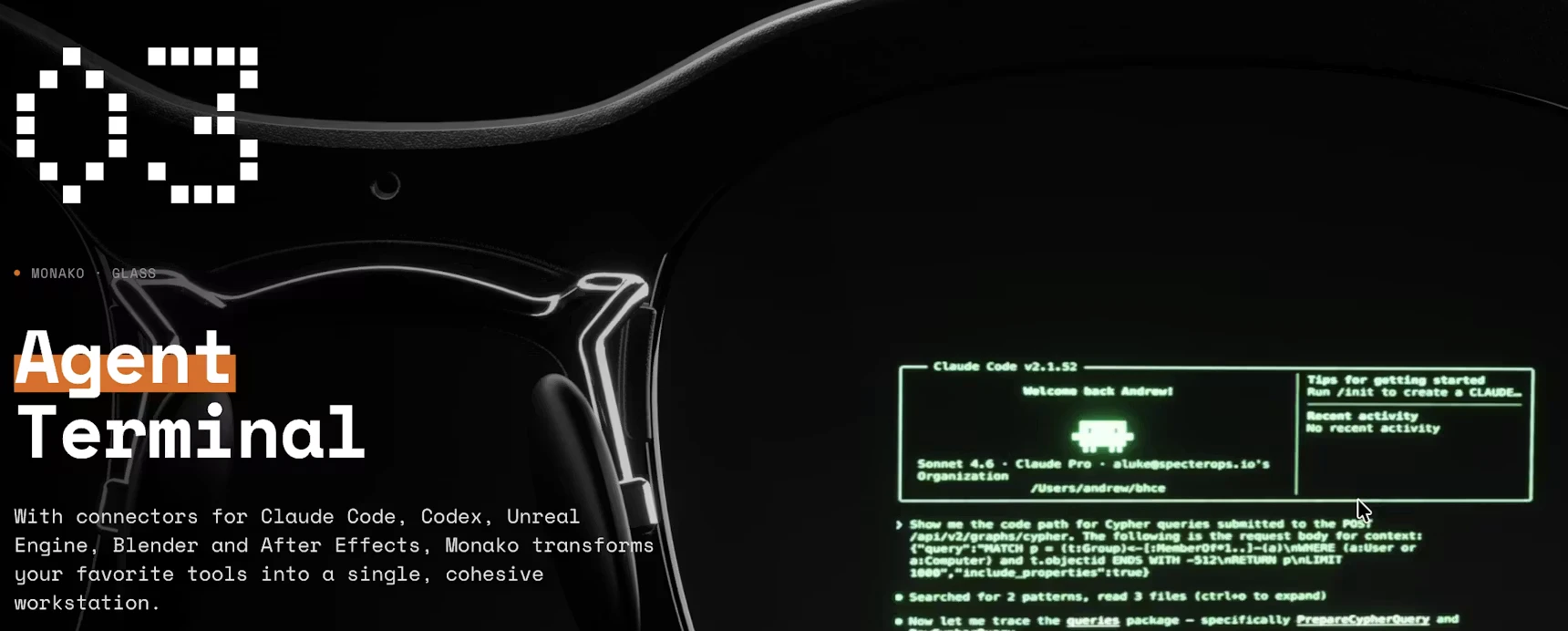
Monako Glass is a 48g heads-up display for running AI coding agents hands-free: waveguide screen, bone conduction microphone, gesture controls, Buildroot Linux, supports Claude Code and Codex. Reservations open now, shipping July-August.
🔥 Our Take: Running AI coding agents has gotten good enough that someone built hardware for it. Not productivity hardware — coding hardware specifically for agents. You're not buying a better keyboard or monitor. You're buying into a workflow where the agent does most of the typing and you review and approve the output. If that's not your workflow yet, this product is telling you it's about to be.
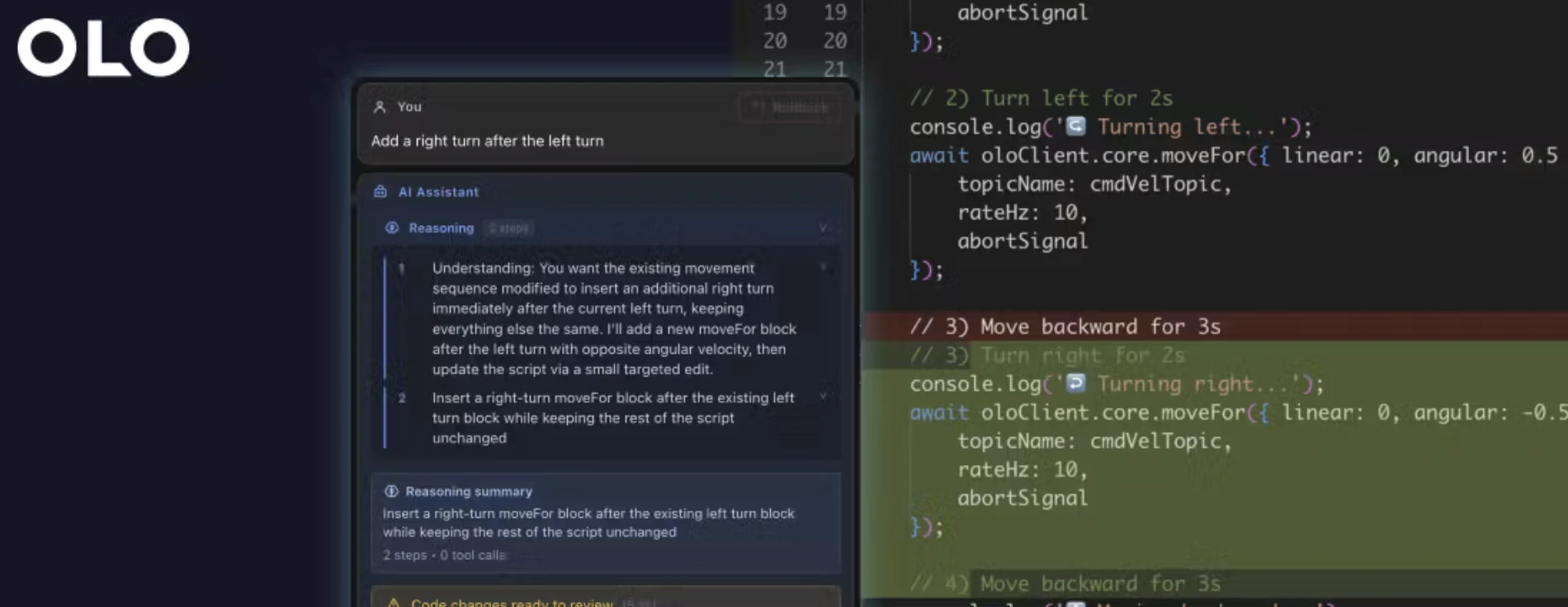
OLO Robotics puts ROS2 in a browser: the robot operating system that typically takes two weeks of Linux configuration to set up is now a signup away, with JavaScript and Python SDK playgrounds ready on day one.
🔥 Our Take: ROS2 is the standard for serious robotics work. It's also an infrastructure project before you write a line of code. OLO didn't replace ROS2 — they just removed the two weeks before you get to use it. The software-to-physical boundary has been dropping for years. This is another step.
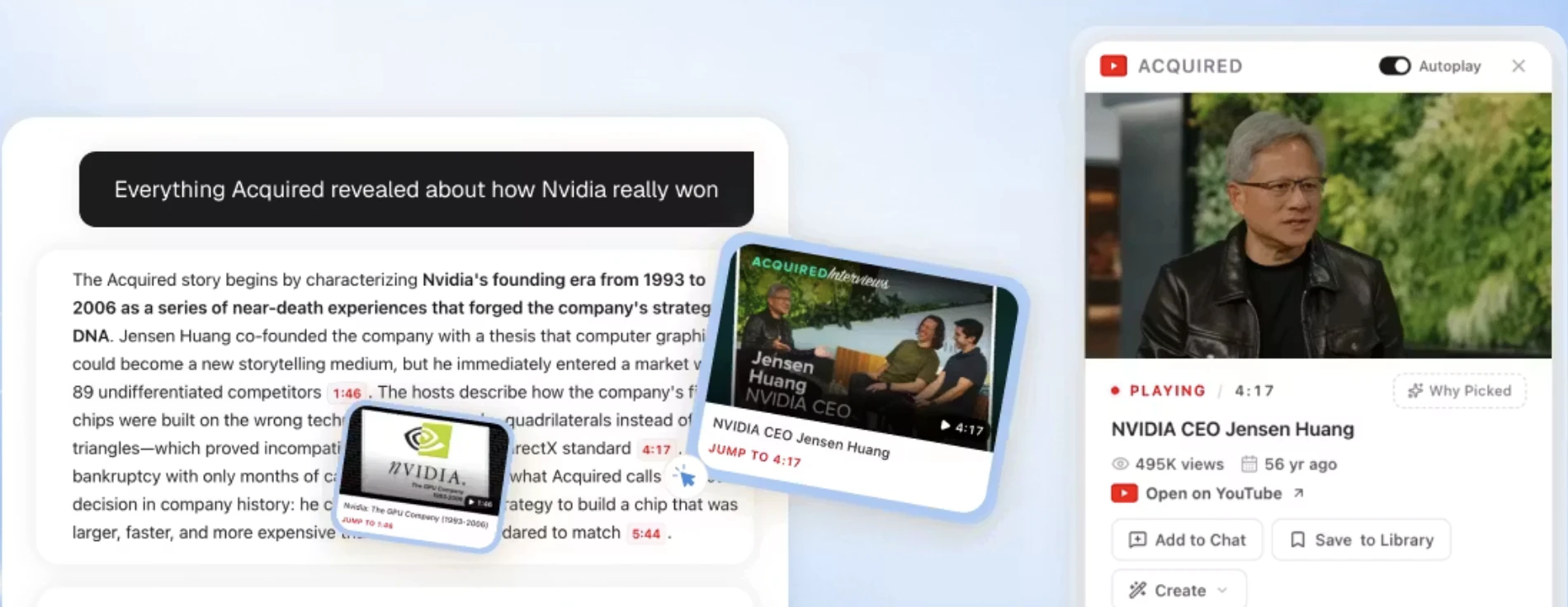
veridive lets you search YouTube videos, podcasts, and lectures via chat: ask a question, get an answer with a click-to-play citation that jumps you to the exact thirty seconds where it was said.
🔥 Our Take: Transcripts have existed for years. The problem was never getting the text — it was knowing which part of a two-hour video actually contained the answer. veridive skips the transcript and gives you the timestamp. That's the part that was missing.
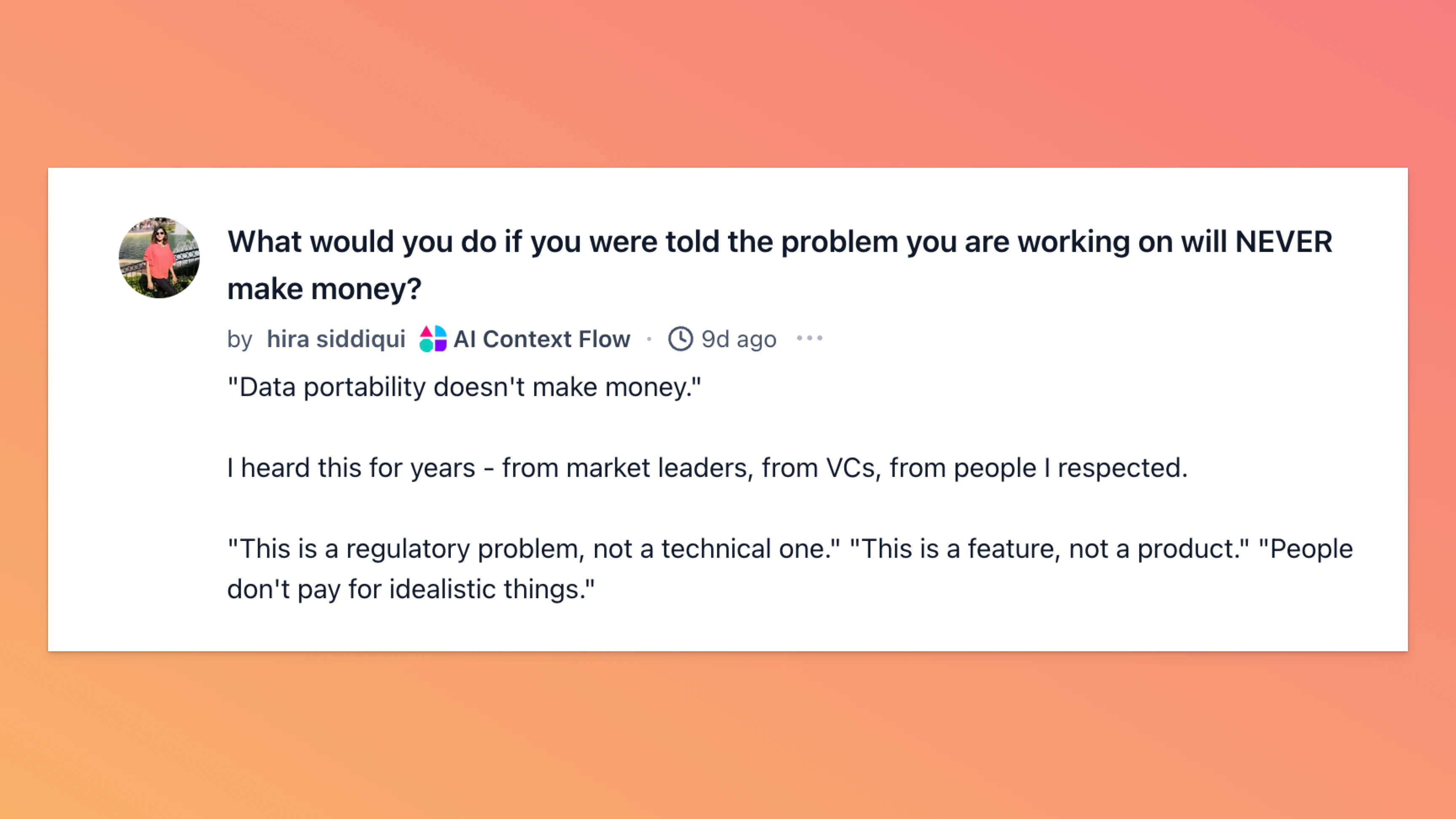
Hira Siddiqui (@hira_siddiqui1) spent six years on data portability — told repeatedly it would never be a real market — before AI made context lock-in the thing everyone suddenly cared about. The thread asks: what would you have done in her position?
The answers mostly landed on keep going, but reframe. Not as a rallying cry but as pragmatism: almost every dismissal is a timing problem wearing a product problem's clothes. Siddiqui herself shifted from selling "data portability" to "stop repeating yourself to AI" and the pitch started landing. Same problem, different vocabulary, five years later.
"Context lock-in is the new data lock-in." That's the line from the thread — the idea that the problem didn't change, the market caught up to it.
Good thread if you've been told the thing you're building doesn't have a market yet.

 64 •
 Venture Capital


