Forums
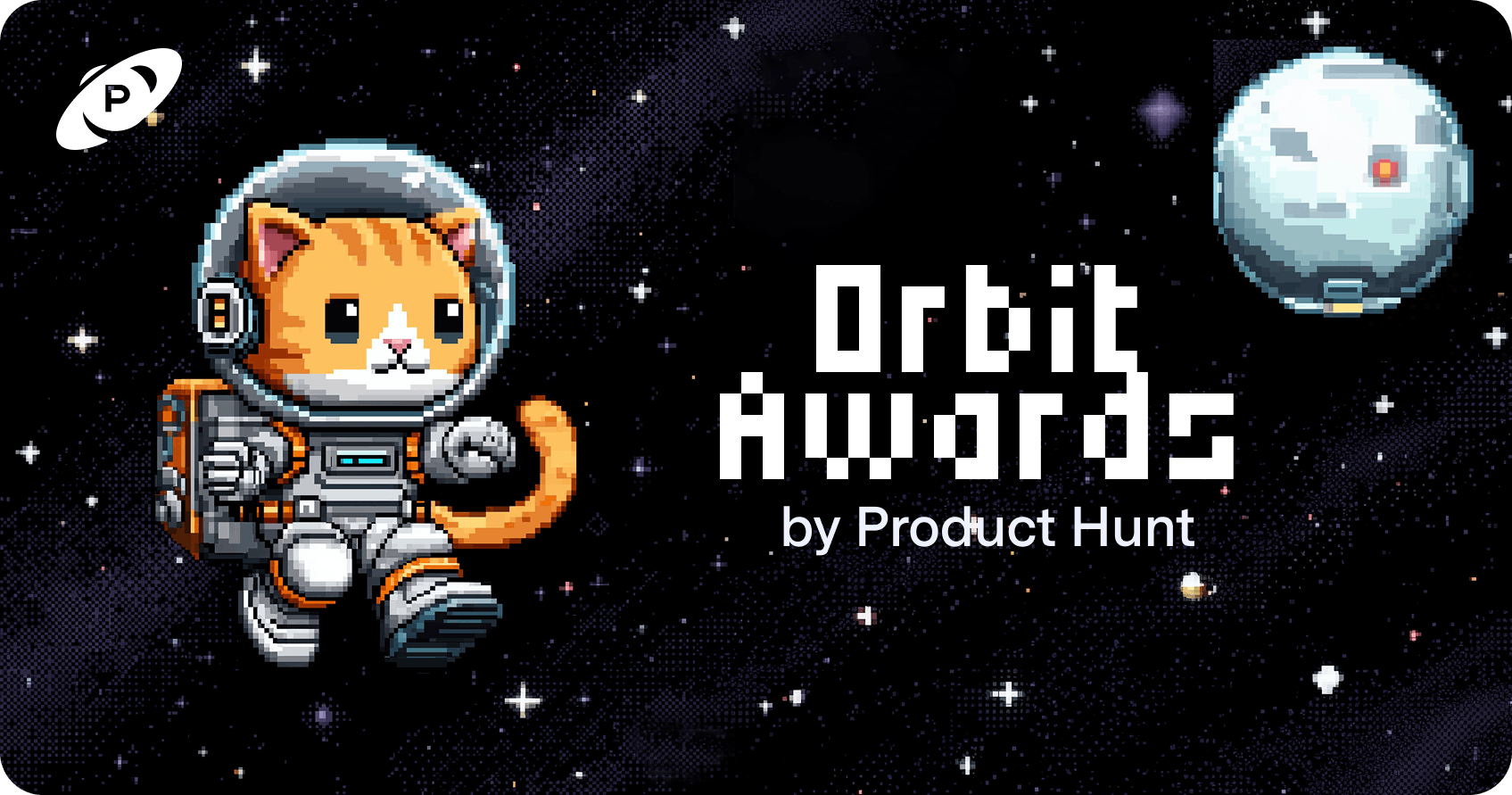
RIP Golden Kitty Awards. Long live Orbit Awards π

We ve got a big update: after ten years, we re officially sunsetting the Golden Kitty Awards.
β POLL: Do you buy the domain first or build the product first?
Let s settle this once and for all.
Do you spend 3 hours trying to find a clever .com before writing a single line of code? Or do you ship the MVP and slap on whatever domain wasn t taken at the time?
Cast your vote and tell us why.
β POLL: Do you buy the domain first or build the product first?
Let s settle this once and for all.
Do you spend 3 hours trying to find a clever .com before writing a single line of code? Or do you ship the MVP and slap on whatever domain wasn t taken at the time?
Cast your vote and tell us why.
AMA - 3 Years. 6 Launches. Countless Lessons. πΈ
Happy weekend, my pal!
We just launched Trickle 2.0 - Magic Canvas this week and made it to #1 Product of the Day!
This time (our 6th launch), we bring the world s first Agentic Canvas for building apps visually with AI.
https://www.producthunt.com/prod...
Big thanks to everyone in the community who supported us.
Question for hunters: According to what you decide to hunt a product (or collab with a company)?
During the time spent on Product Hunt, there are already quite frequent faces who have profiled themselves as top hunters through their activity.
Their names are prominent among hunters, and they probably have to think twice about what they stand for.
π¨ Just 3 days leftβ¦ weβre nearly live!
We re only 3 days away from launching InvisOutlet Pro on Product Hunt, and the excitement is real. It s been incredible hearing your thoughts over the past few weeks, and we can t wait to share the final result with all of you.
If you ve been following along, you know this isn t just another smart outlet or plug.
InvisOutlet Pro is:
Why Are We Interacting with Superintelligence Like Itβs 1999?
Since GPT came out, the way we interact with AI hasn t really changed.
It s still mostly a chat box. You type, it replies.
What is the best Vibe Coding tool so far? Bonus points if we've never heard of it!
I might be missing some but I've been pretty much in love with @Lovable, @Cursor, @bolt.new and have been trying to use @Replit more and I honestly haven't touched @BASE44 too much but have heard good things. @chrismessina has nudged me to use @Windsurf for whenever I build another Raycast Extension!
Currently I use:
- @bolt.new / @Lovable
- @Cursor
- @Warp
Curious what everyone thinks is the top one so far!
YC deadline in <2 weeks; Who's applying?
If you're applying, reply below with what you're building so we can cheer you on!
If you're doing a startup and not applying, why aren't you applying?
YC deadline in <2 weeks; Who's applying?
If you're applying, reply below with what you're building so we can cheer you on!
If you're doing a startup and not applying, why aren't you applying?
π§ Discussion: Can Canvas reshape the way we do vibe coding?
Hey folks,
With the rise of ideas like Human-AI Interaction 3.0 and Context Engineering as proposed by @Andrej Karpathy my team and I started asking ourselves a hard question:
"In a world filled with linear vibe coding tools how can we radically rethink the experience??"
Pagey: AI Assistant, Pre-defined Themes, more...
I told you about On-page AI Assistant, and it's finally here! Alongside Pre-defined Themes, subdomains, plans, and more.
We got more love than we expected for Pagey, and we knew that we had to act fast, to ship things for you. I hope we did a good job!
Anthropic releases Claude 4- what do you think?
Anthropic just released two new models for Claude 4: Opus 4 and Sonnet 4. Let's find out how good they are.
What are you using it for?
What s impressed you? What s broken?
Has anyone tried Figmaβs new feature - Buzz yet? π§
I started using Buzz today to create my social media assets here are my first impressions:
The templates are gorgeous. I m spending more time choosing than actually designing.
The CMS is super intuitive honestly feels like a must-have for any marketer.
"Vibe coding" for non-coders
Recently I've worked with a group of non-corders trying to "vibe code" their apps with AI.
While knowing code is clearly not a must these days, it helps to get technical.
People who were familiar with basic software engineering concepts were 10x more likely to success and get better results.
So, with the hope of providing value to the non-coders people, I've created a quick roadmap for the basic terms and concepts you should be familiar with.
Requirements: Building apps with AI is all about being able to clearly guide AI and express your app features and requirements.
You need to be able to express those ideas and explain them as you d explain to a human developer. Think like a Technical Product Manager.Frontend: The face of your app.
It's what your users see and interact with. It could be a website, a mobile app, or a desktop app. Most popular frontend libraries and frameworks are React, Next.js.UIs: They are the buttons, the forms, the modals, the tooltips, etc. In React, the UI is built with components. For design & styling, Tailwind CSS is the most popular library.
For animations, Framer Motion is the most popular library.-
Packages & npm: Apps are not built from scratch.
They are built on top of existing libraries and frameworks, like lego blocks.The most popular package manager is npm. For example, "react-hook-form" is a famous package that helps you build forms.
-
Backend: The backend is the part of your app that runs on the server.
It's where you store your data, your business logic.
e.g: If you want to send an email, or process payments - this is where you'll do it.
Vibe tip: Use minimal backends with serverless functions.
-
Database: The database is where you store your data.
It's where you store your users, your projects, your tasks, etc. Think of it as a big spreadsheet.
I recommend using a database that is integrated with your frontend.
For example: Fine, or Supabase.
-
API: Real-life apps almost always need to integrate with other apps.
For example: if you want to send email, or get weather data, or integrate with AI - it's all done through APIs.
-
Hosting & Deployment: For your app to be accessible to the public, you need to host it.
The code is usually hosted on GitHub, and deployed to platforms like Fine, Vercel, Netlify.
Finally, being comfortable with code is helpful - even if not a must.
AI often makes minor mistakes (like importing a wrong package), and if you re not afraid of reviewing code - you will get better results faster.
DeepSeek-V3-0324 is now live on Trickle! Enjoy unlimited free tokens for 3 days!
Hey PH community!
We just integrated DeepSeek-V3-0324 into Trickle, and instead of running a $1M hackathon, we decided to give everyone unlimited free tokens for the next 3 days!
"Vibe coding" for non-coders
Recently I've worked with a group of non-corders trying to "vibe code" their apps with AI.
While knowing code is clearly not a must these days, it helps to get technical.
People who were familiar with basic software engineering concepts were 10x more likely to success and get better results.
So, with the hope of providing value to the non-coders people, I've created a quick roadmap for the basic terms and concepts you should be familiar with.
Requirements: Building apps with AI is all about being able to clearly guide AI and express your app features and requirements.
You need to be able to express those ideas and explain them as you d explain to a human developer. Think like a Technical Product Manager.Frontend: The face of your app.
It's what your users see and interact with. It could be a website, a mobile app, or a desktop app. Most popular frontend libraries and frameworks are React, Next.js.UIs: They are the buttons, the forms, the modals, the tooltips, etc. In React, the UI is built with components. For design & styling, Tailwind CSS is the most popular library.
For animations, Framer Motion is the most popular library.-
Packages & npm: Apps are not built from scratch.
They are built on top of existing libraries and frameworks, like lego blocks.The most popular package manager is npm. For example, "react-hook-form" is a famous package that helps you build forms.
-
Backend: The backend is the part of your app that runs on the server.
It's where you store your data, your business logic.
e.g: If you want to send an email, or process payments - this is where you'll do it.
Vibe tip: Use minimal backends with serverless functions.
-
Database: The database is where you store your data.
It's where you store your users, your projects, your tasks, etc. Think of it as a big spreadsheet.
I recommend using a database that is integrated with your frontend.
For example: Fine, or Supabase.
-
API: Real-life apps almost always need to integrate with other apps.
For example: if you want to send email, or get weather data, or integrate with AI - it's all done through APIs.
-
Hosting & Deployment: For your app to be accessible to the public, you need to host it.
The code is usually hosted on GitHub, and deployed to platforms like Fine, Vercel, Netlify.
Finally, being comfortable with code is helpful - even if not a must.
AI often makes minor mistakes (like importing a wrong package), and if you re not afraid of reviewing code - you will get better results faster.
"Vibe coding" for non-coders
Recently I've worked with a group of non-corders trying to "vibe code" their apps with AI.
While knowing code is clearly not a must these days, it helps to get technical.
People who were familiar with basic software engineering concepts were 10x more likely to success and get better results.
So, with the hope of providing value to the non-coders people, I've created a quick roadmap for the basic terms and concepts you should be familiar with.
Requirements: Building apps with AI is all about being able to clearly guide AI and express your app features and requirements.
You need to be able to express those ideas and explain them as you d explain to a human developer. Think like a Technical Product Manager.Frontend: The face of your app.
It's what your users see and interact with. It could be a website, a mobile app, or a desktop app. Most popular frontend libraries and frameworks are React, Next.js.UIs: They are the buttons, the forms, the modals, the tooltips, etc. In React, the UI is built with components. For design & styling, Tailwind CSS is the most popular library.
For animations, Framer Motion is the most popular library.-
Packages & npm: Apps are not built from scratch.
They are built on top of existing libraries and frameworks, like lego blocks.The most popular package manager is npm. For example, "react-hook-form" is a famous package that helps you build forms.
-
Backend: The backend is the part of your app that runs on the server.
It's where you store your data, your business logic.
e.g: If you want to send an email, or process payments - this is where you'll do it.
Vibe tip: Use minimal backends with serverless functions.
-
Database: The database is where you store your data.
It's where you store your users, your projects, your tasks, etc. Think of it as a big spreadsheet.
I recommend using a database that is integrated with your frontend.
For example: Fine, or Supabase.
-
API: Real-life apps almost always need to integrate with other apps.
For example: if you want to send email, or get weather data, or integrate with AI - it's all done through APIs.
-
Hosting & Deployment: For your app to be accessible to the public, you need to host it.
The code is usually hosted on GitHub, and deployed to platforms like Fine, Vercel, Netlify.
Finally, being comfortable with code is helpful - even if not a must.
AI often makes minor mistakes (like importing a wrong package), and if you re not afraid of reviewing code - you will get better results faster.
Is Notion Database a Good Fit for CMS?
I'm curious can Notion's database be used effectively as a CMS for websites?
For example, managing content for an e-commerce site or a news/blog platform.
I'm the Product Hunt CEO, and I've launched 8 times on PH. AMA (unfiltered)
Product Hunt changed my life. A year ago I stepped in as CEO, and a couple weeks ago we launched Product Forums (which you're reading this on!). Before that I founded and launched @Tandem (virtual office - YC S19), and @Cryptagon.io.
Ask me anything about Product Hunt, launching, startups, YC, or what we're trying to do with forums!