
Stock Analysis Desk
Research the idea before you trust it.
6 followers
Research the idea before you trust it.
6 followers
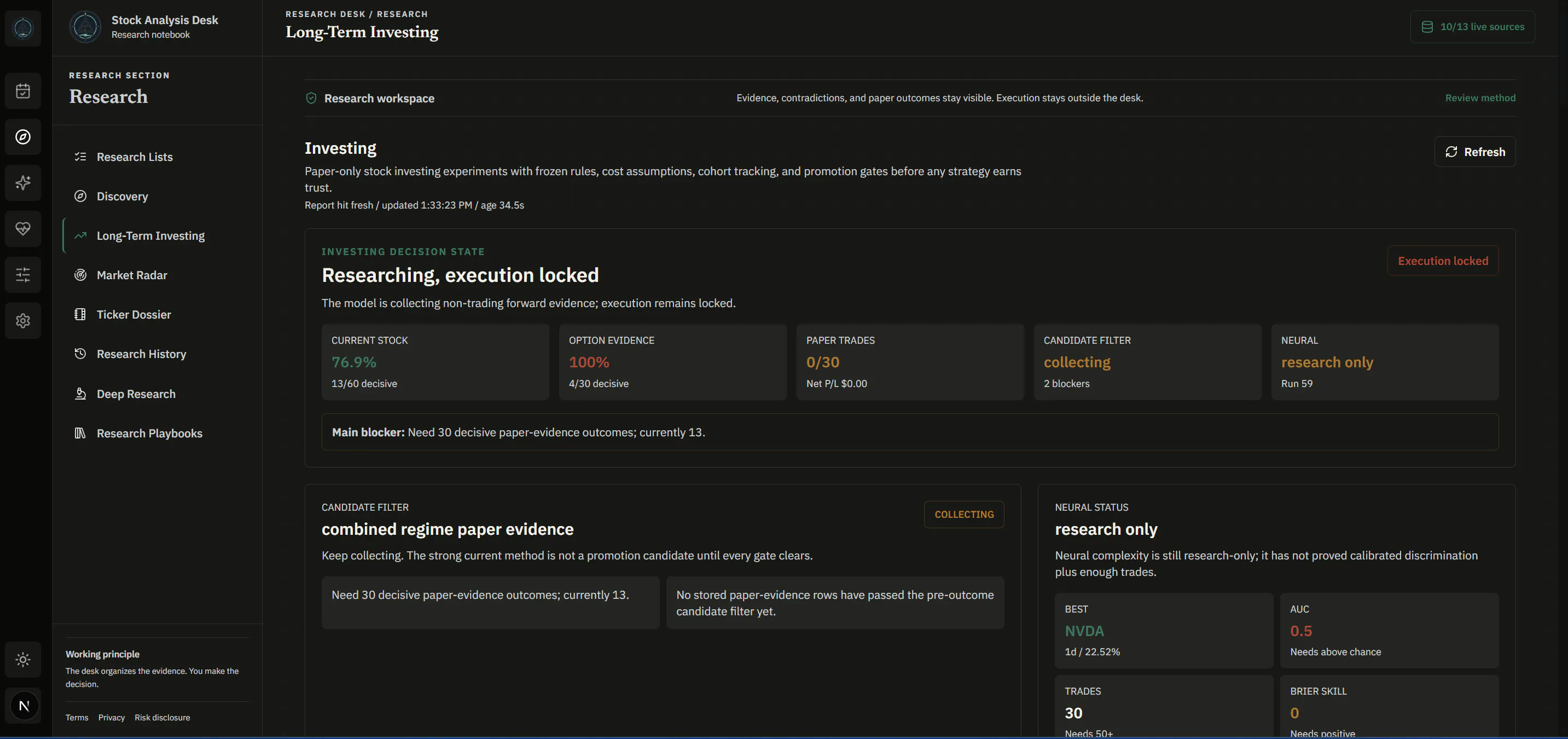
Stock Analysis Desk is a founder-built market research workspace for self-directed traders and investors. It helps users preserve their original thesis, supporting evidence, contradictions, source quality, options/liquidity context, risk, and paper-trade outcomes in one reviewable workflow. The goal is not to generate buy/sell signals. The goal is to make market research more structured, honest, and easier to review after the outcome is known.


One thing that would make this stickier for me is a "thesis decay" view that flags which parts of my original argument are aging out as new earnings or macro data lands. Tracking the evidence shelf life feels like a natural next step after preserving the thesis itself.
@kaanalayandvxb This was a great critique. The “thesis decay” idea clicked immediately because it fits exactly what we’re trying to build not just saving the original thesis, but helping traders know when that thesis is aging out as new earnings, macro, volume, or momentum evidence comes in. We added a first version of it to the Paper Trade Journal so open ideas now get flagged for review before someone leans on stale reasoning. Really appreciate the thoughtful suggestion.
honestly the journal angle is what got me, i usually lose track of why i entered a trade and end up rewriting my thesis after the fact. keeping the original reasoning locked in is kind of genius.
@esilateum Thank you, this means a lot. That was exactly the pain I wanted to solve The journal is meant to freeze the original thesis in place so the review is honest later. Really appreciate you calling that out!
Quick update from the feedback so far! the clearest theme is that people want help knowing when a thesis has gone stale.
I’m now focusing more on evidence decay, contradiction tracking, and pattern review, so Stock Analysis Desk is less about finding trades and more about helping traders avoid fooling themselves after the fact.
I’d love feedback on whether that framing is clearer, and what evidence you’d want tracked automatically before trusting a trade idea.