
Stigg
The Usage Runtime for AI Products
4.7•12 reviews•1.1K followers
The Usage Runtime for AI Products
4.7•12 reviews•1.1K followers
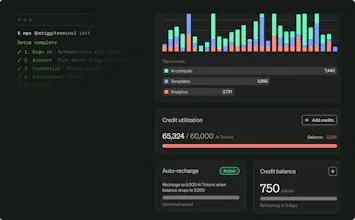
Stigg is the usage runtime for AI products: the real-time enforcement and governance layer between your app and your billing stack. It decides what every customer, user, team, and agent can do, the moment they try. Sub-millisecond credit checks, zero overdraft, enterprise governance, and modular BYOC. Metering, credits, entitlements, and governance in one runtime. Enforce in the request path instead of reconciling on the invoice. Free forever for AI startups.
This is the 2nd launch from Stigg. View more

Stigg 2.0
Launched this week
Stigg is the usage runtime for AI products: the real-time enforcement and governance layer between your app and your billing stack. It decides what every customer, user, team, and agent can do, the moment they try. Millisecond credit checks, zero overdraft, enterprise governance, and modular BYOC. Metering, credits, entitlements, and governance in one runtime. Enforce in the request path instead of reconciling on the invoice. Free forever for AI startups.



Free Options
Launch Team


Putting enforcement in the request path instead of reconciling on the invoice is the right call, month-end reconciliation is how agent loops quietly torch a budget. My one operational worry is the dependency itself: when Stigg is slow or unreachable, does the check fail-open (let the request through and risk overdraft) or fail-closed (block the customer)? For a sub-ms hot-path gate that degradation default is the thing I'd need pinned down before putting it in front of live traffic.
Voquill
Congrats on the launch! Looks solid. How does this handle outages? Is there a fail open or fail closed mode if Stigg isn't available?
How does the sub-millisecond credit check actually hold up under heavy concurrent load, and do you handle rate limiting on the enforcement layer itself or assume that part is already covered upstream?
How does the sub-millisecond credit check actually work under the hood when integrating with something like Stripe or a custom billing backend? Curious if there is extra latency added to the request path in practice.
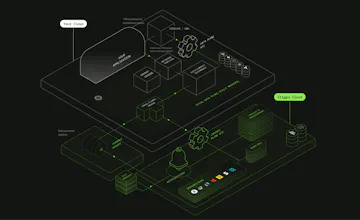
How does the BYOC setup actually work in practice, like do I keep my existing Stripe account and Stigg just sits in front of it, or does it want to own the billing pipeline end to end?
how does this actually handle the real-time enforcement without slowing down the request path, especially when billing data lives in a separate stack?
how does the sub-millisecond credit check actually hold up when an agent is hammering the API in tight loops, does it queue or just drop the extra requests