
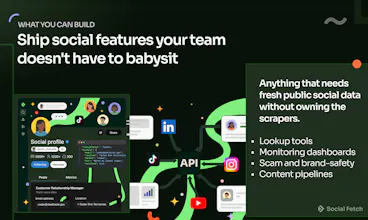
Social Fetch is social media scraper API for every major platform. Fetch profiles, posts, comments, videos, transcripts, metrics, and engagement signals from TikTok, Instagram, YouTube, X, LinkedIn, Facebook, Reddit, and more without maintaining scrapers yourself.
Built for founders and engineering teams shipping social analytics, creator tools, enrichment workflows, monitoring dashboards, and AI agents. Live data, pay-as-you-go credits and no subscription.
This is the 2nd launch from Social Fetch. View more
Social Fetch
Launched this week
Social media scraping API for public profiles, posts, comments, videos, transcripts, and metrics from TikTok, Instagram, YouTube, X, LinkedIn, and more. Pay-as-you-go credits, 100 free to start.


Free Options
Launch Team / Built With


the technical questions are covered well already, curious about the legal side instead - when a platform's ToS changes or they start actively blocking scrapers (LinkedIn especially, given the lawsuits), who eats that risk, you or the customer whose product suddenly loses a data source overnight. is that something you indemnify at all or is it explicitly on us
I like the platform coverage but how do you handle sudden API changes across networks. I think fast fallback systems could keep data reliable.
How does the credit system actually work per request, like is fetching a profile the same cost as pulling a full post thread or does it scale with the data volume you get back?
How do you keep things stable when platforms like TikTok and Instagram constantly tighten their scraper detection, and does the pay-as-you-go pricing mean I only pay for successful requests or every call I make?
I enjoy the broad platform support because maintaining scrapers takes real efforts. how do you verify that profile metrics stay accurate over time. Regular validation against public data could improve confidence for analytics products.
How does the pay-as-you-go credit pricing work in practice, like do different platforms or data types cost different amounts per call?
For the scraper API, how consistent is the response shape across TikTok, Instagram, YouTube, X, and LinkedIn? I can imagine developers using Social Fetch in AI workflow automation or marketing dashboards would care a lot about whether posts, profiles, comments, and metrics come back in a predictable schema, or if each platform has its own structure.