
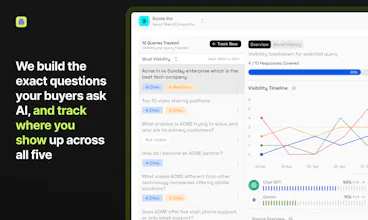
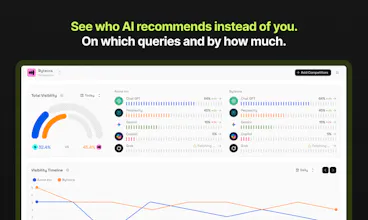
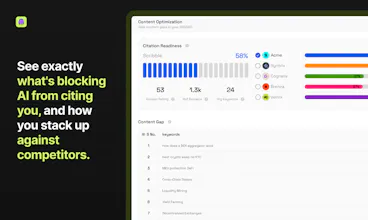
Your customers ask AI before they ask Google, and most brands have no idea whether they show up or lose to a competitor. Every other tool hands you a visibility score and stops there. Scribble does the whole loop: audit where you're invisible across every AI engine, create content that closes the gap, and amplify it through 50,000 creators who only get paid when AI cites them. A gap report won't win customers. Being the cited answer will.




Forum Threads


View all
How does the creator amplification piece actually work in practice, like do you match brands with creators based on the queries they want to rank for, or is it more of a blanket network push?
How does the creator amplification piece actually work in practice - are you vetting the 50k creators by topic or niche, and how do you make sure they stay focused on the brand instead of churning out generic content just to chase the citation payouts?
How does the creator amplification piece actually work in practice, like does Scribble match you with creators based on your niche or do you get to browse and pick? Curious how much control you have there.
The audit part is genuinely useful - it showed me which competitors were getting cited for queries I assumed were mine. Wish the creator amplification piece had clearer pricing upfront, but the gap reports feel a lot more actionable than the dashboards I have tried.
Finally ran my own site through it and the gap report flagged a competitor I'd completely overlooked in ChatGPT results. The creator amplification angle is genuinely new to me, curious to see how that plays out.
Ran a quick audit on my own site and the gap report actually flagged two real questions my competitors show up for that I'd completely missed. The creator amplifier angle is interesting too, that's a smart way to close the loop.
Ran a quick gap audit on a small site I'm working on and it caught a couple of AI visibility issues I genuinely hadn't thought about. The creator-amplification angle is clever too.