Launched this week

RunEvr
Agentic project management environment for creatives
274 followers
Agentic project management environment for creatives
274 followers
One AI-powered workspace where your projects, conversations, reviews, and creative work stay connected. Every tool switch interrupts creative thinking, scatters context, and adds unnecessary cognitive load. RunEvr is built to keep your entire creative workflow in one place, helping teams stay focused, collaborate naturally, and create without losing momentum.


RunEvr
Hey Product Hunt 🐱
We're excited to finally introduce RunEvr.
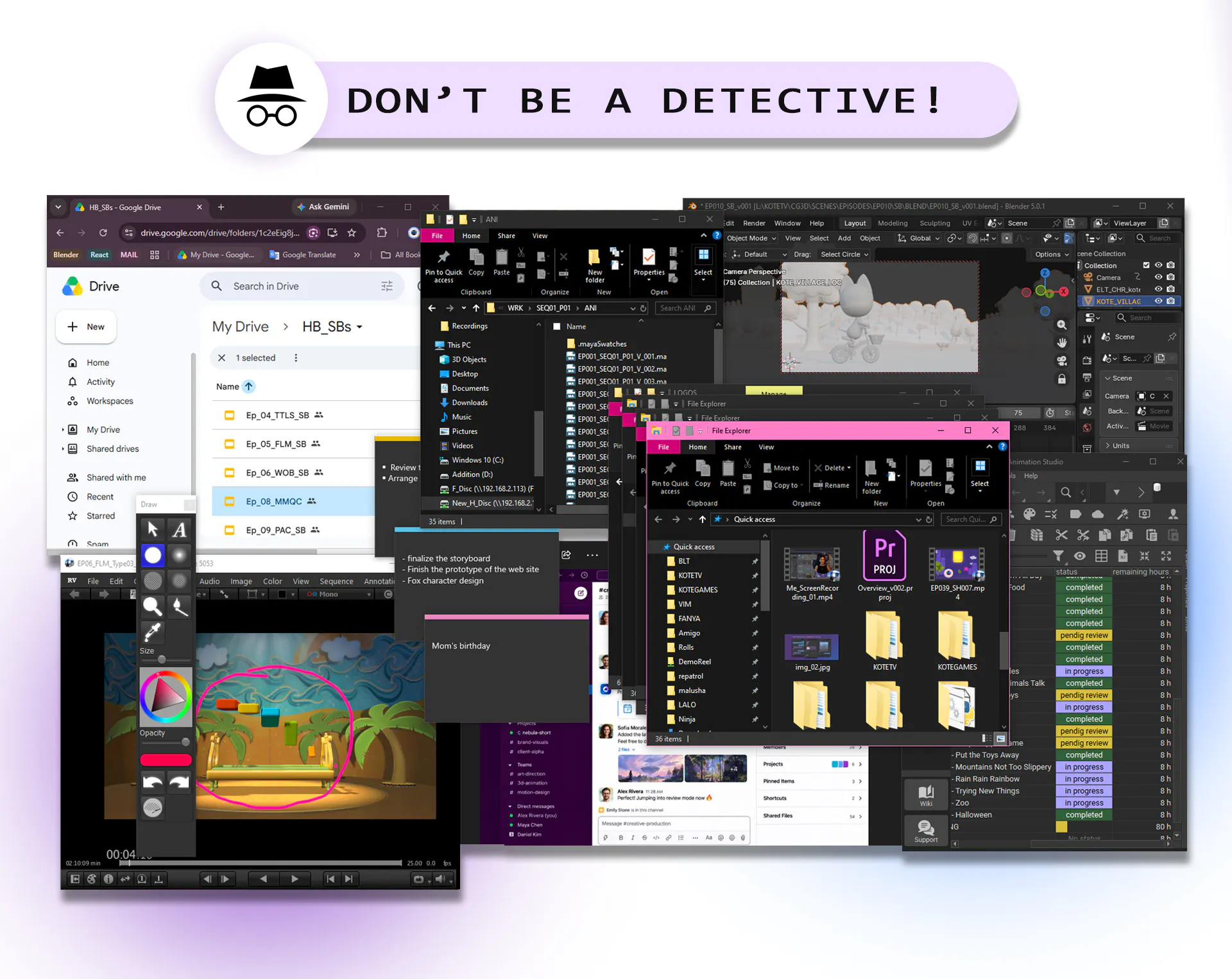
RunEvr was born inside our animation studio. Every project involved artists, producers, clients, and partners, but the work itself was scattered across chats, task managers, cloud storage, whiteboards, and endless browser tabs. We weren't losing files - we were losing context.
So instead of adding another tool to the stack, we built the environment we wished we had: one place where projects, conversations, reviews, files, collaborative boards, and AI agents work together in the same context.
We used RunEvr internally for real production before sharing it publicly. It became the space where our team planned projects, reviewed creative work, discussed ideas, and kept everything connected without constantly switching between apps.
Beyond productivity, we wanted collaboration to feel more human. We love storytelling, creativity, and building things together, so we designed RunEvr to be a workspace that's enjoyable to use - not just another dashboard.
In RunEvr, AI agents can become part of the team - taking roles like project coordinators, managers, or creative contributors. They work alongside people as equal members of the project, helping teams organize, create, and move ideas forward while keeping humans at the center of the creative process.
Whether you're building a product, producing creative work, running a community, learning with others, or managing personal projects, our goal is simple: keep everything connected so your ideas can keep moving.
We'd love to hear your thoughts:
Where do you feel collaboration breaks down the most today?
We'll be here all day to answer questions and would genuinely appreciate your feedback. 🚀
The context-preservation problem feels especially real for creative teams because feedback often arrives in different formats and at different moments. When a project moves from rough idea to approved asset, how do you keep the original brief, review decisions, and current version connected so an AI agent can help without treating an old comment as still authoritative?
RunEvr
@wesc Great question!
This is actually one of the hardest parts of creative workflows - not just storing information, but understanding what is still relevant.
In RunEvr, we keep the project context connected: the original brief, discussions, feedback, versions, and decisions all live around the same project. Version history helps separate what was an earlier direction from what became the approved outcome.
For AI agents, the goal isn’t to treat every comment as truth - it’s to understand the evolution of the project: what was suggested, what was changed, and what the current state is.
free plan's nice but how does pricing scale once a studio grows past like 10 people, that's usually where these tools start hurting.
RunEvr
@kyle_bennett6 Great Question !
Pricing's the hardest part and we're being careful - we're shaping it with our current users right now, so I'd genuinely welcome your take too.
Our intent is - never charge people who are just participating - clients following along, chatting, leaving light comments stay free. We only charge for the heavy lifting (calls, storage, intensive Board use), which means just a small core of each team pays, priced to actual use rather than per head. So as a studio grows, most of your people cost nothing - and the total stays at or below what you already pay for just one of the tools in your current stack.
Congrats 👏@adana on hitting product hunt today. how do you handle versioning history when team members iterate on media assets inside the board?
RunEvr
@priya_kushwaha1 Priya, thanks for the question! 👋
Versioning is decoupled from the Board - it's just a canvas that references files, not a version history itself.
New versions get created either when a task/stage is finalized (each retake/approval bundles into a version), or when someone manually uploads a new overall version at the room level (e.g. "Episode 3 complete").
Iterating on the Board itself doesn't fork history - only finalize/approve or an explicit new upload does.
@adana Interesting approach thanks for explaining it!
Congratulation @adana on the launch! The all-in-one bet usually breaks when one bundled tool loses to the specialist it replaces. Which capability did you decide had to be best-in-class, and which is okay being good-enough?
RunEvr
@aidan_codefox Thanks Aidan, appreciate you asking this!
We're not chasing all-in-one to beat specialists - the bet is context preservation. Our Forum and Drive aren't trying to out-Slack Slack or out-Dropbox Dropbox, they exist so your people and assets live in one room instead of scattered across dedicated tools. The one area we're pushing hardest to be best-in-class: the real-time Board - creatives reviewing media together live, no screen sharing, actual data sharing.
"AI agents as equal members" is a bold framing. does that ever get noisy, like an agent jumping into something a client only wanted a human opinion on?
RunEvr
@derek_julian That’s a great point. We don’t want AI agents to become another source of noise 😄
Agents don't act on their own. They only do what they're assigned, inside the room and role you place them in.
So an agent never wanders into a thread to offer an opinion nobody asked for - if you want a moment to be human-only, it just is.
Think of it less like a bot listening to everything, and more like a teammate who only works on the tickets you hand them.
Really like the idea of keeping everything in one context instead of jumping between 5 different tools. The part about 'losing context, not files' is something I've experienced on almost every project.
Curious, what's been the most surprising use case you've seen for AI agents inside RunEvr so far?
Congrats on the launch and good luck today
RunEvr
@deepaksingh09 Thank you so much!
And yes, the “losing context, not files” problem is exactly what pushed us to build RunEvr.
The most surprising use case so far was actually outside of creative work 😶
One of our 3D animators started using Aurora (our AI coordinator) not only for project-related tasks, but also to create a weight loss plan, organize his routine, and track his progress. And the funny part - it actually helped him lose weight! 😂
It was a great reminder for us that AI agents can become personal assistants in many areas, not just work.